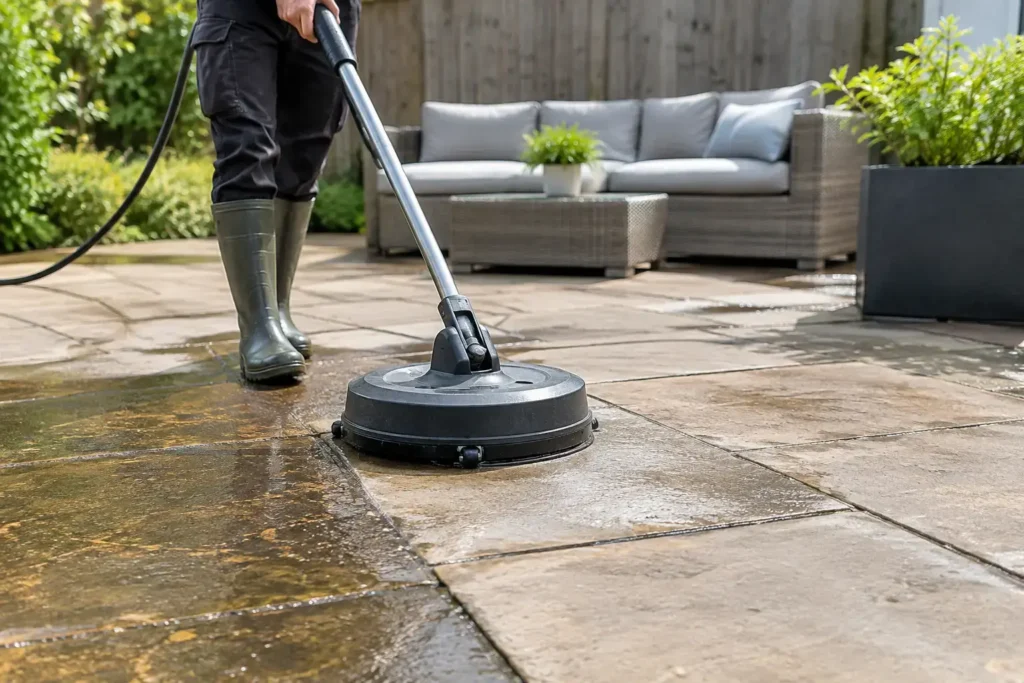
A patio can look tired long before the rest of the garden does. Green algae, black spotting, mud, and barbecue stains gradually dull the surface, while damp weather can make slabs slippery underfoot. This guide to cleaning patio slabs explains how to bring back a cleaner, safer finish without damaging the paving, washing out joints, or creating a mess around your home.
The right method depends on what your patio is made from and how heavily soiled it is. Concrete slabs can usually handle firmer cleaning than sandstone, limestone, or other natural stone. A pressure washer can deliver excellent results, but only when it is used with care. For many patios, preparation and the correct cleaning solution matter just as much as the machine.
Start by identifying your patio slabs
Before applying a cleaner or bringing out a pressure washer, check the type and condition of the slabs. Most patios are made from concrete, porcelain, sandstone, limestone, slate, or block paving. Each surface has different strengths and weaknesses.
Concrete is generally durable, although older slabs may have a worn or pitted finish. Porcelain is low-porosity and easy to maintain, but its smooth surface can become slippery when algae builds up. Natural stone needs more caution. Acidic cleaners can etch limestone and sandstone, leaving pale marks or a rough finish that cannot simply be washed away.
Look closely for cracked slabs, loose pointing, flaking surfaces, or areas that feel unstable. Cleaning will not repair underlying damage. In fact, high pressure can make weak joints and loose paving worse. If the patio has widespread movement or crumbling mortar, address those repairs before a deep clean.
Prepare the area before you clean
A good result begins with clearing the patio properly. Move furniture, pots, outdoor toys, and planters away from the working area. Sweep up loose leaves, soil, and gravel so they do not turn into muddy streaks when wet.
Cover delicate plants where possible, especially if you plan to use a patio cleaner. Rinse nearby grass, borders, and shrubs with clean water before and after applying any product. This helps dilute accidental splashes and reduces the chance of plant damage.
You will usually need four basic items:
- A stiff outdoor brush with non-metal bristles
- A bucket and clean water supply
- A suitable patio cleaner or mild detergent
- Protective gloves and non-slip footwear
For larger or heavily stained patios, a pressure washer may also be useful. Choose a unit with an adjustable setting and a wide fan nozzle rather than a narrow, concentrated jet.
Clear weeds and moss first
Weeds between slabs should be removed before washing. Pull out larger growth by hand or use a suitable weed treatment, allowing enough time for it to work before cleaning. If you pressure wash a patio full of weeds, you may remove the visible leaves but leave roots and seeds behind.
Moss and algae need treating as well as scrubbing. Brushing can lift surface growth, but a purpose-made biocidal cleaner is often more effective for killing spores. This is particularly useful in shaded corners, beneath trees, and on patios that stay damp for long periods.
How to clean patio slabs by hand
Hand cleaning takes longer than power washing, but it is often the safest choice for delicate stone, newer pointing, or patios with only light staining. It also gives you more control around edges, steps, drainage channels, and planted borders.
Start by wetting a manageable section of the patio. Apply a cleaner that is suitable for the slab material, following the dilution and dwell-time instructions on the label. Do not let the product dry onto the surface, particularly in warm or sunny conditions.
Scrub with a stiff brush using steady pressure. Work across the slabs and into the joints, rather than concentrating on one small patch. Once grime has lifted, rinse the area thoroughly with clean water. Repeat where necessary instead of using a stronger chemical immediately.
For routine dirt and light green growth, warm water with a mild detergent can be enough. Heavier organic staining may need a dedicated algae and moss treatment. Avoid household bleach unless the product specifically states it is suitable for your paving. Bleach can affect nearby plants, discolor certain materials, and leave runoff that needs careful management.
Treat stains based on the cause
Not all dark marks are the same, and using the wrong treatment can waste time or harm the slabs. Green or black patches are usually algae, moss, lichen, or mildew. A patio biocide, left for the recommended time, is normally the best approach.
Oil stains from grills, cars, or outdoor equipment need an absorbent or degreasing cleaner. Work on these while they are fresh if possible. Older oil marks may improve significantly but can be difficult to remove completely, especially from porous concrete or sandstone.
Rust stains may come from metal furniture feet, planters, or tools. Use a cleaner designed for rust removal that is safe for your specific paving. Test it in a hidden corner first. Patio slabs can vary in color and finish, even within the same installation.
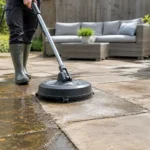
Using a pressure washer safely
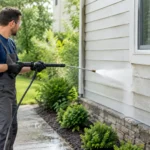
Pressure washing is an efficient option for larger patios with ingrained grime, but power is not always better. Too much pressure, held too close to the surface, can scar concrete, strip the face from natural stone, and blast jointing material out from between slabs.
Begin on the lowest effective pressure. Hold the nozzle at a slight angle and keep it moving in even passes. Start around 12 to 18 inches from the paving, then adjust gradually if needed. You should see dirt lifting without visible roughening, striping, or loose grit coming away from the slab surface.
Clean in sections and rinse as you go. Overlapping each pass helps prevent obvious lines. Take extra care near doors, walls, drainage grates, and garden borders. Dirty runoff can splash onto siding, fences, and windows, creating another cleaning job.
Avoid using a rotating turbo nozzle on soft natural stone or damaged concrete. It may clean quickly, but it can leave permanent swirl marks and expose the aggregate beneath the surface. A wider fan setting is slower, but it is far more forgiving.
Protect the joints between slabs
Pressure washing often removes some sand or mortar from joints, even when done carefully. Check the patio once it has dried. Refill any shallow joints with an appropriate jointing compound or paving sand, depending on the construction of your patio.
Leaving open gaps invites weeds, allows water to sit beneath the slabs, and can lead to movement over time. If several joints have failed, it may be worth having the patio repointed rather than repeatedly topping up isolated areas.
Common mistakes that make patios look worse
The most common mistake is treating every patio like hard concrete. Strong acids, undiluted bleach, wire brushes, and high-pressure jets can all leave lasting damage on the wrong material. If you are unsure what type of slab you have, use the mildest suitable method first and test any cleaner in an inconspicuous spot.
Another issue is cleaning only the visible surface while ignoring the cause of the buildup. Overhanging plants, poor drainage, blocked gullies, and constant shade can all encourage algae to return quickly. Trimming back vegetation and keeping drainage clear can extend the time between deep cleans.
It is also tempting to clean the patio during a very hot, dry afternoon. In reality, this can cause cleaning products to dry too fast and leave residue. A cool, dry day is usually better, provided rain is not expected before treatments have had time to work.
Keep patio slabs cleaner for longer
Once the patio is clean, regular light maintenance is much easier than another major clean. Sweep leaves and soil away every week or two, particularly in fall and after windy weather. Organic debris holds moisture against the paving and feeds moss and algae.
A seasonal wash with a brush and mild cleaner will deal with early buildup before it becomes slippery or deeply embedded. For porous natural stone and concrete, a breathable sealer may help reduce staining and water absorption. The right sealer depends on the slab type, so never apply one without checking it is compatible with your paving.
For homeowners who want spotless results without the time, equipment, or risk of surface damage, professional patio cleaning is often the practical option. Essex Exterior Cleaning uses suitable methods for the condition and material of the surface, helping homeowners restore outdoor areas while protecting the details that matter.
A clean patio makes the garden more inviting, but the real value is in keeping the surface safe, well-drained, and in good condition year after year. Clean gently, deal with growth early, and give the slabs the care they need rather than the harshest treatment available.