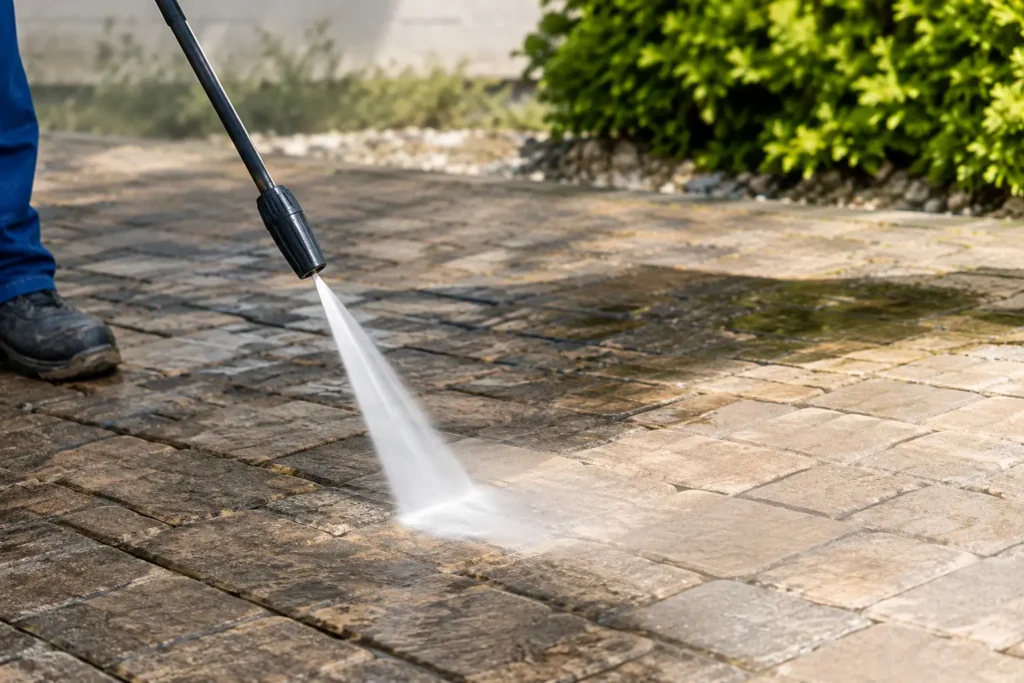
A driveway can look much worse before it actually needs replacing. Moss in the joints, black algae, oil marks, and years of ground-in dirt can make paving look tired, which is why many homeowners reach for a pressure washer. But can pressure washing damage paving? Yes, it can – particularly when the surface is old, cracked, poorly installed, or cleaned with too much pressure at close range.
The aim should not be to blast every mark away as quickly as possible. Good paving cleaning removes buildup while protecting the surface, the jointing, and the drainage around it. That balance is what keeps a clean driveway or patio looking good after the equipment has been packed away.
How pressure washing can damage paving
Pressure washing uses a concentrated stream of water to lift dirt, algae, and stains. Used correctly, it is an effective way to refresh many concrete driveways, patios, and block-paved areas. Used carelessly, that same force can erode the top layer of the material or wash out what holds it in place.
The risk is greatest when a narrow spray nozzle is held very close to the paving. Rather than cleaning evenly, it can cut a visible line into softer concrete, strip the surface from a weathered paver, or leave a patchy finish that is difficult to put right. A surface may look clean at first, but roughened areas can hold more dirt and encourage algae to return sooner.
Jointing material is another common problem. On block paving, the sand between each block helps keep the driveway stable. Pressure washing can remove a significant amount of that sand, especially from loose, damaged, or previously neglected joints. If it is not replaced afterward, blocks can start shifting, edges can loosen, and water can find its way beneath the surface.
Water pressure can also worsen damage that is already there. Small cracks, crumbling mortar, loose pavers, and sunken areas should be repaired before cleaning. Forcing water into those weak points may widen cracks or disturb the base underneath.
Which paving surfaces need the most care?
Not all outdoor surfaces react in the same way. The material, its age, its condition, and the installation quality all matter.
Block paving
Block paving is commonly pressure washed, but it needs a controlled approach. The main concern is jointing sand. A professional clean may remove old contaminated sand from the joints, but the area should then be allowed to dry and re-sanded properly. Skipping this step can leave the driveway less secure than it was before cleaning.
Blocks with chipped edges, movement, or deep weed growth may need attention before any washing begins. Cleaning will improve their appearance, but it will not correct an unstable base or failing edge restraint.
Concrete paving and slabs
Concrete slabs can usually cope with sensible pressure washing, although older slabs deserve more care. The top layer of concrete can weaken over time through weather exposure, frost, and general wear. High pressure can expose the aggregate beneath, leaving a rough, speckled texture that looks uneven and is more prone to staining.
Patio joints also matter. If mortar is cracked or missing, washout can occur quickly. It is often better to clean gently, then repoint areas that need it rather than trying to force dirt from failing joints.
Natural stone
Natural stone often needs the lightest touch. Sandstone, limestone, and some other porous stones can be marked, etched, or damaged by aggressive washing. Stone may also have natural variations in color and texture, so one over-cleaned patch can stand out sharply from the rest of the patio.
A lower-pressure method, suitable cleaning products, and a test area are particularly important on natural stone. This is not a surface where more power equals a better result.
Asphalt and tarmac
Asphalt and tarmac are softer than concrete and can be damaged by strong, close-range water pressure. The surface may pit, loosen, or lose small pieces of aggregate. For these driveways, gentle cleaning methods are generally a safer choice, especially where the surface is already aging or cracking.
Signs your paving should not be pressure washed yet
Before cleaning, take a close look at the driveway or patio in dry conditions. Loose blocks, rocking slabs, deep cracks, missing mortar, and areas that hold standing water all need addressing first. White powdery deposits, flaking concrete, and exposed aggregate can also suggest that the surface is becoming fragile.
It is worth checking drainage as well. Pressure washing moves a lot of dirty water quickly. If gullies are blocked or the patio drains toward the house, the job can create a mess or push debris where it should not go. Clearing drainage points first helps protect both the paving and the surrounding property.
If weeds are growing heavily through the joints, treating them ahead of time is often better than relying on water pressure alone. A pressure washer may remove the visible growth, but it will not always deal with the root system. New growth can appear quickly if the joints are left open and damp.
Can pressure washing damage paving if the settings are right?
It depends on the paving and the technique. A sound concrete or block-paved surface can often be cleaned safely with appropriate pressure, a wider fan setting, and steady movement. The nozzle should be kept at a sensible distance from the surface, rather than held in one place to attack a stubborn mark.
Starting with the lowest effective setting is the sensible approach. Test a small, less visible area first and allow it to dry before judging the result. Wet paving can hide damage, especially changes in texture or color.
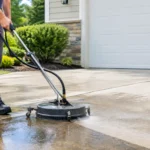
A surface cleaner attachment can also provide a more even finish on suitable hard surfaces. It helps prevent the striped appearance that can happen when a handheld lance overlaps unevenly. However, even the right equipment cannot compensate for loose paving, failed joints, or a surface that is too delicate for high-pressure cleaning.
Stains may need more than water. Oil, rust, paint, and organic growth respond differently, and the wrong cleaning product can discolor paving or harm nearby plants. A careful treatment designed for the specific stain is often safer than increasing the pressure until the mark disappears.
Why professional paving cleaning is often the safer option
A clean driveway should not come at the cost of damaged blocks, washed-out joints, or a patio that looks patchy in daylight. Professional exterior cleaners assess the material and condition first, then choose the cleaning method to suit the surface. That may involve controlled pressure washing, pre-treatment for algae, careful stain removal, or a gentler process where the paving needs it.
There is also the practical side of the job. Large driveways and patios take time to clean evenly, and runoff has to be managed properly. Re-sanding block paving after cleaning is a key part of protecting the finished result, not an optional extra.
For homeowners in Canvey Island and nearby Essex towns, Essex Exterior Cleaning provides fully insured exterior cleaning with an emphasis on visible results and proper property care. If there is any doubt about the condition of your paving, getting it assessed before cleaning can prevent an avoidable repair bill.
A well-cleaned driveway or patio should look refreshed, not scoured. Taking a little more care with the method now gives the surface a better chance of staying clean, stable, and welcoming for years to come.