A patio can look tired long before the slabs themselves are worn out. Green algae, black spotting, mud, and weather marks quickly change an outdoor space from somewhere to relax into an area that feels slippery and neglected. For homeowners searching for “clean patio slabs Canvey Island,” the right approach depends on the slab material, the level of buildup, and whether the joints are still sound.
Canvey Island’s coastal air and damp spells can encourage algae and moss to return, especially on patios shaded by fences, walls, trees, or garden furniture. A proper clean does more than improve the appearance of the paving. It removes slippery growth, helps you spot loose slabs or damaged pointing, and makes regular upkeep far easier.
Why Patio Slabs Become Dirty So Quickly
Patio surfaces are exposed all year. Rain carries soil into the texture of the slabs, fallen leaves leave tannin stains, and foot traffic pushes dirt into the surface. On a north-facing patio or an area that receives little direct sun, moisture can stay on the paving for longer. That creates the ideal conditions for green algae and moss.
Black spots are another common complaint. These are often lichen, which attaches itself more firmly to the slab than ordinary surface dirt. It may fade with cleaning but can take repeated treatment and time to fully clear. Trying to remove it by aggressively pressure washing one small area can leave a visibly uneven finish.
The type of slab matters too. Concrete paving, Indian sandstone, porcelain, limestone, and block paving all react differently to water pressure and cleaning products. A method that works well on durable concrete may damage a softer natural stone or wash away the jointing between slabs.
Clean Patio Slabs in Canvey Island Without Damaging Them
The best patio cleaning starts with preparation rather than a pressure washer. Move pots, furniture, and planters away from the work area. Sweep off leaves, loose grit, and soil so they are not turned into muddy residue during washing. If weeds are growing through joints, remove or treat them first. Otherwise, they can spread debris across the slabs and make the finished patio look unfinished.
Check the patio for cracked slabs, loose edging, crumbling mortar, and low areas where water pools. High-pressure water can worsen existing damage. If the pointing is already weak, cleaning may expose the problem rather than cause it, but it is still better to know what needs attention before starting.
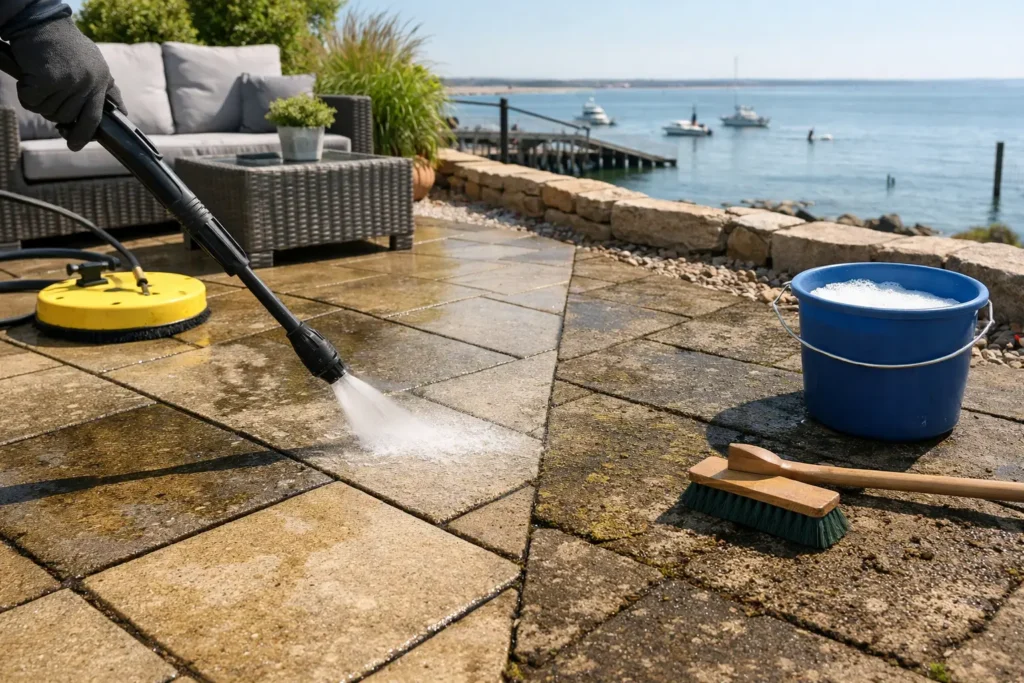
For a lightly soiled patio, a stiff outdoor brush, warm water, and a suitable patio cleaner may be enough. Work in manageable sections and rinse thoroughly. This method takes more effort, but it is often the lower-risk choice for older paving and delicate stone.
For heavier green growth and ingrained dirt, jet washing can produce much more noticeable results. The key is using controlled pressure, holding the nozzle at a sensible distance, and keeping it moving. A concentrated jet held too close can etch concrete, roughen sandstone, or create pale lines that stand out once the patio dries.
Avoid assuming that more pressure means a better clean. A patio should look consistently clean, not stripped or scarred. Experienced cleaning teams adjust their method to the surface and the condition of the paving rather than using one setting for every job.
Start With a Small Test Area
Before treating the whole patio, test the cleaning product or pressure washer in an inconspicuous corner. Let the surface dry before judging the result. Wet slabs can hide marks, changes in color, and uneven cleaning.
This is particularly useful with natural stone, where the surface can vary from slab to slab. It is also wise to protect nearby doors, painted fences, rendered walls, and planting beds from splashback. Cleaning runoff can carry dirt and detergent into places where it is difficult to rinse away.
Be Careful With Chemicals
Patio cleaners can be effective against algae, moss, and organic staining, but the product must be suitable for the paving. Acid-based cleaners are not a general-purpose answer. They can damage or discolor some stones, affect mortar joints, and harm nearby plants if used carelessly.
Use the product according to its directions, never mix chemicals, and keep children and pets away until the area has been properly rinsed and is dry. If you are unsure what the slabs are made from, a professional assessment is safer than experimenting with strong treatments.
What Professional Patio Cleaning Can Do Better
DIY cleaning is practical for a small patio with light surface dirt. It becomes less appealing when the area is large, badly stained, slippery, or surrounded by surfaces that could be affected by overspray. It can also be difficult to get even results with a domestic pressure washer, particularly on textured slabs.
Professional patio cleaning combines suitable equipment with a more measured approach. The job is not simply about blasting dirt away. It involves assessing the paving, selecting the appropriate pressure and cleaning treatment, managing runoff, and cleaning edges and hard-to-reach areas properly.
A surface cleaner can be useful on broad, level patios because it helps produce a more even finish than a narrow jet lance. Detailed work around steps, walls, and corners may still need a different technique. Where algae is the main issue, a follow-up treatment can help slow its return after the patio has been cleaned.
There are trade-offs. Pressure cleaning can reveal faded areas, weak jointing, or old repairs that had been hidden by grime. That is not necessarily bad news. Seeing the true condition of the patio gives you the chance to carry out repairs before water gets beneath loose slabs or weeds gain more space to grow.
At Essex Exterior Cleaning, patio and driveway cleaning is carried out with the same practical focus as every exterior service: clear visible results, careful treatment of the property, and dependable communication. Fully insured work and a free re-clean promise provide extra reassurance when you want the patio cleaned properly without adding another demanding weekend job to your list.
Keeping a Clean Patio Looking Better for Longer
A freshly cleaned patio needs simple ongoing care, not constant hard work. Sweep it regularly, especially in fall when wet leaves can stain and trap moisture. Move furniture and planters occasionally so water and debris do not collect underneath them. Trim back overhanging plants where possible to improve airflow and allow the paving to dry after rain.
Promptly remove spills from barbecues, pots, and bird feeders. Oil, rust, and organic stains are easier to deal with before they settle into the surface. If you notice green growth returning in one shaded corner, treat that area early instead of waiting for it to spread across the whole patio.
How often your patio needs professional cleaning depends on its position and how it is used. A sunny, open patio may only need attention every year or two. A shaded area near trees, or a patio that gets damp through the winter, may benefit from an annual clean. The goal is not to clean more often than necessary. It is to prevent slippery buildup and preserve the appearance of a space you use and enjoy.
If your slabs are stained, slippery, or simply no longer doing your garden justice, arranging a professional clean can be a straightforward way to bring the area back into use. A clean patio gives you a safer surface now and a better starting point for the warmer days ahead.