
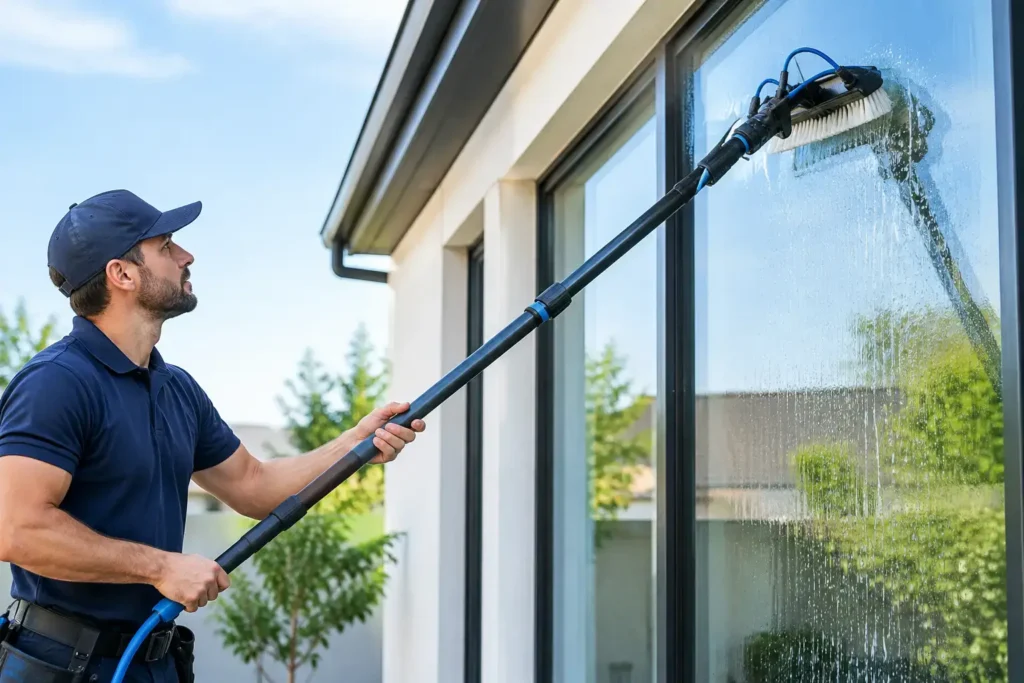
A second-story window can look simple to clean until a ladder is involved. For homeowners, the real question is not just whether the glass will come up spotless, but whether the work can be done without unnecessary risk. So, are water fed poles safe? When used by trained, insured professionals with the right equipment and site checks, they are one of the safest ways to clean many residential windows.
A water-fed pole allows the cleaner to work from the ground while reaching upper-floor glass, frames, and sills. That removes the need to place a ladder against much of the property, reducing risks to the cleaner, your windows, gutters, roofline, and landscaping. Like any professional cleaning method, though, safety depends on the conditions and how the equipment is used.
Are Water Fed Poles Safe on Residential Properties?
Water-fed poles are designed to improve safety by replacing many ladder-based jobs with ground-level work. A lightweight telescopic pole carries purified water to a soft brush at the top. The cleaner uses the brush to loosen dirt, then rinses the glass with pure water. Because the water has been filtered to remove minerals, it dries without leaving the usual spotting behind.
The main advantage is straightforward: the operator can usually keep both feet on stable ground. This is especially useful for upper windows, glass above conservatories, awkward side passages, and areas where a ladder would need to be placed on uneven paving or soft ground.
That does not mean every window can be cleaned in every condition with a pole. A professional should assess access, ground conditions, nearby hazards, the height of the property, and the condition of the windows before starting. The safest method is the one that suits the specific job, not simply the newest piece of equipment.
Why Working From the Ground Matters
Falls from height are one of the most serious risks in exterior maintenance. Even a short ladder job can become dangerous when the surface below is slippery, uneven, loose, or obstructed. Wet decking, gravel, sloped driveways, garden beds, and narrow paths all make safe ladder placement more difficult.
Water-fed poles substantially reduce the amount of work carried out at height. Instead of leaning a ladder against a wall, the cleaner can wash the glass, frames, and sills from below. That also means less chance of ladder feet damaging lawns or flower beds, and less pressure placed against fragile guttering, cladding, or painted surfaces.
For homeowners, there is another practical benefit. A ground-based system often causes less disruption around the property. There is less moving of ladders across patios and paths, fewer contact points against the building, and a lower chance of accidental marks from ladder standoffs.
The Safety Checks a Professional Should Make
Safe window cleaning begins before water reaches the glass. The cleaner should walk around the property, identify the windows to be cleaned, and look for hazards that could affect the work.
Overhead electrical lines are the most important concern. Water-fed poles, particularly carbon-fiber models, must never be used close to overhead power lines. Carbon fiber can conduct electricity, and water can carry contaminants that increase risk. Purified water does not make electrical work safe. If a power line is nearby, the safest course may be to avoid that area entirely or arrange a different approach after proper assessment.
The ground also needs attention. A professional should check for loose slabs, slippery surfaces, holes, exposed drains, steep slopes, and obstacles that could catch a hose or cause a trip. Hoses should be managed carefully around walkways and entrances, particularly where residents, visitors, pets, or delivery drivers may pass.
Weather matters as well. Strong winds can make a long pole harder to control, while ice, heavy rain, or lightning can turn a routine visit into an unnecessary risk. A reliable cleaner will postpone or adjust the work when conditions are unsuitable rather than rush through a job.
Safe Equipment Makes a Difference
Not all water-fed pole setups are the same. Professional systems are selected to provide control, reach, and a clean result without putting undue strain on the operator or property.
Modern poles are generally light enough to handle safely when used correctly, but a pole becomes harder to manage as it extends. This is why experience matters. A trained cleaner knows how to control the brush, avoid striking window frames, maintain a secure position, and work without overreaching.
The brush itself should be soft and suitable for residential glass, frames, and sills. Used properly, it loosens everyday grime without scratching sound surfaces. However, no cleaner should scrub aggressively at damaged glass, flaking paint, loose seals, or fragile leaded windows. Where a property has older or delicate features, the cleaning approach should be adjusted accordingly.
The purified water system also matters. Tap water can leave mineral residue as it dries, which is why professional pole cleaning uses filtered water. Clean water improves the finish, but it should still be controlled carefully to avoid overspray on open windows, ventilation points, or areas where water could create a slip hazard.
When a Water-Fed Pole May Not Be the Best Option
Water-fed poles are highly effective for most standard home window cleaning, but they are not the answer to every situation. Some windows have very limited access, deep recesses, obstructions, or delicate finishes that may call for traditional hand cleaning. Interiors, of course, require a different method altogether.
Windows with heavy construction residue, paint, silicone, or stubborn staining may also need specialist attention. A brush and purified water are excellent for regular maintenance, but they are not intended to remove every type of buildup. Trying to force a result can damage the glass or surrounding finishes.
There are also times when a cleaner may use both methods during the same visit. A water-fed pole can safely handle upper windows, while traditional tools may be better for a ground-floor window behind a gate, a small pane beneath an overhang, or a detail area that needs closer access. This is not a compromise. It is good judgment.
What Homeowners Can Do Before the Cleaner Arrives
You do not need to prepare extensively, but a few simple steps make the visit safer and smoother. Keep gates unlocked if access has been agreed, move fragile garden items away from the window area, and let the cleaner know about loose paving, drainage covers, or any known hazards in the yard.
It also helps to close windows fully and keep pets indoors while work is underway. If you have an outdoor electrical outlet, low-hanging cable, security camera, or unusual access issue, point it out before cleaning begins. Clear communication prevents surprises and helps protect your home.
If a cleaner cannot safely reach a window, they should tell you why. It is better to leave one difficult pane for another suitable method than take a risk with an unstable setup or work too close to an electrical hazard.
Choosing a Safe Local Window Cleaning Service
The best reassurance comes from choosing a company that treats safety and property care as part of the service, rather than an afterthought. Ask whether the work is fully insured, whether the cleaner uses the right method for the window, and how they handle challenging access or bad weather.
At Essex Exterior Cleaning, water-fed poles are used where they offer the safest and most effective result, alongside traditional methods where those are more appropriate. The aim is simple: clean windows properly while reducing avoidable risks around your home.
A clean exterior should never come at the expense of safety. When the equipment, conditions, and experience are right, water-fed poles offer a practical way to keep upper windows looking their best without turning a routine clean into a risky ladder job.