A green path may look like a minor cleaning issue, but after rain it can become one of the most hazardous surfaces around a home. To avoid slipping on mossy paths, it helps to treat the cause as well as the visible growth. Moss holds moisture against paving, reduces grip underfoot, and often points to shade, poor drainage, or a surface that needs regular care.
For homeowners, the risk is easy to underestimate. A delivery, a trip to the trash bin, or a walk to the car can end in a painful fall when a damp path has been left untreated. Acting early keeps access routes safer, improves curb appeal, and can help protect paving from more stubborn buildup over time.
Why Moss Makes Paths So Slippery
Moss has a soft, spongy texture that traps water. When it spreads across concrete, block paving, stone, or brick, it creates a slick layer between shoes and the solid surface below. It is particularly risky on slopes, steps, narrow side passages, and entrances that receive little direct sunlight.
Moss is not the only problem. Algae, mildew, wet leaves, soil, and organic debris can mix with it and form a greasy film. On textured paving, that growth settles into small gaps and can be difficult to remove with a quick sweep alone.
Paths on the north side of a house, beneath trees, or close to garden beds usually need more attention. In places with frequent damp weather, such as Canvey Island and nearby coastal areas, salt air and persistent moisture can also leave outside surfaces looking tired more quickly.
How to Avoid Slipping on Mossy Paths Before It Spreads
The safest approach is regular light maintenance rather than waiting until the path turns green. Sweep the surface often enough to remove leaves, mud, and loose debris, especially through fall and winter. This allows the path to dry sooner after rain and removes material that moss can grow on.
Look at where water sits after a shower. Puddles that remain for hours may indicate a blocked drain, a low area in the paving, or soil and debris preventing water from reaching the edge of the path. Clearing drainage channels and keeping gullies free-flowing will not solve every moss issue, but it reduces the damp conditions moss prefers.
Trim back overhanging shrubs and low branches where practical. More light and airflow can make a noticeable difference, particularly along side paths and patios. There is a balance to strike: shade can be welcome in summer, but dense planting that keeps a walkway wet all day is likely to create an ongoing cleaning job.
It is also worth checking nearby gutters and downpipes. Overflowing guttering can repeatedly soak the same section of paving, encouraging moss and staining. If water is running down an exterior wall or splashing beside the entrance, address that issue before cleaning the path or the growth will return sooner.
Clean Moss Carefully and Thoroughly
Choose a dry day where possible and keep children, pets, and visitors away from the area while it is being cleaned. Start by removing loose moss with a stiff outdoor brush or scraper. Work steadily rather than forcing the tool into joints, especially on older block paving where aggressive scraping may dislodge sand.
A suitable exterior cleaner can help loosen the remaining green growth. Always follow the product instructions, test a small inconspicuous area first, and protect nearby plants as directed. Household chemicals are not automatically safe or effective for every surface. Some can discolor natural stone, damage vegetation, or leave residues that create a different slip hazard.
Once the treatment has had time to work, rinse the area thoroughly if the product instructions call for it. Do not assume a path is safe immediately because it looks cleaner. Wet paving can remain slippery until it dries, and loosened moss may need a second sweep to remove it fully.
Pressure washing can produce excellent visible results, but it is not a one-size-fits-all solution. Used correctly, it can lift ingrained moss, algae, and dirt from durable paving. Used too aggressively, it can damage soft stone, chip concrete, strip jointing sand from block paving, or force water beneath loose slabs. The wrong pressure or nozzle can also leave an uneven finish that attracts dirt more readily.
For heavily soiled paths, uneven paving, or surfaces close to doors and drainage points, professional jet washing is often the safer option. An experienced exterior cleaning team can assess the material, select the appropriate method, and manage runoff without turning a straightforward cleaning job into a repair project.
Make the Walking Surface Safer While You Plan Cleaning
If moss is already making a route unsafe, do not wait for a full cleaning day before reducing the risk. Use another entrance where possible, particularly during rain or frost. Let family members and regular visitors know which section is slippery, and keep the route clear of hoses, pots, bins, and other trip hazards.
For steps or sloping paths, a temporary warning is sensible until the surface is cleaned and dry. A sturdy handrail, where appropriate, adds a useful layer of security for older residents, children, and anyone carrying groceries. If slabs rock, joints have opened, or the path has a significant slope toward the house, cleaning alone may not be enough. Those are signs that repair or drainage improvements should be considered.
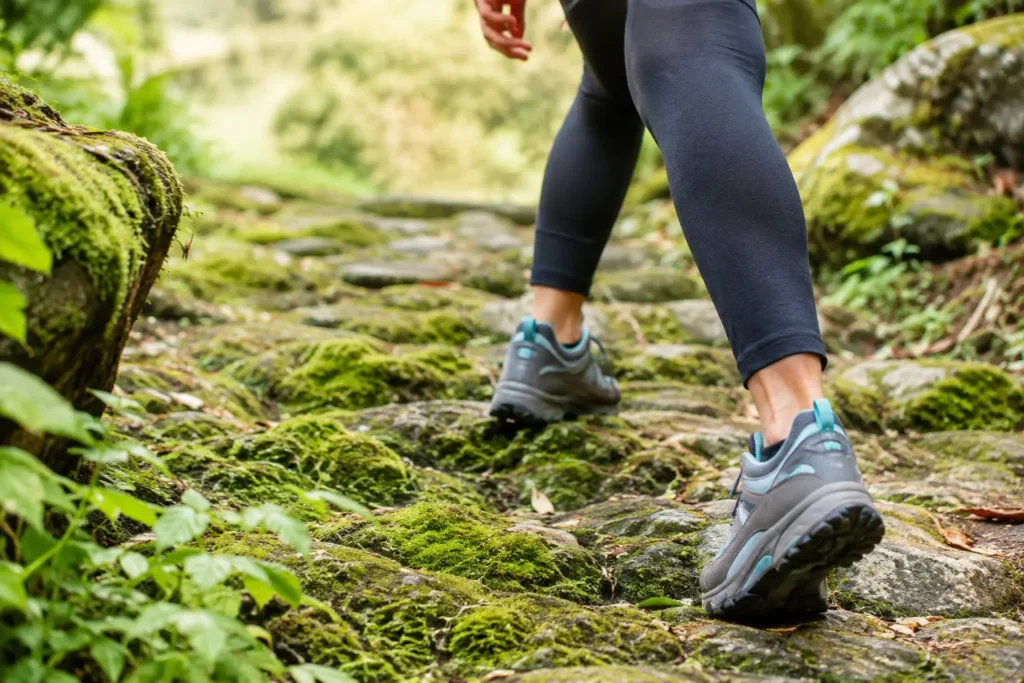
Footwear matters too. Smooth-soled slippers, dress shoes, and worn-out trainers offer very little grip on wet moss. Shoes or boots with a defined tread are a better choice for yard tasks and wet-weather trips outside. This is a simple measure, but it should support regular surface care, not replace it.
Prevent Moss From Returning So Quickly
A freshly cleaned path will still need attention. Moss spores are carried by wind and rain, so no cleaning method can promise that growth will never return. The goal is to slow it down and stop it from building into a slippery layer again.
After cleaning, make sweeping part of the normal exterior routine. A quick pass every week or two during wet seasons is easier than tackling months of buildup. Remove fallen leaves promptly, especially where they collect along edges and in joints. Keep drains, gutter outlets, and paving channels clear so water has somewhere to go.
If your path is block paved, inspect the joints once clean and dry. Missing jointing material can allow movement, create places for weeds and moss to take hold, and make the surface harder to maintain. Re-sanding may be needed after a deep clean, but the correct material and method depend on the paving type.
Some homeowners consider a surface treatment or sealant after cleaning. This can be useful on certain materials, but it depends on the age and condition of the paving. A sealant applied to a damp, dirty, or unsuitable surface can trap problems rather than solve them. Natural stone and older paving often need a more careful approach, so ask for advice before applying anything permanent.
When It Is Time to Call a Professional
A light covering of moss on a flat patio may be manageable with routine cleaning. A path that is dark green, slippery after every shower, difficult to access, or close to delicate surfaces is a different job. The same applies if the problem keeps coming back despite cleaning, since drainage or overhanging vegetation may be contributing.
Essex Exterior Cleaning provides practical exterior cleaning for homeowners who want safer, cleaner paths without the hassle of managing equipment, runoff, and stubborn buildup themselves. A professional clean can restore the appearance of walkways, driveways, and patios while helping you stay on top of the conditions that allow moss to return.
Do not wait for a fall to make a mossy path a priority. Keep an eye on the spots that stay damp, deal with debris before it compacts, and arrange a proper clean when the surface no longer feels safe underfoot. A clear, dry route to your front door is a small part of home maintenance, but it makes a real difference every day.