A damp patch on an inside wall rarely starts where you first notice it. In many homes, the real problem is outside, and one of the most common questions we hear is: can blocked gutters cause damp? Yes, they can, and often more quickly than homeowners expect.
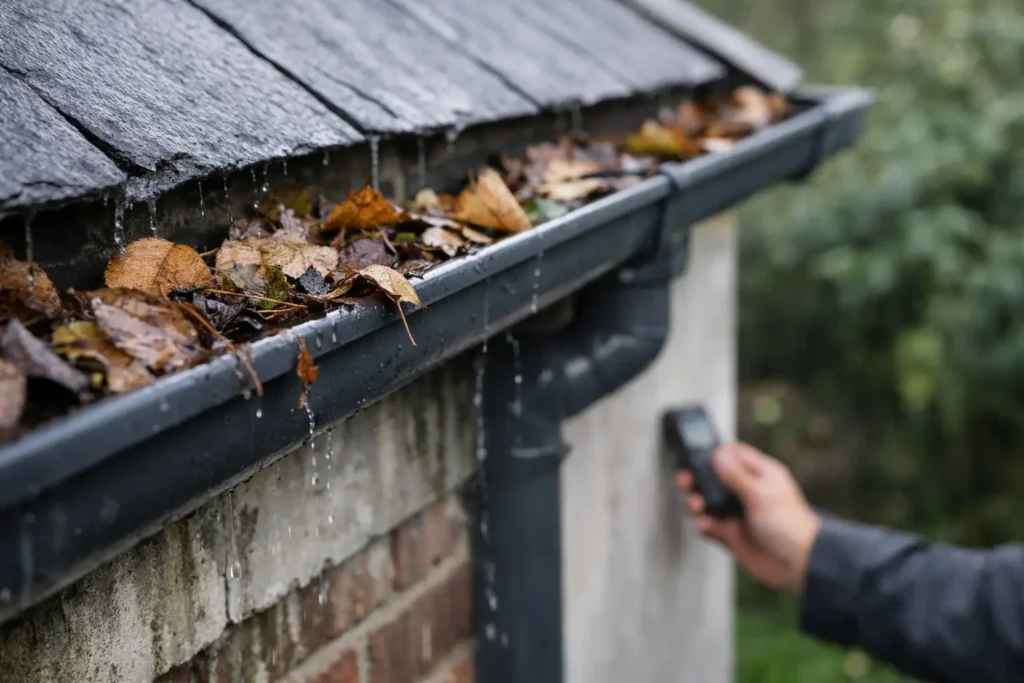
When gutters clog with leaves, moss, silt, and general debris, rainwater has nowhere to go. Instead of flowing safely into the downpipe and away from the house, it spills over the edge, runs down exterior walls, and starts soaking into areas that should stay dry. That can lead to staining, damaged masonry, wet insulation, timber issues, and internal damp patches that keep coming back.
Can blocked gutters cause damp around the home?
They can, but the exact damage depends on where the blockage is, how long it has been there, and how your property handles water. A minor blockage may only cause occasional overflow during heavy rain. A fully blocked run of guttering can send water down the same section of wall every time it rains, which is where bigger problems begin.
Gutters are there to control roof runoff. A lot of water comes off a roof in even a short downpour. If that volume is not directed into working downpipes, it will find the easiest path down the building. Brickwork, mortar joints, render, fascia boards, soffits, window frames, and the ground around the base of the house can all take the hit.
Over time, that repeated saturation can leave the outside of the property permanently wet for long periods. Once materials stay damp instead of drying properly between rainfalls, moisture starts moving inward.
How gutter blockages turn into damp problems
The main issue is not just the blockage itself. It is the repeated overflow and the way water is forced into places it should never reach.
If water spills over the front of the gutter, it often tracks down the wall face. That can penetrate weak pointing, hairline cracks, porous brick, and gaps around windows. If it spills behind the gutter, the problem can be worse. Water may run onto fascia boards, into the roof edge, or behind soffits, where it is less visible and more likely to cause rot before anyone notices.
Blocked downpipes create a similar problem. Even if the gutter looks only partly full, a jammed downpipe can cause water to back up across the whole run. In heavy rain, that can mean overflow at several points, not just one.
At ground level, constant overflow can also saturate the soil near the foundations. That does not always mean structural damage, but it can contribute to damp at the lower part of walls, especially if other issues are already present, such as bridged damp proof courses, raised flower beds, or poor drainage.
Signs the gutters may be causing damp
Homeowners often treat the symptom rather than the source. You repaint a wall, wipe off mold, or run a dehumidifier, only for the damp mark to return. If that sounds familiar, it is worth looking up before you look indoors.
Common signs include water spilling over the gutter edge in rain, dark streaks on exterior walls, green algae near the top of the wall, peeling paint around the roofline, and damp patches inside on upper walls or near chimney breasts. You may also notice dripping long after rain has stopped, which can mean water is trapped in debris rather than draining freely.
Another clue is seasonal timing. If damp problems get worse during fall and winter, blocked gutters are often part of the picture. Leaves, moss from the roof, and storm debris tend to build up at exactly the time when the weather is wettest.
Where damp usually shows up first
There is no single pattern, but some areas are more vulnerable than others. Upper-story damp near the ceiling line is a strong warning sign because rising damp does not usually appear there. If moisture is showing high up, guttering, roof edges, or flashing are more likely causes.
Around windows is another common trouble spot. Overflowing water can work into small gaps around frames, especially in older properties where seals and surrounding mortar are not in great shape.
At the lower part of the wall, the picture is less clear. Blocked gutters can contribute to low-level damp by dumping water at the base of the property, but low-level damp can also come from drainage issues, ground levels, or internal condensation. This is one of those cases where it depends. The guttering may be the whole problem, or it may be one part of a bigger moisture issue.
Can blocked gutters cause damp in every type of property?
Yes, but some homes are more at risk than others. Older homes with porous brickwork, worn mortar, timber features, or aging gutter brackets tend to show problems sooner. Properties exposed to driving rain also have less margin for error. If your house regularly takes wind and rain on one elevation, a blocked gutter on that side can cause faster damage than it would in a more sheltered spot.
Modern homes are not immune either. Cavity walls help, but they do not make a house waterproof. If water gets behind cladding, enters through roof edges, or keeps soaking one area over and over, damp can still develop.
Bungalows and extensions are also worth watching. Lower rooflines are often easier to ignore because they seem less risky than two-story guttering, but they collect just as much debris from nearby trees and can overflow directly onto walls, doors, and patios.
Why waiting usually makes it more expensive
A blocked gutter is usually a simple maintenance issue at first. Leave it long enough, and it becomes a repair issue.
Wet fascia boards can start to rot. Soffits can stain and soften. Brickwork can stay saturated for weeks, especially in colder months. Internally, you may end up paying for plaster repairs, paintwork, mold treatment, or joinery replacement, even though the original cause was just debris sitting in the gutter.
There is also the access problem. Once water damage spreads into roof edges or upper walls, sorting it out safely is no longer a quick DIY check for most homeowners. That is why regular gutter cleaning is far cheaper than dealing with damp after the fact.
What to do if you think gutters are the cause
First, check during or just after rainfall if it is safe to do so from ground level. Overflowing corners, water running down walls, and gutters that sag under weight are all signs that attention is needed. You do not need to see a full waterfall to have a problem. Even a steady trickle in the wrong place can create damp over time.
Next, look for buildup. Plants growing in gutters, visible moss, or joints packed with dirt are all clear warning signs. If the downpipe is blocked, you may hear water gurgling or see it spilling from a joint.
The right fix is not always just clearing debris. If brackets have pulled away, joints are leaking, or the fall is wrong, the system may still overflow after cleaning. A proper inspection should check flow, alignment, and condition, not just whether the gutter looks empty.
For many homeowners, the sensible option is to have the gutters cleaned and checked professionally, especially on taller properties or where access is awkward. A reliable exterior cleaning company can spot early signs of water damage while dealing with the blockage safely.
Preventing gutter-related damp
Prevention is straightforward, but it does need consistency. Most homes benefit from gutter clearing at least once or twice a year, with extra attention if there are trees nearby or a roof that drops moss. After storms, a visual check from the ground can catch fresh blockages before they become a bigger issue.
It also helps to keep an eye on the wider exterior. Clean gutters work best alongside clear downpipes, sound soffits and fascia boards, and a roof that is not shedding large amounts of debris. That is one reason homeowners often prefer one local provider to handle exterior upkeep as a whole rather than treating each issue separately.
If you live in places where wind-driven rain is common, including coastal areas such as Canvey Island and nearby parts of Essex, regular checks matter even more. When the weather is rough, small drainage issues show up quickly.
Blocked gutters are easy to put off because the damage is usually gradual at first. But damp has a habit of showing itself only after water has been going where it should not for quite a while. If your walls are staining, paint is peeling, or damp keeps returning, looking at the guttering early can save a lot of time, mess, and expense later.