A gutter can look clear from the ground and still be holding wet leaves, roof moss, silt, and debris around the downpipe outlet. That is why the choice between gutter vacuum versus hand cleaning matters more than many homeowners expect. Both methods can keep rainwater moving properly, but the best option depends on the condition of the gutter, access around the property, and whether a closer inspection is needed.
For homes across Canvey Island and the surrounding Essex area, regular gutter cleaning is a practical way to reduce the risk of overflowing water, damp patches, stained brickwork, and avoidable damage around fascias and foundations. The aim is not simply to remove what can be seen. It is to leave the gutter clear enough to do its job when heavy rain arrives.
How a gutter vacuum works
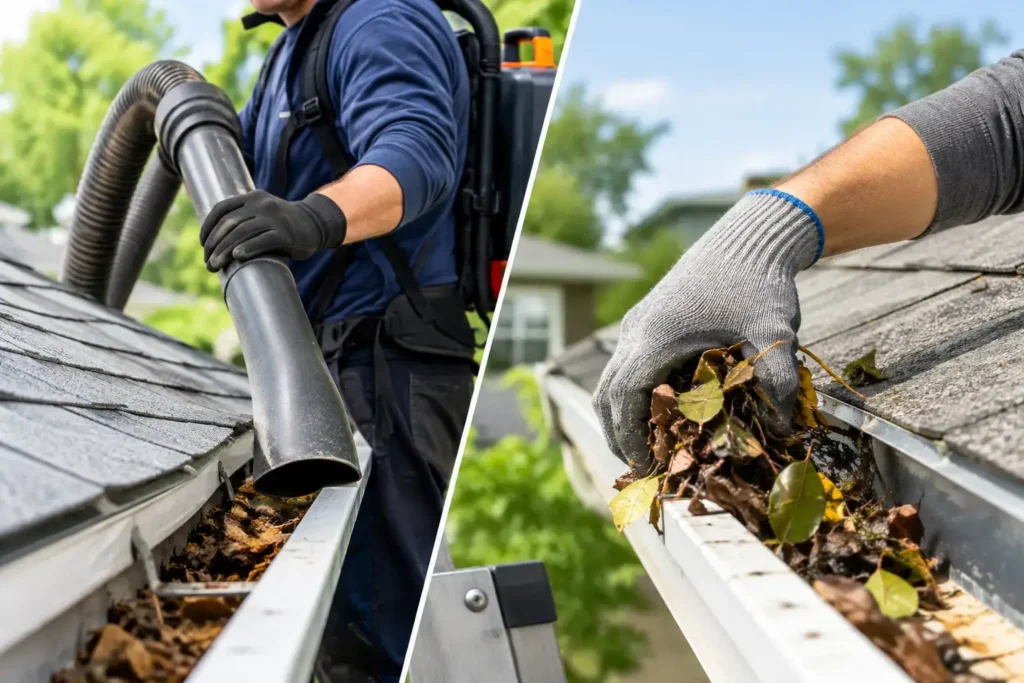
A gutter vacuum removes loose debris through a powerful suction system connected to long carbon-fiber poles. The operator works from ground level in most cases, guiding the pole along the gutter and using a camera or visual checks to confirm that debris has been removed.
This method is particularly effective for dry leaves, loose moss, small twigs, dirt, and the sludge that builds up over time. It allows a trained cleaner to reach standard residential gutters without repeatedly climbing ladders, which can make the service quicker and reduce disruption around the home.
For many properties, gutter vacuuming is an efficient maintenance option. It is especially useful where access is restricted by conservatories, landscaping, uneven ground, or narrow side passages. A vacuum system can often reach above these obstacles more easily than a ladder-based approach.
When hand cleaning is the better choice
Hand cleaning involves accessing the gutter directly, usually by ladder or another suitable access method, then removing debris by hand and checking the gutter channel closely. It remains a valuable method because it gives the cleaner a direct view and feel of what is inside the gutter.
This approach is often better when debris is tightly compacted, heavily saturated, or stuck behind gutter brackets. It can also be the right choice where plants have begun growing in the gutter, a downpipe outlet is packed solid, or a section of gutter has shifted out of position.
A hands-on clean makes it easier to spot concerns that suction alone may not reveal, such as cracked joints, loose clips, standing water caused by poor gutter alignment, or a damaged downpipe connection. Cleaning does not replace gutter repair, but identifying these issues early can help a homeowner arrange the right work before a minor fault becomes a larger problem.
Gutter vacuum versus hand cleaning: the key differences
The main difference is not that one method is always better. It is that each method is suited to a different type of job.
Gutter vacuuming is usually the more convenient option for routine clearing. It is fast, keeps the work largely at ground level, and handles everyday debris very well. For a home with normally maintained gutters and no sign of a serious blockage, it can produce excellent results with less time spent setting up ladders.
Hand cleaning is more detailed when the gutter needs a close inspection or contains stubborn material. If a gutter has been neglected for several years, is full of compacted moss, or has visible growth coming over the edge, direct access may be necessary to clear it properly.
The best professional service does not treat these as competing methods. A reliable cleaner assesses the property first and uses the method that gives the safest, cleanest outcome. In some cases, that means vacuuming the majority of the gutter and using hand cleaning only where a blocked outlet or compacted section needs extra attention.
Safety and access around your home
Gutters are often difficult to reach safely, particularly on two-story homes or properties with extensions, garages, sloping ground, and obstacles below the roofline. That is one reason homeowners should be cautious about attempting the job themselves.
A gutter vacuum can reduce the need for ladder work, but it does not remove the need for professional judgment. The equipment must be handled correctly, the ground must be assessed, and the cleaner needs to know when a closer check is required. A blocked downpipe, for example, may need more than suction from above.
Hand cleaning also has a place, but only when appropriate access can be achieved safely. Fully insured exterior cleaning professionals should choose the method based on the property rather than forcing every job into one approach. Safety should never be compromised simply to finish a job faster.
What affects the cost of gutter cleaning?
The cleaning method is only one part of the price. The size and height of the property, the amount of debris, access restrictions, the number of gutters and downpipes, and the condition of the system all influence the work involved.
A lightly soiled bungalow with clear access may take far less time than a larger home with a conservatory below the rear gutter and years of moss buildup. If gutters are overflowing or vegetation is visible, the job may require more detailed clearing and inspection.
Homeowners should be careful of quotes that focus only on a low starting price without explaining what is included. A proper service should be clear about whether downpipe outlets are checked, whether the cleaner can confirm debris has been removed, and what happens if an area needs additional attention.
Signs your gutters need more than routine vacuuming
Gutter vacuuming is excellent for regular maintenance, but there are clear signs that a more detailed hand-cleaning approach may be needed. These include water spilling over the gutter during rainfall, weeds or grass growing from the roofline, visible sagging, or debris packed tightly at the corners.
Damp marks on exterior walls can also point to an overflow issue, although the cause should always be assessed properly. Water may be escaping from a blocked gutter, a leaking joint, a faulty downpipe, or another maintenance problem.
If rainwater is not draining away, cleaning the gutter alone may not solve everything. The downpipe should be checked, along with the outlet where it connects. A thorough service looks at the route water takes, not just the debris sitting in the gutter channel.
How often should gutters be cleaned?
Most homes benefit from gutter cleaning at least once a year. Properties near mature trees, homes that collect roof moss, and houses exposed to frequent windblown debris may need attention twice yearly. Autumn is a common time for buildup, but spring cleaning can be just as useful after winter storms and seasonal growth.
Waiting until water is pouring over the edge is rarely the best approach. By then, debris may already be compacted, dampness may have affected surrounding surfaces, and the work can be more involved. Regular maintenance is generally simpler, more predictable, and kinder to the property.
For homeowners who want a dependable local service, Essex Exterior Cleaning can assess the access and condition of the gutters, then use the most suitable cleaning method for the job. Whether that involves a gutter vacuum, careful hand cleaning, or a combination of both, the priority should be clear flow, safe working, and visible results.
A clean gutter is easy to overlook when the weather is dry. Booking maintenance before the next prolonged spell of rain gives your home the best chance to direct water where it belongs – safely away from the roofline and walls.