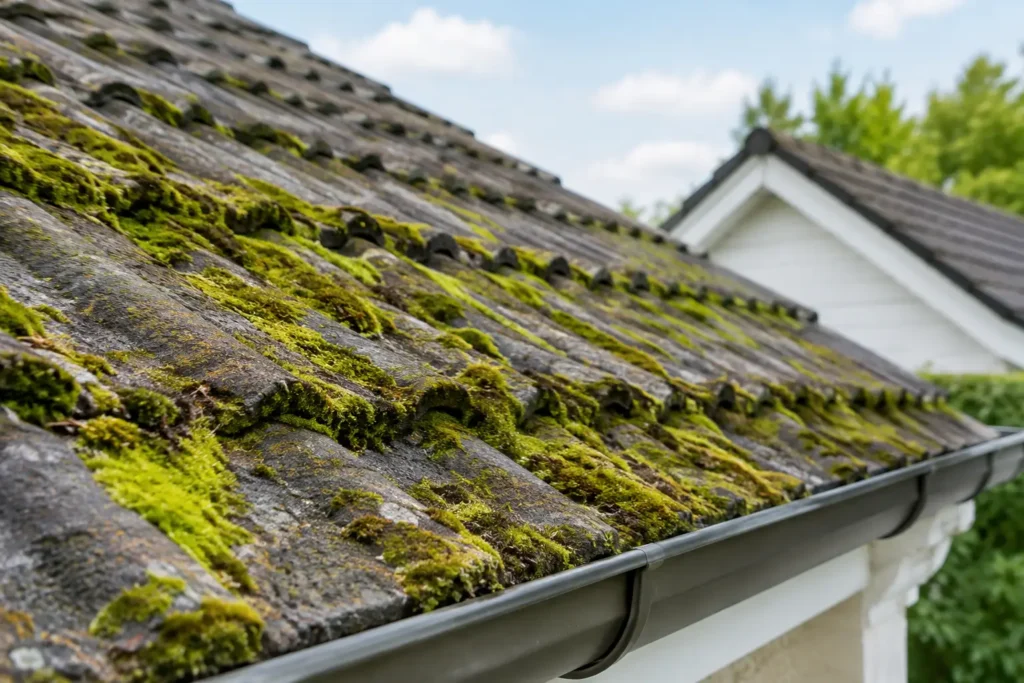
A green roof can make a home look older than it is, but appearance is not the only concern. Can moss damage roof tiles? Yes, particularly when it has been left to build up for years. Moss holds moisture against the roof surface, spreads beneath tile edges, and can contribute to broken, displaced, or leaking tiles over time.
For homeowners, the sensible approach is not to panic at the first small patch of moss. A little surface growth is different from a thick, established layer across the roof. The key is dealing with it before a simple cleaning job becomes a roof repair.
Can Moss Damage Roof Tiles Over Time?
Moss does not usually eat through a clay or concrete tile. The damage is more gradual and indirect. It grows in damp, shaded areas, often on north-facing roof slopes or beneath overhanging trees. As it spreads, its root-like structures grip the tile surface and collect rainwater, debris, and airborne dirt.
That trapped moisture keeps tiles wet for longer after rainfall. Over repeated wet and dry cycles, tiles can become more vulnerable to surface wear, especially older concrete tiles with a weathered finish. In colder conditions, water held around cracks and joints can freeze, expand, and make existing damage worse.
The larger issue is what happens at the overlaps between tiles. Thick moss can lift tile edges slightly or force its way into small gaps. Wind-driven rain can then reach areas designed to stay protected. This does not mean every mossy roof leaks, but it does raise the risk as growth becomes heavier.
Why Moss Causes More Than a Cosmetic Problem
A roof is designed to shed water quickly. Moss works against that by acting like a sponge. After rain, a clear roof dries relatively fast, while a moss-covered roof stays damp and carries extra weight for longer.
Moss can also break away in clumps and wash down into gutters. Once mixed with leaves, roof grit, and other debris, it can block downspouts and cause water to overflow. Overflowing gutters may lead to staining on walls, damp around fascia boards, or water collecting near the base of the property.
On tiled roofs, moss buildup may hide problems that need attention. A cracked tile, slipped tile, or damaged ridge line is much harder to spot beneath a thick green covering. Cleaning makes the roof easier to inspect and helps homeowners address small faults before they become costly water damage inside the home.
Not Every Green Mark Is Moss
Homeowners often use the word moss for several types of roof growth. Moss is usually thick, soft, and clumpy. Algae tends to show as dark streaks or broad green staining, while lichen forms flatter, crusty patches that may be white, gray, green, or yellow.
Each type has a slightly different effect. Algae is often more of a visual issue, although it still holds dirt and moisture. Lichen can bond firmly to tile surfaces and should be removed carefully. Moss is normally the most likely to create buildup around tile edges and in roof valleys.
The best cleaning method depends on the roof material, its age, the level of growth, and the condition of the tiles. That is why a quick look from ground level does not always tell the full story.
Signs It Is Time to Arrange Roof Cleaning
A small amount of growth does not always require immediate action, but it should be monitored. It is worth arranging a professional assessment when moss is visibly lifting at tile edges, collecting in valleys, or dropping into gutters after rain.
Other warning signs include gutters that keep blocking, damp patches in the loft, loose debris around downspouts, and tiles that look uneven from the ground. If vegetation is hanging over the roof, falling leaves and reduced sunlight will encourage moss to return more quickly.
Older roofs deserve extra care. Tiles may be more brittle, mortar around ridge tiles may have weakened, and previous repairs may not be obvious until the surface has been cleaned. A careful service should focus on protecting the roof rather than simply making it look clean for a few weeks.
Why High-Pressure Washing Can Be the Wrong Choice
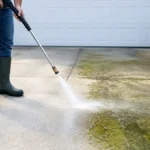
Many homeowners are tempted to use a pressure washer because it produces an instant visual result. On some roof types, however, high pressure can cause more harm than moss. It can crack fragile tiles, strip protective surface layers from concrete tiles, force water beneath overlaps, and dislodge mortar or flashing.
There is also the safety issue. A wet, mossy roof is extremely slippery, and walking on tiles can crack them even before cleaning begins. Roof work should not be treated like a standard patio-cleaning job.
A professional cleaner will choose a method suited to the property. This may involve careful manual moss removal, low-pressure treatment, controlled rinsing where appropriate, and gutter clearing afterward. The goal is to remove growth without compromising the roof’s ability to keep water out.
A Safer Way to Remove Moss From Roof Tiles
The first step is a visual check of the roof, gutters, valleys, and accessible edges. This helps identify loose tiles, damaged mortar, or areas where heavy growth is causing a concern. Any obvious repair issue should be handled before or alongside cleaning.
For most tiled roofs, gentle removal is the safest starting point. Moss is carefully lifted away rather than blasted off at high pressure. Remaining spores and staining may then be treated with a roof-safe solution designed to slow regrowth. Results can continue to improve over time as weathering removes the last traces of dead organic material.
Gutters and downspouts should be cleared as part of the process. There is little benefit in cleaning a roof if the removed debris is left to form a blockage below. A proper clean leaves the roof clearer, the drainage route working, and the exterior of the home looking more cared for.
How to Keep Moss From Returning Quickly
No roof can be guaranteed to stay completely moss-free forever, especially in shaded, coastal, or tree-lined areas. But a few practical measures can make a real difference. Keeping gutters clear prevents standing water and debris buildup around the roofline. Trimming back branches where appropriate allows more light and airflow onto the tiles.
Regular exterior maintenance also helps catch early growth before it takes hold. A roof does not need aggressive cleaning every year, but periodic checks are worthwhile. The right schedule depends on shade, nearby trees, roof age, and how quickly moss returns after treatment.
For homes in Canvey Island and nearby Essex towns, wind, rain, salt air, and seasonal leaf fall can all add to exterior buildup. Using an insured local team with experience cleaning roof surfaces means the work can be planned around the condition of the property, not a one-size-fits-all approach.
When Cleaning Is Not Enough
Roof cleaning is maintenance, not a substitute for repairs. If tiles are cracked, slipping, or missing, cleaning alone will not solve the problem. The same applies if there are signs of a failed underlayment, damaged flashing, or a leak inside the property.
A reputable cleaner should be clear about that distinction. Removing moss can reveal defects, which is useful, but the defects must then be repaired by the right professional. It is better to know where the roof stands than to cover a growing problem with a temporary cosmetic fix.
A clean roof is easier to maintain, easier to inspect, and more likely to drain as intended. If moss is beginning to collect around your tiles or fill your gutters, dealing with it carefully now is a practical way to protect the home you have worked hard to maintain.