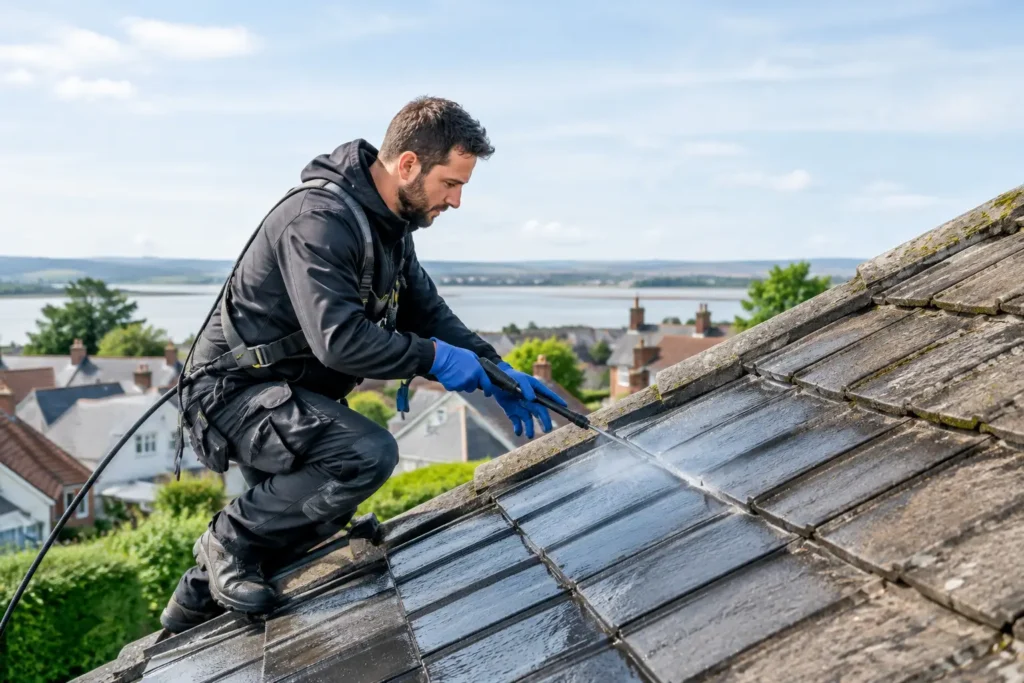
A roof can look tired long before it has reached the end of its working life. Mossy tiles, dark algae streaks, and blocked gutters can make a well-kept home look neglected, while holding moisture against surfaces that need to dry properly. The best roof treatments are not about making a roof look artificially new. They are about removing damaging growth, protecting suitable materials, and avoiding cleaning methods that can cause expensive problems.
For homeowners, the right approach depends on the roof’s age, tile type, condition, and the amount of moss or staining present. A treatment that suits one property may be the wrong choice for another, which is why a careful assessment should always come before any work begins.
What a roof treatment should achieve
A worthwhile treatment should improve the appearance of the roof while supporting its long-term condition. Moss and algae are common in damp, shaded areas and on roofs beneath overhanging trees. They can retain water, fall into gutters, and contribute to blockages. Heavy moss can also lift slightly at tile edges as it grows, although it is rarely the only cause of a roof leak.
The goal is to remove excess organic growth without damaging tiles, flashing, ridge mortar, or the protective surface of the roof. This is especially important on older properties, where tiles may be more porous or brittle than they appear from ground level.
A good contractor will also consider where the runoff goes. Treatments should be applied with care around gardens, ponds, drainage, and neighboring properties. Clean results matter, but so does protecting the rest of the property.
Best roof treatments for moss and algae
Manual moss removal and biocide treatment
For many tiled roofs, careful manual moss removal followed by a professional biocide treatment is one of the best options. Moss is removed using appropriate hand tools, rather than aggressively blasting the roof with high pressure. The remaining surface is then treated to deal with spores and algae that are not always visible.
The treatment works gradually, particularly on stubborn lichen and dark staining. Rain helps carry away the dead organic matter over time, so the roof may continue to improve in the weeks and months after the visit. This is a practical choice for homeowners who want a cleaner roof and a slower return of moss without unnecessary force being used on the tiles.
It is not an instant transformation in every case. A heavily stained roof can take time to brighten, and weather conditions affect how quickly the treatment works. That slower process is often preferable to risking damage for a same-day result.
Soft washing for surface staining
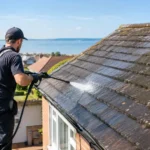
Soft washing uses low-pressure application and specialist cleaning solutions to address algae, mildew, and biological staining. It is different from pressure washing. The emphasis is on the cleaning solution doing the work, rather than water pressure stripping the surface.
This can be suitable where a roof has widespread black algae streaks or green growth but does not need extensive manual scraping. It needs to be carried out by someone who understands roof materials, dilution rates, runoff control, and safe access. Using too much product, or applying the wrong chemical, can harm surrounding plants and leave uneven results.
Soft washing is often paired with gutter clearing. There is little value in removing roof debris if the gutters below are already full of moss, leaves, and sediment.
Roof coatings for sound, suitable roofs
Roof coatings are often marketed as a quick way to refresh faded tiles and improve water resistance. In the right circumstances, a professionally applied coating can improve the appearance of a roof and provide an additional protective layer. However, it is not automatically one of the best roof treatments for every home.
A coating should only be considered after the roof has been cleaned, allowed to dry, and checked for damaged tiles, loose ridge materials, or underlying defects. Coating over moss, flaking surfaces, or unresolved leaks is a cosmetic shortcut that can hide problems instead of fixing them.
Older, porous tiles may need a different solution, and some roofs should simply be cleaned and maintained rather than coated. If a contractor promises that every roof needs a coating, it is sensible to ask why and to request a clear explanation of the preparation work involved.
Water-repellent sealants
A breathable water-repellent sealant may help reduce moisture absorption on certain tile and masonry surfaces. The word “breathable” matters. Roof materials need to release moisture rather than trapping it beneath a hard, non-breathable layer.
As with coatings, sealants are not a substitute for repairs. Cracked tiles, failed flashing, and worn mortar need proper attention first. A sealant may offer value on a sound roof with a specific moisture-related issue, but it should not be sold as a cure-all.
Treatments to approach with caution
High-pressure roof cleaning is the method homeowners should question most carefully. Powerful pressure can dislodge tiles, damage pointing, remove protective finishes, and force water beneath the roof covering. It can also create a mess in gutters and downpipes if debris is not managed properly.
Some newer, durable roof tiles may tolerate controlled pressure cleaning in skilled hands, but that does not make it the default choice. The age and construction of the roof should decide the method, not the equipment a contractor happens to have available.
Avoid painting over a dirty roof, using household bleach without proper controls, or walking on fragile tiles without appropriate safety measures. These approaches can turn a maintenance job into a repair bill. Any roof work should be fully insured, with clear attention to safe access and protection of the property below.
How to choose the right treatment for your roof
Start with the condition of the roof, not its appearance from the street. A few patches of moss on otherwise sound tiles may only need gentle removal and treatment. Thick growth, persistent staining, loose tiles, or recurring gutter blockages call for a more detailed inspection.
The roof’s setting matters too. Homes close to trees, shaded by neighboring buildings, or exposed to coastal weather may need more regular maintenance. In areas such as Canvey Island and Southend-on-Sea, wind-driven rain and salt-laden air can add to the wear on exterior surfaces, making routine checks worthwhile.
It also helps to distinguish cleaning from repair. Cleaning can remove growth and improve presentation, but it cannot fix a broken tile, failed underlay, or damaged flashing. A dependable provider will point out visible concerns rather than treating over them.
Keep the result looking better for longer
Once a roof has been cleaned or treated, simple maintenance can make a real difference. Keep gutters clear so water can flow freely away from the roofline. Trim back branches where practical to reduce shade and leaf fall. Check for slipped tiles after severe weather, especially around ridge lines, valleys, and chimney areas.
There is no need to treat a roof every year simply because it has a few marks. Over-cleaning can be as unhelpful as neglect. Instead, arrange a visual check when growth becomes noticeable or when gutters begin filling unusually quickly. Regular exterior maintenance is usually more cost-effective than waiting until buildup becomes heavy.
At Essex Exterior Cleaning, roof cleaning is approached with the same care as gutter, driveway, and exterior surface work: use the method that suits the material, protect the property, and leave a visible improvement without cutting corners.
The best next step is not to choose the strongest treatment. It is to choose a careful, insured approach that respects the condition of your roof and gives it the attention it actually needs.