An upstairs window can look like a simple weekend job until you find yourself stretching from a ladder, balancing a bucket, and trying not to drip cleaner down the wall. Knowing how to clean upstairs windows safely starts with one rule: a spotless pane is never worth a fall.
For many homeowners, the safest choice is to clean upper-floor glass from the ground using the right equipment. Where that is not practical, the job needs an honest assessment of access, weather, window type, and your confidence working at height. A few careful decisions protect both you and your property.
Start With the Safest Cleaning Method
Before bringing out a ladder, check whether your upstairs windows can be reached from inside. Some modern windows tilt inward, while others have opening sections that allow you to clean the exterior glass safely from indoors. Follow the manufacturer’s instructions and avoid forcing hinges or catches that do not move freely.
If interior access is not possible, a water-fed pole is usually the best option for cleaning second-story windows from ground level. These extendable poles use a soft brush and purified water to wash the glass, frames, and sills without leaving the residue that can cause streaks. The water dries clear, so there is no need to lean out of a window or climb a ladder for routine cleaning.
A traditional squeegee and bucket can still give excellent results, but it is best suited to windows that are safely within reach. It becomes less practical once you need to work high above ground, especially if the ground below is uneven or crowded with garden furniture, walls, or planting beds.
How to Clean Upstairs Windows Safely From the Ground
A water-fed pole makes the process straightforward, but good preparation still matters. Move vehicles, outdoor furniture, plant pots, and anything else that could be damaged by drips or falling debris. Close nearby windows and doors, particularly if the seals are worn or the window has trickle vents.
Choose a calm, dry day. Strong wind makes an extended pole harder to control and can blow water onto walls, open windows, or neighboring property. Freezing conditions are also a poor time to clean because wet paths, decks, and driveways can become slippery.
Begin by rinsing loose dust and cobwebs from the frame. Then brush the top frame, side frames, sill, and glass with steady overlapping strokes. Work from the top down so dirty water does not run over areas you have already cleaned. Give the glass a final rinse with purified water and allow it to air dry.
Do not rush the final rinse. Most spotting happens when dirt from the frame is left behind or when regular tap water dries on the glass. If you are using a pole-and-brush system connected to a tank or filtration unit, use purified water for the final stage rather than household hose water.
When a Ladder Is Not the Right Answer
Ladders are useful tools, but they are not a default solution for second-story window cleaning. The risk rises quickly when you need to overreach, carry equipment, work alone, or position the ladder on soft ground. A short task can become unsafe in a moment if the ladder shifts or you lose your balance while focusing on the glass.
Never place a ladder on loose gravel, wet grass, decking, sloped ground, or a driveway with an uneven surface. Do not rest it against gutters, fragile cladding, downspouts, or window glass. Gutters are designed to carry rainwater, not a person’s weight, and they can bend or pull away from the fascia.
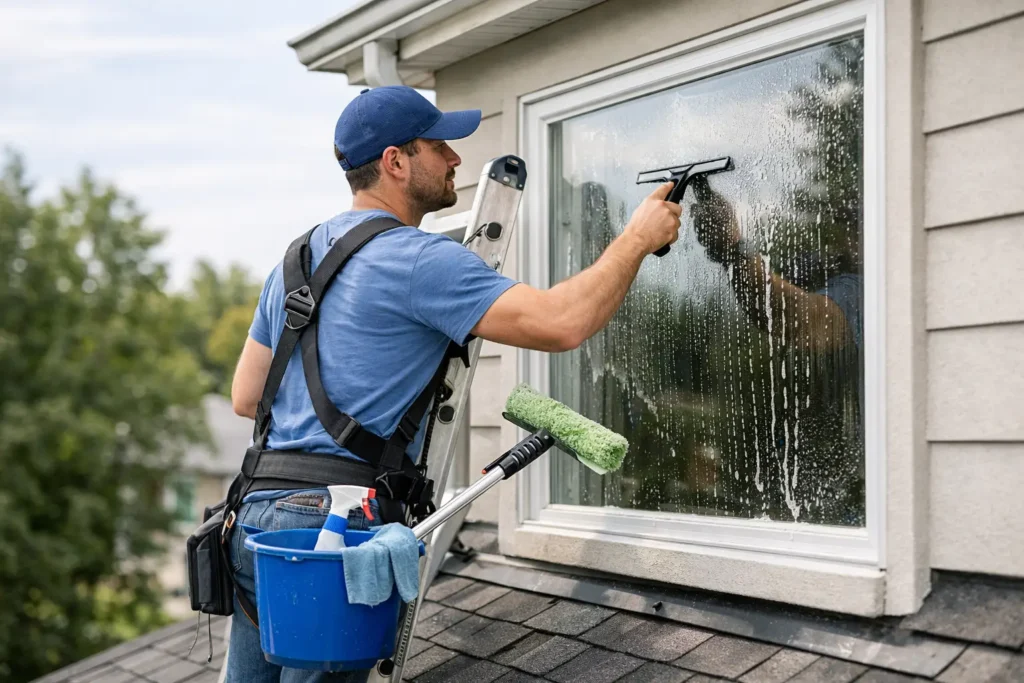
If you must use a ladder for a small, accessible area, inspect it first for bent rails, loose feet, damaged rungs, or worn locking mechanisms. Position it on firm, level ground and maintain three points of contact while climbing. Keep your belt buckle between the ladder rails – if you have to lean sideways to reach the window, climb down and reposition it.
Avoid carrying a bucket while climbing. A secure tool belt or a small container attached after you are in position is safer, but the better answer is often to use a pole system instead. You should also have another adult nearby to steady the ladder base and respond if something goes wrong. Even then, a helper does not make a poor setup safe.
Do Not Lean Out of an Upstairs Window
Cleaning from inside can be safe only if you can reach the exterior surface without putting your upper body through the opening. Leaning out to reach a corner changes your center of balance and can lead to a serious fall, particularly on smooth flooring or when the sill is damp.
Use a stable step stool only for a small increase in height inside the room, and never stand on a chair, windowsill, radiator, bed, or stack of books. Keep children and pets out of the room while the window is open. If the glass is beyond a comfortable reach, leave it for a ground-based pole or a professional cleaner.
This is especially relevant with older sash windows, narrow openings, or windows above extensions and conservatories. The view from indoors can make the job look manageable, but the outside drop and awkward angle tell a different story.
Use Cleaning Products That Will Not Damage Glass or Frames
For light dirt, purified water and a soft brush are often enough. For inside glass or accessible exterior panes, a small amount of mild dish soap in warm water works well. Use a microfiber cloth or quality squeegee, then dry edges with a clean lint-free towel.
Avoid abrasive pads, scouring powders, and harsh solvents. These can scratch glass, dull uPVC frames, strip painted timber, or damage window seals. Strong chemicals may also stain render, brickwork, decking, and plants below the window.
Pressure washers are not suitable for windows. Even at a lower setting, the force can drive water past seals, crack old glazing, damage putty, or loosen trim. A gentle brush and rinse is slower than blasting the surface, but it is far safer for the window and the surrounding exterior.
Check the Window While You Clean
Upper-floor windows are easy to ignore until the dirt becomes obvious. Regular cleaning gives you a chance to spot maintenance issues early, before rain and wind make them worse. Look for cracked seals, peeling paint, loose trim, damaged putty, leaking joints, or mold around the frame.
Pay attention to the gutters above the window as well. Overflowing gutters can leave dark trails on glass and walls, while repeated water exposure may lead to staining or damp problems around the frame. Cleaning the glass without dealing with a blocked gutter can mean the window looks dirty again after the next heavy rain.
If you notice a cracked pane, loose exterior trim, or water entering the property, stop cleaning that area. These issues need repair before more water is applied.
Know When to Call a Professional
There is no prize for taking on an elevated cleaning job that does not feel safe. Professional window cleaners use water-fed poles to reach upper-floor windows from the ground in many homes, reducing the need for ladder work while delivering a clear finish on glass, frames, and sills.
Calling a professional is particularly sensible when windows sit above a conservatory, sloped roof, extension, basement stairwell, or restricted side passage. It also makes sense when access is blocked by landscaping, when glass has heavy buildup, or when you want the gutters, soffits, fascias, or solar panels cleaned at the same time.
For homeowners in Canvey Island and nearby Essex towns, Essex Exterior Cleaning provides fully insured exterior cleaning with practical access methods suited to the property. A regular service can keep upper windows looking presentable without turning a difficult height job into a recurring concern.
Clean upstairs windows improve the light inside your home and the appearance outside it, but safe access always comes first. If the work requires stretching, balancing, or taking chances, step back and choose the method that keeps both feet firmly on the ground.