
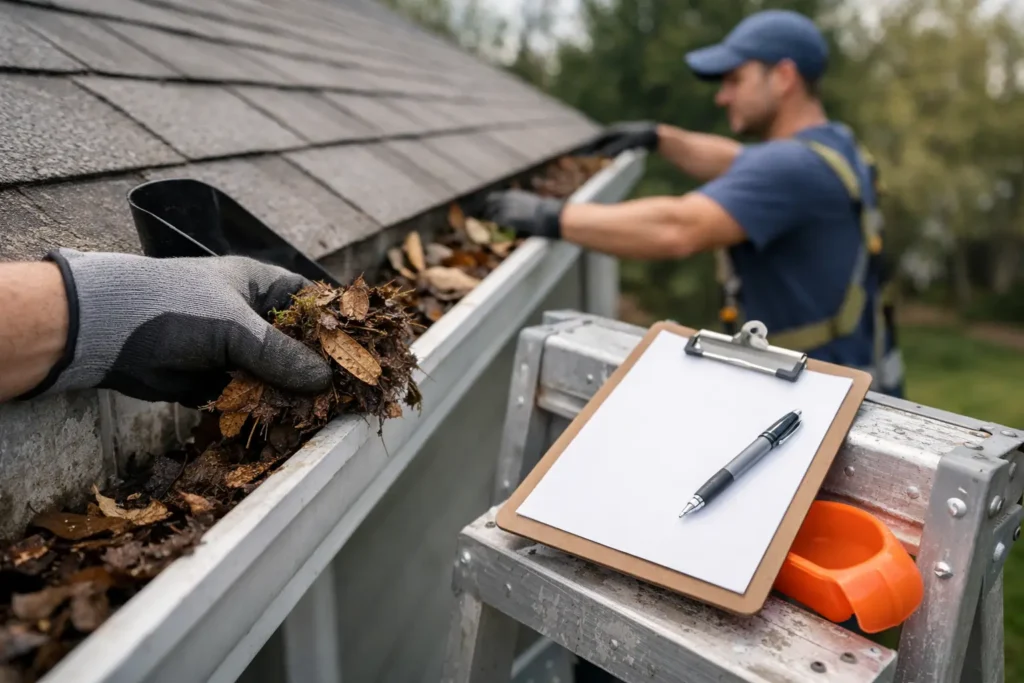
A gutter can look harmless from ground level while holding enough wet leaves, moss, and roof grit to send rainwater over the edge. This gutter clearing checklist for homeowners helps you spot trouble early, decide what you can safely handle, and know when professional help is the sensible option.
Blocked gutters are more than an appearance issue. Water that cannot reach the downspout can run down exterior walls, soak fascia boards, stain brickwork, flood paths, and collect around the foundation. In places with frequent wind and rain, such as Canvey Island and nearby Essex towns, a small buildup can become a bigger problem quickly.
Start With a Safe Ground-Level Check
Before bringing out a ladder, walk around the property after rain or inspect the gutters with binoculars from a clear position on the ground. Look for water spilling over an edge, dark streaks on walls, sagging sections of gutter, weeds growing from the channel, and downspouts that appear to be dripping poorly.
Also look at the area below each downspout. Persistent puddles, washed-out soil, or damp patches near the house may point to a blockage or a downspout that is sending water where it should not go. This first check is useful because it tells you whether the issue is likely limited to one section or affecting the whole system.
If your gutters are high, the ground is uneven, or you cannot see the roofline clearly, do not guess. Working at height is where a straightforward maintenance task can become risky.
Gather the Right Equipment
For a low, accessible single-story gutter, basic equipment is usually enough. Wear sturdy shoes with grip, waterproof gloves, eye protection, and clothing you do not mind getting dirty. A bucket or garden bag, a small plastic scoop, a hose, and a stable ladder are practical essentials.
Avoid resting a ladder directly on the gutter itself. The pressure can dent or loosen the gutter, particularly where brackets have already been weakened by the weight of wet debris. Use a properly positioned ladder on level ground, and have someone steady it where possible.
Do not work in rain, strong wind, icy conditions, or poor light. Wet leaves make surfaces slippery, and rushing to finish before dark is rarely worth the risk. If the property has a steep roof, multiple stories, conservatory roofing, or difficult access, an insured gutter cleaning service is the safer choice.
Gutter Clearing Checklist for Homeowners
Once access is safe, work methodically rather than clearing only the section you can see. Begin at the downspout end and remove loose debris by hand or with a scoop. Place leaves, moss, twigs, and compacted roof grit into your bucket instead of dropping it onto patios or flower beds.
Use this checklist as you go:
- Remove leaves, moss, twigs, and silt from the full length of each gutter.
- Clear debris around every downspout opening, where blockages often start.
- Check for standing water after the debris has been removed.
- Inspect gutter joints, end caps, brackets, and corners for leaks or movement.
- Make sure downspouts are firmly attached and directing water away from the home.
- Rinse the system with a hose, using a gentle flow to test drainage.
- Clear any debris that lands on paths, driveways, or garden areas below.
Do not use a pressure washer from a ladder. The force can push debris farther into a downspout, damage seals, or throw you off balance. A normal hose is generally enough for testing water flow once the main debris is gone.
Test Every Downspout
A gutter can look clean but still fail because the downspout is blocked. Run water into the gutter at the end furthest from the downspout and watch for a steady flow at the outlet. If water backs up, trickles slowly, or spills from a joint, stop and investigate before assuming the gutter itself is the problem.
Minor clogs close to the top can sometimes be loosened carefully with a hose. For a deeper blockage, disconnecting a lower section may help, but only if you can do so safely and refit it securely. Never force a metal rod or sharp tool into the downspout. It may puncture the pipe or separate joints that were already under strain.
Pay attention to where the water finishes. Downspouts should lead away from the building, not toward a wall, patio door, or foundation. An extension or properly positioned drain connection can make a meaningful difference where rainwater repeatedly pools close to the house.
Inspect the Gutter and Roofline While It Is Clear
Clearing debris gives you a chance to spot faults that are often hidden by leaves. Look along the gutter line for dips where water collects, loose brackets, rust, cracked joints, and gaps between gutter sections. A gutter that has pulled away from the fascia can allow water behind the system, causing damage that is easy to miss until paint peels or timber softens.
Check the fascia and soffit for staining, bubbling paint, mold, or signs of dampness. These do not always mean the gutter is at fault, but they are worth addressing promptly. Roof moss is another warning sign. It can shed into gutters regularly, meaning your home may need more frequent clearing than a property with a clear roof and few nearby trees.
There is a trade-off with gutter guards. They can reduce the amount of large leaves entering some systems, but fine debris, moss, and seed pods can still build up on top or underneath them. Guards should be inspected rather than treated as a permanent no-maintenance solution.
Choose the Right Time of Year
Most homes benefit from gutter checks at least twice a year: once after the main fall leaf drop and once in spring. However, the right schedule depends on the property. Homes beneath mature trees, near coastal winds, or with mossy roofs may need checks every few months.
Do not wait for an obvious overflow. By that stage, debris may be compacted and heavy, and water may already have been running into places it should not. A quick visual check after a period of heavy rain is one of the simplest ways to catch a developing problem.
It can also be practical to coordinate gutter clearing with other exterior maintenance. Clean windows and fascias are easier to keep looking their best when dirty gutter water is not overflowing across them. The work does not have to happen on the same day, but planning it together can reduce repeated disruption around the property.
Know When to Call a Professional
DIY clearing can be reasonable for a low, straightforward gutter with safe access. It is not the best option for every home. Call a professional if gutters are above a conservatory, access requires working over a roof, the ladder position is unstable, or you have noticed significant sagging, leaks, or damaged fascia boards.
Professional equipment can clear gutters from the ground in many cases, reducing the need for ladders while allowing the operator to remove compacted debris effectively. For homeowners who are short on time or simply do not want the risk and mess, this is often the more convenient route.
Essex Exterior Cleaning provides fully insured gutter cleaning for homeowners who want reliable results without taking on elevated work themselves. A clear gutter should do one job well: move rainwater safely away from your home. Keeping it that way is one of the quieter, more worthwhile parts of protecting your property.