Soffits and fascias usually only get noticed when they start looking tired. Streaks, green staining, cobwebs, and traffic film can make the whole front of a home look older than it is, even when the windows are clean and the gutters seem fine. For most homeowners, the best way to clean soffits and fascias is not the fastest method or the cheapest one. It is the method that gets a proper result without causing damage, leaving marks, or turning a simple tidy-up into a safety risk.
What is the best way to clean soffits and fascias?
In most cases, the best way to clean soffits and fascias is with purified water, soft-bristle brushes, and the right reach equipment to clean thoroughly from the ground where possible. That approach removes everyday dirt, algae, and surface staining without the harsh scrubbing that can damage finishes or force dirty water behind the boards.
That said, not every job is the same. Light dust and cobwebs on modern uPVC soffits are very different from years of built-up grime on older fascias above a busy road. Some homes need a gentle maintenance clean. Others need a more involved treatment to shift stubborn staining and restore a brighter finish.
The reason this matters is simple. Soffits and fascias do more than frame the roofline. They help protect the roof edge, support the guttering, and keep the exterior looking cared for. When they are left dirty for too long, the grime tends to spread visually across the whole property.
Why soffits and fascias get dirty so quickly
These surfaces catch more than most homeowners realize. Wind-blown dust settles underneath soffits, while fascias collect water marks, algae, and grime from overflowing or splashing gutters. Spider webs build up around corners and joints. If a property is near trees, busy roads, or open coastal air, the dirt can return faster.
White and light-colored fascias show this sooner, but darker finishes are not immune. They often hide general dirt while still developing staining around brackets, joints, and gutter lines. By the time many people notice the problem from ground level, there is usually more buildup than they expected.
That is one reason a rushed clean with a household sponge often disappoints. You may brighten one visible section, but the edges, underside, and upper trim still hold dirt. The result looks patchy rather than clean.
The safest method for regular cleaning
For ongoing maintenance, a soft wash approach is usually the right one. That means using non-abrasive tools, controlled water flow, and enough agitation to lift grime without scraping the surface. On modern uPVC, this is normally all that is needed.
A water-fed pole system is especially effective because it allows the cleaner to work from the ground while reaching the full roofline. Purified water helps rinse away loosened dirt without leaving mineral spotting behind, which is useful on white fascias where marks tend to stand out. Soft brushes can get into corners, around gutter clips, and under the soffit line without the aggressive contact that can scuff the finish.
This method also gives a better overall result than simply spraying the area. Pressure alone may move loose dirt, but it does not always clean evenly, and it can drive water into places it should not go. Soffits and fascias are trim details, not hard paving. They need control more than force.
When hand cleaning is still the better option
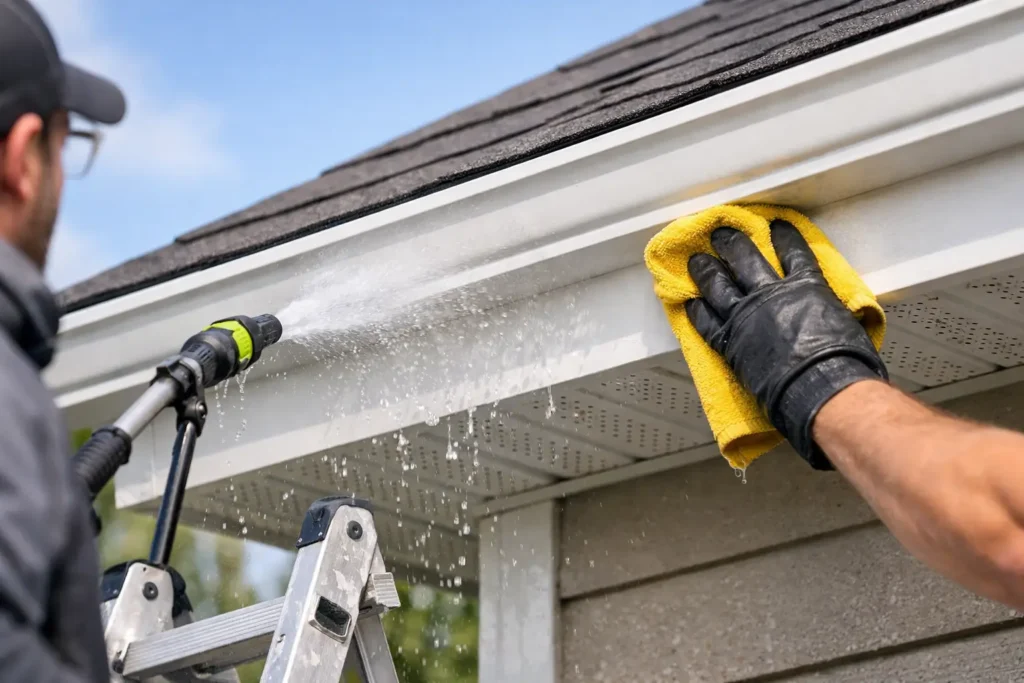
There are times when traditional hand cleaning makes more sense. If the buildup is heavy, if there are greasy stains, or if the finish has uneven weathering, working section by section can produce a more even result. This is also useful around delicate areas, older fittings, and awkward roofline details where extra care is needed.
Hand cleaning allows more attention to the visible front face of the fascia and to problem areas around joints. The trade-off is time. It usually takes longer, and for upper stories it may require access equipment. That is why the best approach often combines both methods rather than treating one as the answer for every property.
For homeowners, the main point is that a good clean should be tailored to the condition of the roofline. If someone offers the same quick method for every house, there is a fair chance they are prioritizing speed over finish.
What to avoid when cleaning soffits and fascias
The biggest mistake is using too much pressure. A pressure washer can seem like the obvious answer because the dirt is visible and the surfaces look sturdy. In practice, high pressure can splash dirty water onto walls and windows, disturb seals, and force water behind the fascia or into roofline gaps. It can also leave zebra-like lines where one section is cleaner than the next.
Abrasive pads are another common problem. They may remove staining quickly, but they can dull glossy uPVC and leave fine scratches that catch dirt faster next time. Strong chemical products can also create issues if they are not suited to the material or are left on too long.
Ladder work is the other risk that gets underestimated. Even on a single-story extension, leaning and stretching to reach the full underside of the soffit is awkward. Most accidents happen during ordinary jobs people thought would only take ten minutes.
How often should soffits and fascias be cleaned?
For most homes, once a year is enough to keep the roofline looking fresh and prevent heavy buildup. If the property is under trees, close to a main road, or exposed to damp conditions, twice-yearly cleaning can make sense. Homes near the coast also tend to benefit from more regular attention because salt, moisture, and airborne grime can cling to exterior surfaces.
Timing matters too. Many homeowners book this work alongside gutter cleaning or window cleaning because it restores the whole front of the property at once. That tends to give the best visual improvement. Clean soffits above dirty gutters rarely look fully finished, and freshly cleaned windows can quickly be marked by runoff if the roofline is left untouched.
Signs it is time to book a professional clean
If you can see green staining from the ground, black lines beneath the gutter edge, or webs and dirt collecting along the underside, the job is ready to be done. Another sign is when the fascias still look dull after the windows have been cleaned. That usually means the roofline is now the surface bringing down the appearance of the property.
You should also take it seriously if there are signs of gutter overflow. Dirty fascias often come with water marks that suggest the guttering needs attention too. Cleaning the trim without checking the gutters can improve the look for a short time, but it does not solve the cause.
A reliable exterior cleaning company should be able to tell the difference between surface dirt, staining that can be improved, and permanent discoloration from age. That matters because honest expectations are part of good service.
Best way to clean soffits and fascias without damage
The best way to clean soffits and fascias without damage is to use the least aggressive method that will still get a proper result. That usually means soft-bristle agitation, purified water rinsing, and careful assessment of the material and condition before cleaning starts.
It also means knowing when not to overwork a surface. Some older fascias have weathered finishes that will never return to a factory-bright white. A professional clean can still make a major difference, but there is a point where repeated scrubbing does more harm than good. An experienced cleaner will aim for the best safe result, not just the whitest possible patch on the day.
That practical approach is what homeowners usually want. Not gimmicks, not guesswork, and not a rushed splash-and-go job. Just a cleaner roofline, less mess, and the confidence that the work has been done properly.
If your soffits and fascias are making the whole house look dull, dealing with them sooner is usually easier than leaving them another season. A careful clean does more than improve curb appeal. It helps your home look looked after, which is often the difference people notice first.