A heavy shower can reveal a drainage problem in minutes. Water spilling over a gutter, pooling beside a wall, or running across a driveway is more than an untidy sight. Left alone, it can soak brickwork, stain exterior surfaces, damage landscaping, and put unnecessary pressure on foundations. This guide to rainwater drainage care helps homeowners spot the early warnings and keep water moving where it should.
For most homes, the system is straightforward: roof gutters collect rainfall, downspouts carry it down, and drains or gullies take it safely away. The trouble is that every part of that route needs to stay clear. Leaves, moss, roof grit, mud, and even a misplaced wheelie bin can interrupt the flow.
Start With the Route Water Takes
Rainwater drainage care is easiest when you think of it as one connected route rather than separate jobs. A clear gutter will not help much if the downspout is blocked. Likewise, a free-flowing downspout can still leave water standing if the ground drain below it is full of silt.
Walk around your property after rain if it is safe to do so. Look for water overflowing from one section of gutter, wet patches below downspout joints, puddles that remain for hours, or soil that has been washed away near the house. These signs show where water is struggling to drain.
Also look up from ground level. Sagging gutters, visible plant growth, or dark staining on fascias often point to standing water inside the channel. You do not need to climb a ladder to identify a likely problem. In fact, high-level inspection and cleaning are usually better left to an insured professional with the right equipment.
Keep Gutters Clear Before They Overflow
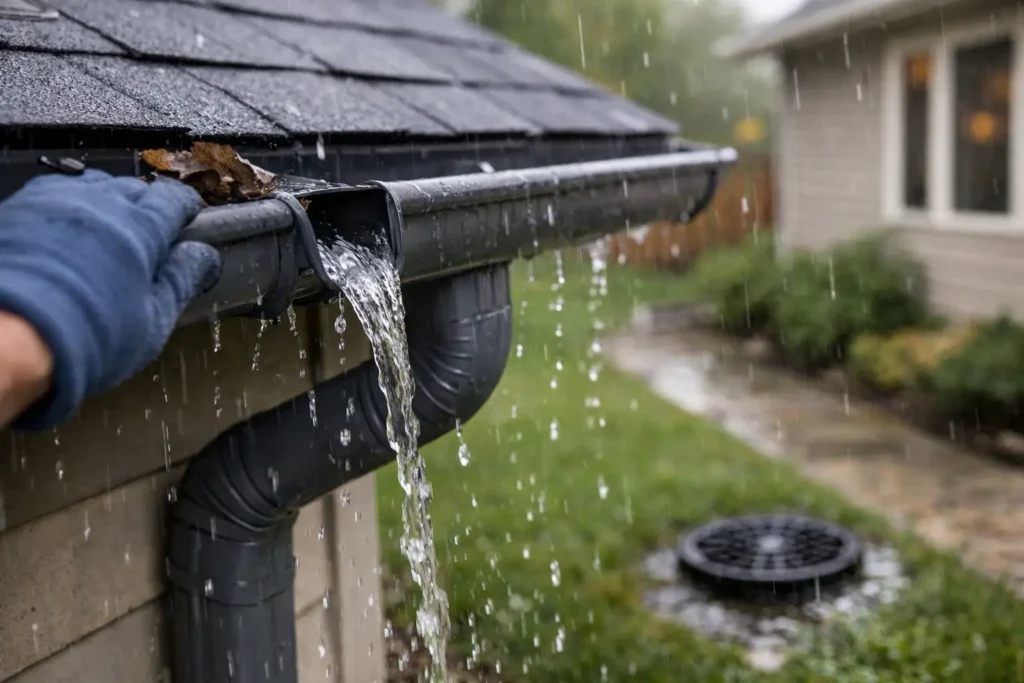
Gutters are the first line of defense against uncontrolled roof runoff. In leafy streets, they can fill surprisingly quickly, particularly in fall and after windy weather. Moss from roof tiles can also build up in gutters throughout the year, forming a dense, heavy blockage when mixed with rainwater.
For many homes, a thorough gutter clean once or twice a year is sensible. Properties near mature trees, with overhanging branches, or with a mossy roof may need more frequent attention. There is no single schedule that fits every house, so it is worth adjusting care around your surroundings rather than waiting for an overflow.
A proper clean should remove debris from the gutter channel and check that water can reach every outlet. Simply clearing the visible handful of leaves at one end may make the gutter look better without solving a blockage farther along.
While inspecting gutters, pay attention to their condition. Loose brackets, cracked joints, and sections that slope the wrong way can cause repeat problems even after cleaning. Water should run steadily toward the outlet, not sit in a low section or escape through a seam. Cleaning handles the buildup; a repair may be needed if the fitting itself has failed.
Do Gutter Guards Solve the Problem?
Gutter guards can reduce the amount of large leaves entering some systems, but they are not maintenance-free. Smaller debris, roof moss, and grit may still collect on top of or beneath the guard. On certain roofs, guards can make clearing more difficult.
They can be useful where large leaves are the main issue, but they should not replace periodic checks. Before fitting them, consider the roof type, nearby trees, and whether the gutter already has alignment or drainage issues.
Check Downspouts and Ground Drains
A downspout can look clear from the outside while being blocked lower down. Warning signs include water backing up into the gutter, overflow at a joint, or water pouring from an unexpected gap during a storm. If an outlet is blocked, forcing water through with an unsuitable tool can damage joints or push debris farther into the drainage system.
At ground level, clear leaves, mud, and litter from around the drain or gully receiving the downspout flow. Liftable grates can collect a surprising amount of debris, especially beside driveways and patios. Wear gloves, keep the area stable underfoot, and avoid putting hands into drains where you cannot see what is inside.
If a drain repeatedly fills or water rises back toward the property, it may be more than a surface blockage. A collapsed pipe, root intrusion, or a problem farther along the line requires investigation. Repeatedly clearing the top may offer temporary relief, but it will not fix the cause.
Protect the Ground Around Your Home
Drainage care is not only about the roofline. Once water reaches the ground, it needs a safe route away from the building. Pooled water beside exterior walls can encourage damp conditions and leave unsightly marks on patios, paths, and rendered surfaces.
Check that downspout discharge is directed away from the home rather than straight onto a narrow strip of soil beside the wall. The right solution depends on the property. One home may have a suitable connected drain; another may need a properly planned extension or drainage improvement. Avoid improvised arrangements that send water toward a neighbor’s property, across a walkway, or into an area that already floods.
Hard surfaces deserve attention as well. Driveways, patios, and paths often have channels or gullies that trap silt, leaves, and pressure-washing residue. Keeping these clear helps reduce standing water, slippery algae growth, and dirt being carried back onto cleaned surfaces.
A Seasonal Guide to Rainwater Drainage Care
A little routine attention is usually less stressful than dealing with an emergency during a downpour. The most useful times to check are before fall leaf drop, after it, and following periods of severe weather.
In spring, look for debris left by winter winds and check for damage from frost or storms. Summer is a good opportunity to identify moss buildup on roofs and gutters before heavier seasonal rain arrives. In fall, clear leaves regularly if trees are close by. During winter, keep ground drains visible and free of surface debris so rainfall can escape when conditions are wet.
There are a few situations where waiting is not worthwhile:
- Water is overflowing into or down exterior walls.
- A gutter is visibly pulling away from the fascia.
- A downspout is leaking at several joints or backing up.
- Ground drains are overflowing or sending water toward the house.
- Standing water has created a slippery route near an entrance.
These problems can worsen quickly in bad weather. Prompt attention is generally cheaper and simpler than repairing damage after water has found its way behind surfaces or into a property.
Clean Safely and Know When to Call for Help
Gutter work involves height, wet surfaces, and awkward access. For a single-story section with safe, level access, some homeowners may feel comfortable carrying out light ground-level checks. However, ladder work should never be rushed, done alone, or attempted in wind and rain. Conservatories, sloped ground, and hard-to-reach rooflines add further risk.
Professional exterior maintenance is often the practical option when gutters are high, heavily blocked, or difficult to access. A reliable service can clear the system, identify visible issues, and help keep the rest of the exterior looking cared for at the same time. For homeowners in Canvey Island and nearby Essex towns, Essex Exterior Cleaning provides fully insured gutter cleaning alongside window, fascia, driveway, and roof cleaning services.
The aim is not to make drainage a complicated project. It is to notice small changes early, keep the route clear, and act before rainwater turns a minor blockage into a repair bill. The next time rain is forecast, take a moment to look at where the water goes. That simple check can tell you a great deal about how well your home is being protected.