Bird droppings are not just an eyesore on a roof. When they sit on solar glass, they can block sunlight, leave stubborn residue, and make it harder for your system to produce as expected. Knowing how to clean bird droppings from solar panels safely helps protect both the appearance and day-to-day performance of your installation.
The key is not simply to scrub harder. Solar panels are durable, but the glass, frame edges, cabling, and roof around them all need careful treatment. A poor cleaning method can leave scratches, force water where it should not go, or create a fall risk that is far greater than the benefit of a quick DIY job.
Why bird droppings need attention
A light coating of ordinary dust may have little noticeable effect, especially after rain. Bird droppings are different. They are thick, uneven, and often dry hard onto the panel surface. Even a small patch can create shade over part of a panel, reducing the amount of light reaching the cells below.
The effect depends on where the droppings land, how many panels are affected, the type of system you have, and how long the buildup remains. One small mark may not cause a dramatic change in output. Repeated droppings across several panels, particularly during brighter months, are more likely to be worth dealing with promptly.
There is also the practical issue of residue. Once droppings bake in the sun, they can become much harder to remove without excessive pressure. Regular, gentle cleaning is usually easier and safer than waiting until the panels look heavily marked.
Before you clean bird droppings from solar panels
Start by checking your panel manufacturer’s cleaning guidance and any paperwork supplied with the installation. Some manufacturers give specific advice on water quality, cleaning products, and access. Following those instructions can help protect your warranty.
Safety should come before spotless results. Most domestic solar panels are installed at height, often on pitched roofs. Do not climb onto a roof, stand on the panels, or lean a ladder against them. Panels can be damaged by concentrated weight, and roof work brings a genuine risk of slips and falls.
If the affected area cannot be reached safely from the ground, it is sensible to arrange professional cleaning. An experienced exterior cleaning team can use suitable access equipment and water-fed pole systems to reach elevated panels without putting unnecessary weight or pressure on the roof.
It is also wise to clean early in the morning, later in the day, or when the panels are cool. Spraying cold water onto hot glass can cause sudden temperature changes. While quality panels are designed for outdoor conditions, there is no reason to add avoidable stress to the surface.
The safest way to remove bird droppings
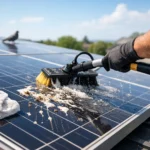
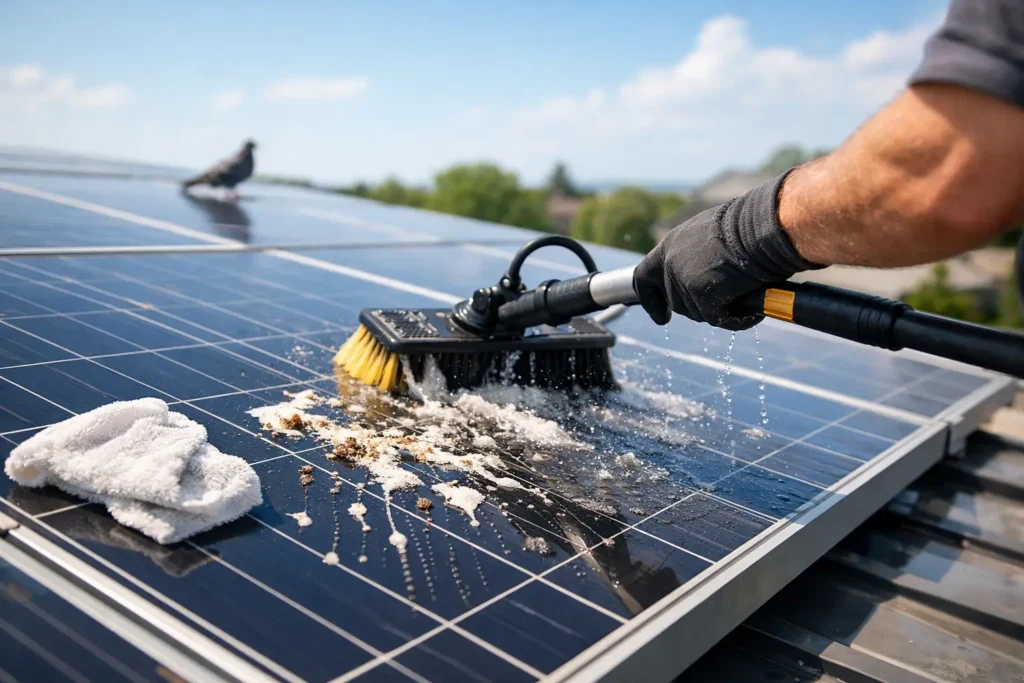
For panels that can be safely reached from ground level or a stable, appropriate access point, use clean water and a soft, non-abrasive brush designed for solar panels or delicate exterior glass. The aim is to soften and lift the droppings, not scrape them away.
Begin by rinsing the affected area with a gentle flow of water. Let the water sit briefly so dried material can loosen. Then use very light pressure with a soft brush to remove the residue. Work from the top of the panel down where possible, allowing dirty water to run away naturally.
A purified water system is often the best option because it leaves fewer mineral deposits as it dries. In hard-water areas, ordinary tap water can sometimes leave spotting or a thin film on the glass. This may not always be a major issue, but clean, filtered water gives a clearer finish and avoids adding more residue to the panel surface.
For stubborn marks, repeat the gentle rinse-and-brush process rather than reaching for a stronger chemical. If droppings remain firmly attached after a careful attempt, stop and consider professional help. Excessive rubbing is where unnecessary damage can happen.
What not to use on solar panels
Solar panels do not need harsh treatment. Avoid pressure washing, even if you use a low setting. A pressure washer can force water around seals, damage components, disturb roof tiles, or drive debris into places it should not be.
Do not use abrasive pads, wire brushes, scouring powders, or blades. These can scratch the protective glass coating. Small scratches may not be obvious immediately, but they can hold dirt and affect the panel’s appearance over time.
Strong household cleaners, solvents, bleach, and highly alkaline products should also stay away from solar panels unless your manufacturer specifically approves them. These products can leave residue or affect seals and frame finishes. Dish soap may seem harmless, but too much can leave a film that attracts dust.
Bird droppings can contain bacteria, so avoid dry brushing them or handling them without protection. Wear gloves if you are cleaning a reachable panel yourself, and wash your hands thoroughly afterward. Wetting the area first also helps prevent particles from becoming airborne.
How often should solar panels be cleaned?
There is no single schedule that suits every home. A clear, open property may only need occasional attention, while panels beneath trees, near the coast, or close to regular bird perches may need more frequent checks.
A simple visual inspection every few months is a sensible starting point. Look for visible droppings, pollen, leaves, salt residue, or patches of grime. Pay extra attention in spring and summer, when birds are more active and sunny conditions make every bit of available light more valuable.
If a particular area is repeatedly affected, look beyond cleaning alone. Nearby trees, aerials, chimneys, and rooflines can create popular perching spots. Bird deterrents may be appropriate in some cases, but they should be selected and fitted carefully so they do not damage the roof, interfere with the panels, or create future maintenance problems.
When professional solar panel cleaning makes sense
Professional cleaning is the right choice when panels are high, roof access is awkward, droppings are widespread, or you simply do not want to take on the risk. It also makes sense when you want the work done alongside other exterior maintenance, such as gutter, roof, or window cleaning.
A proper service should use methods suited to the job, including purified water and soft-bristled equipment where appropriate. The cleaner should avoid walking on panels, avoid high-pressure washing, and take care around roof edges, wiring, and surrounding surfaces. Fully insured work offers additional reassurance when cleaning equipment is being used around a valuable home installation.
For homeowners in Canvey Island and nearby Essex towns, Essex Exterior Cleaning can carry out solar panel cleaning as part of a practical exterior maintenance visit. The focus is straightforward: remove grime safely, leave the glass clear, and help you avoid the difficulty of working at height yourself.
A few signs cleaning may be overdue
Visible bird droppings are the clearest sign, but they are not the only one. If your monitoring app shows output that seems lower than expected compared with similar weather conditions, it may be worth checking the panels for obstruction. This does not automatically mean dirt is the cause – seasonal daylight, shading from new growth, equipment faults, and system settings can all affect production – but a visual inspection is an easy first step.
You may also notice dirt gathering along the lower edge of panels, particularly after dry spells. Rain can rinse away loose dust, but it does not always remove sticky residues. In fact, rainwater mixed with dust can sometimes dry into marks when conditions turn warm again.
Keeping panels clean is not about chasing a perfect shine every week. It is about dealing with buildup before it becomes stubborn, protecting safe access around your roof, and giving your solar system a fair chance to do its job. If the droppings are out of reach or the roof does not feel safe, leaving it to an insured professional is the sensible way to keep your property cared for.