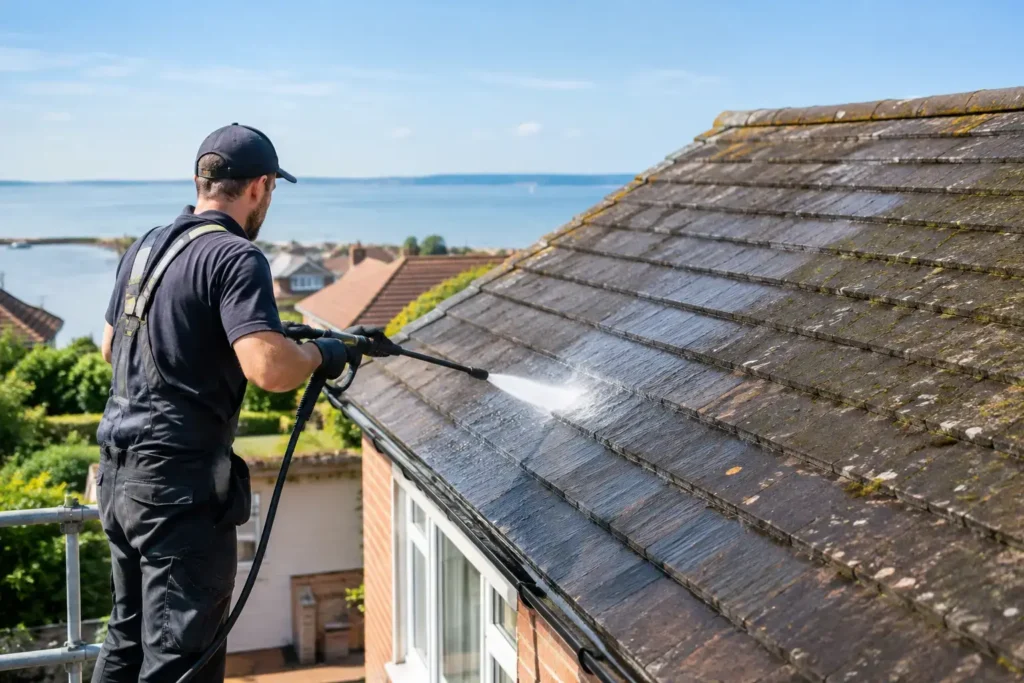
A roof can look tired long before there is a visible leak. Dark moss, green growth, and blocked valleys gradually change the appearance of a home, while holding moisture against the roof surface. This Southend roof cleaning example shows what a careful, professional approach can look like for a homeowner who wants a cleaner property without taking unnecessary risks.
The property in this example had a pitched tiled roof with noticeable moss across the front slope and around the edges. From the ground, the buildup made the roof appear uneven in color and left the gutters at risk of filling with loose debris during wet weather. The owner wanted a clear improvement, but also wanted the tiles, gutters, and surrounding garden treated with care.
Southend Roof Cleaning Example: The Starting Point
Before any cleaning begins, the condition of the roof matters more than how dirty it looks. Moss may be widespread, but that does not automatically mean a roof should be cleaned in the same way as every other property. The roof’s age, tile type, pitch, access points, and any existing damage all affect the safest plan.
In this case, the roof was checked from the ground and at close range where safe access allowed. The aim was to identify slipped, cracked, or loose tiles, inspect the ridge line, and see where moss had collected most heavily. Attention was also given to the gutters and downpipes, because roof debris has to go somewhere once it is removed.
This early assessment helps prevent a common mistake: treating roof cleaning as a quick pressure-washing job. High-pressure washing can be unsuitable for many tiled roofs. It can dislodge fragile tiles, force water where it should not go, strip surface finishes, and leave a mess in gutters and on nearby paths. The right method depends on the roof, not on the fastest-looking result.
Why Moss Needed Attention
Moss thrives where moisture lingers, especially on shaded roof slopes or properties near trees. It does not always create an immediate problem, but a thick layer can retain water and send debris into gutters as it breaks away. Over time, that can contribute to blocked drainage and a neglected appearance.
For this Southend home, the visible issue was the roof’s patchy green and dark staining. The practical concern was the amount of loose moss likely to fall into the gutters during heavy rain. Cleaning the roof gave the homeowner a chance to improve both the look of the property and the way rainwater could move away from it.
A clean roof will not repair broken tiles or solve an underlying roofing fault. If an inspection reveals damaged areas, roof repairs should come first. Roof cleaning works best as part of sensible property upkeep, not as a substitute for repair work.
A Careful Cleaning Plan
The work began with safe access planning. Roof cleaning involves working at height, and this is not a task for balancing on a ladder with household equipment. A fully insured exterior cleaning team should use an approach suited to the property, the roof layout, and the space around the home.
Removing the Heavy Growth
The thickest moss was removed carefully by hand using appropriate tools designed to lift buildup without aggressively scraping the tile surface. This stage makes an immediate difference, but it is only one part of the job. Moss fragments need to be controlled and cleared properly rather than left to wash into drains, flower beds, or neighboring areas.
Gutters were then cleared of the material that had come down from the roof. Leaving gutter cleaning out of a roof-cleaning job can create a new problem straight away, particularly when the next period of rain carries remaining debris toward the downpipes.
Treating Remaining Organic Growth
Once the main buildup was removed, a suitable treatment can be applied to address remaining moss, algae, and lichen. This is often a gradual process. A roof may look much better as soon as the physical growth has been cleared, while lighter staining and residue can continue to weather away over the following weeks and months.
That slower change is normal. Homeowners should be cautious of promises that every roof will look brand new in an afternoon. Tile condition, the type of growth, weather, shade, and the length of time the roof has been affected all influence the final appearance.
Care is also taken around gutters, windows, patios, plants, and outdoor furniture. Protecting the rest of the property is part of doing the job properly. A clean roof is not much use if the surrounding areas are left covered in debris.
The Visible Result and the Practical Benefit
After the heavy growth was cleared, the roof in this example looked more even in color and far less overgrown from the street. The tile lines were visible again, and the home had a cleaner, better-maintained appearance without the harsh finish that can come from unsuitable cleaning methods.
The less obvious result was just as useful. With the roof edges and gutters cleared, there was less loose organic material ready to collect in the drainage system. That gives rainwater a clearer route away from the roofline and makes future gutter maintenance more straightforward.
For many homeowners, this is the value of professional roof cleaning. It is not simply about making a property look better for a week. It is about removing buildup carefully, reducing avoidable gutter debris, and taking a more proactive approach to exterior maintenance.
Is Roof Cleaning Right for Every Property?
Not always. A newer roof with a light amount of algae may only need monitoring and routine gutter cleaning. A roof with extensive damage, crumbling tiles, or structural concerns needs advice from a qualified roofer before cleaning is considered. The same applies where access is unsafe or where the roof material requires a specialist method.
It also depends on what the homeowner wants from the work. If the priority is immediate visual improvement before selling a property, removing visible moss and clearing gutters may be the main focus. If the priority is ongoing care, a treatment plan and regular gutter cleaning can help manage regrowth over time.
An honest assessment should explain those differences clearly. There is no benefit in recommending more work than the roof needs, and there is no value in using a cleaning method that is wrong for the surface.
What Can Affect the Cost?
Roof-cleaning prices vary because no two properties are accessed or cleaned in exactly the same way. The roof size and pitch matter, as do the amount of moss, access requirements, the number of gutters, and whether treatment is needed after removal.
A compact home with easy access and light growth will usually take less time than a large detached property with steep slopes, heavy moss, conservatories, or restricted working space. Nearby trees can also increase the amount of buildup and the time needed to clear it responsibly.
A proper quote should be based on the actual property rather than a vague estimate. That gives the homeowner a clearer idea of what is included, whether gutter clearing is part of the service, and what result to expect.
Keeping the Roof Looking Better for Longer
Roof cleaning does not have to become an annual job. The right interval depends on shade, local trees, moisture levels, and the roof’s overall condition. Homes in sheltered or tree-lined areas may see moss return faster than properties with more open exposure to sun and wind.
Regular gutter cleaning is one of the simplest ways to support the work. Keeping gutters clear reduces the chance of roof debris accumulating at the edges and helps homeowners spot changes before they become more serious. It is also sensible to look up at the roof occasionally from ground level after storms, watching for slipped tiles, overflowing gutters, or fresh growth.
Essex Exterior Cleaning provides insured roof and gutter cleaning for homeowners who want a reliable local team, clear communication, and visible results. A careful inspection and straightforward quote can help establish whether roof cleaning is suitable for your property and what method will make sense.
If your roof is starting to look green, dark, or heavily overgrown, addressing it before the next season of wet weather can make routine upkeep far easier. A clean, clear roofline is one less property concern to carry into the months ahead.