A green film on exterior cladding can make an otherwise well-kept home look tired fast. The challenge is to clean cladding without surface damage – removing algae, traffic film, salt residue, and general grime without dulling the finish, forcing water behind panels, or leaving permanent streaks.
For most homes, the safest result comes from matching the cleaning method to the cladding material and the level of buildup. High pressure may appear to offer a quick fix, but it is rarely the right starting point. A controlled clean using the correct solution, gentle agitation where needed, and a thorough rinse protects the surface while restoring the appearance of the property.
Why cladding needs a careful cleaning method
Cladding is designed to handle changing weather, but it is not indestructible. Over time, rainwater, airborne dirt, pollen, algae, and coastal salt can settle on the surface. On homes near Canvey Island, Leigh-on-Sea, and Southend-on-Sea, salt in the air can add to the problem, particularly on more exposed elevations.
The risk is not simply cosmetic. Organic growth holds moisture against the surface and can become more difficult to remove if it is left for too long. Dirt around joints, trims, and drainage channels may also hide small maintenance issues that deserve attention.
The wrong cleaning approach can create a bigger problem than the original staining. Excessive pressure can mark softer materials, lift paint, damage seals, or drive water into gaps behind the cladding. Strong chemicals can fade colored panels, leave chalky patches, or affect nearby plants. A clean exterior should look refreshed, not scoured.
Identify the cladding before cleaning
There is no single setting, detergent, or technique that suits every property. Before any work begins, establish what the cladding is made from and check its general condition.
Vinyl cladding usually responds well to a mild cleaning solution and low-pressure rinsing. It can become brittle with age, especially in areas that receive strong sunlight, so hard brushing and close-range pressure washing should be avoided. Composite cladding often has a durable finish, but abrasive pads and harsh alkaline cleaners can leave visible marks or alter its sheen.
Painted wood requires particular care because peeling paint, open grain, and failed caulk can allow moisture in. Metal cladding can look excellent after a gentle wash, but some products may react with coatings or leave a residue. Fiber cement and render-style panels also need a controlled approach, as aggressive cleaning can damage the painted surface or expose the material underneath.
If you cannot identify the material, check any paperwork from the installation or ask a professional to assess it. Manufacturer guidance should always take priority, particularly where a warranty is still in place.
How to clean cladding without surface damage
The safest process starts slowly. Rather than reaching straight for a pressure washer, remove loose dirt with a soft brush or a gentle water rinse. This gives you a clearer view of the staining and helps prevent dry grit from scratching the surface during the main clean.
A mild, cladding-safe detergent can then be applied from the bottom upward. Working upward reduces the chance of dirty solution running down and drying into streaks. Allow the product a short dwell time so it can loosen algae and grime, but do not let it dry on the surface. On a warm or breezy day, work in smaller areas and keep the panel damp.
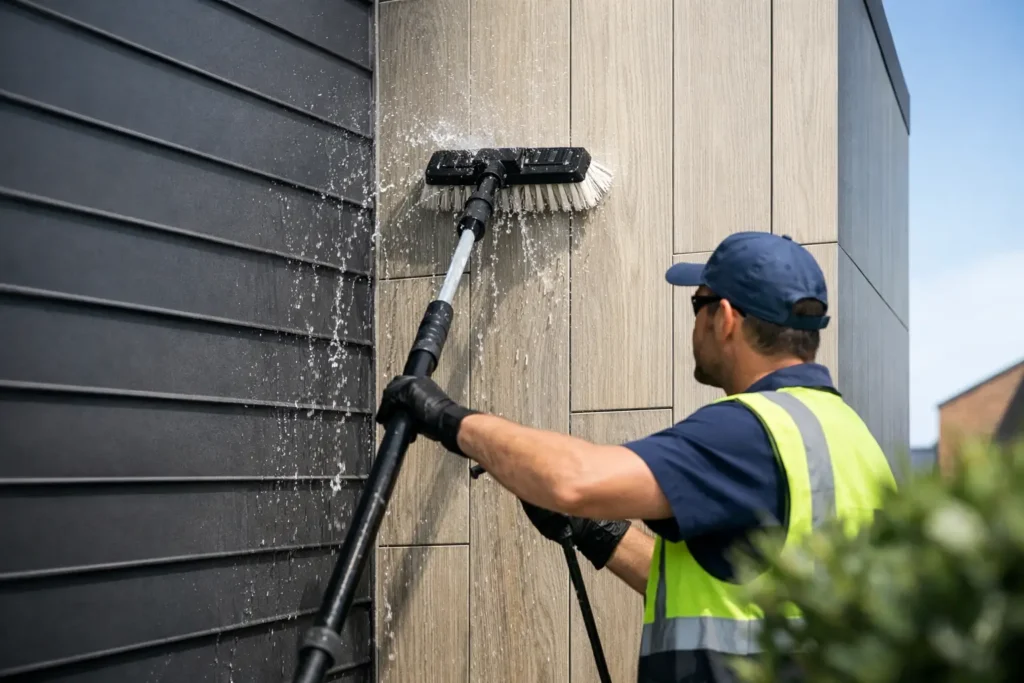
For stubborn patches, use a soft-bristled brush or non-abrasive wash mitt. The aim is light contact, not heavy scrubbing. Pay attention to the direction of the panels and clean along them where possible. This is especially useful around textured finishes, lap joints, and trim details where dirt tends to collect.
Rinse thoroughly with clean water, again using low pressure. Keep the spray angle broad and direct it downward where panels overlap. Never force water upward beneath laps, into vents, around windows, or into joints. A water-fed pole system can be a sensible option for upper-level cladding because it allows controlled rinsing from the ground without leaning ladders against the property.
Pressure washing is not always the answer
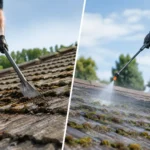
Pressure washing can be suitable for certain hard exterior surfaces, but cladding needs a more measured decision. Even a machine with adjustable pressure can cause damage when the nozzle is held too close, the spray is too narrow, or the operator uses the wrong angle.
If pressure is needed to rinse heavier buildup, use the lowest effective setting, stand well back, and test an inconspicuous section first. Do not use a rotating turbo nozzle on cladding. Its concentrated force can leave etched lines, strip coatings, or damage panel edges in seconds.
In many cases, a soft-wash approach is more effective than high pressure because it treats the organic growth instead of just blasting the visible layer away. The finish may take a little longer to achieve, but it is kinder to the surface and typically provides a more even result.
Common mistakes that leave lasting marks
One common mistake is using household bleach or a strong degreaser without checking whether it is suitable for the surface. These products may appear to brighten cladding quickly, but they can discolor finishes, weaken surrounding vegetation, and leave uneven patches. Any cleaning solution should be selected for the material, diluted correctly, and rinsed completely.
Another issue is cleaning only the most visible areas. If one wall is washed but adjoining trim, soffits, gutters, and window frames are left dirty, the result can look uneven. Runoff from blocked gutters may also be the cause of recurring staining. Cleaning the cladding without dealing with the source means the same marks can return sooner than expected.
Avoid abrasive scouring pads, wire brushes, and rough tools. They can leave fine scratches that hold dirt and make the cladding harder to maintain. Be cautious with ladders as well. A ladder can scratch panels, crush guttering, or create unsafe working conditions if the ground is uneven.
When professional cleaning is the safer option
A homeowner can often manage light, accessible dirt on ground-level cladding. Professional help makes more sense when staining is widespread, the cladding is high up, algae has established itself in joints, or the material is old and fragile. It is also the safer choice where access requires working around conservatories, sloping ground, solar panels, or overhead lines.
A trained exterior cleaning team can inspect the surface, choose the appropriate wash method, protect nearby landscaping, and reach upper areas safely. Fully insured work matters here. If a surface needs a softer method rather than pressure washing, the job should be adjusted rather than rushed.
At Essex Exterior Cleaning, the focus is on visible results without taking unnecessary risks with a customer’s property. Modern water-fed pole equipment and traditional methods both have a place, depending on the material, height, and condition of the cladding.
Keep cladding cleaner for longer
Cladding does not need constant deep cleaning, but a regular check prevents small issues from becoming stubborn stains. For many homes, an annual wash is enough. Shaded walls, north-facing elevations, and properties close to trees or the coast may benefit from more frequent attention.
Keep gutters clear so dirty overflow does not track down the walls. Trim back vegetation that sits against the property, as it reduces airflow and encourages algae. Washing down splashback areas near patios, driveways, and downspouts can also make a noticeable difference between scheduled cleans.
A careful clean is one of the simplest ways to protect the finish of your exterior and keep your home looking looked after. When in doubt, start gentle, test a small area, and choose a method that preserves the surface as well as the result.