A driveway can be freshly swept and still look neglected when oil marks, rust streaks, or black algae patches remain. Effective paving stain removal is not simply about using the strongest cleaner or the highest-pressure washer setting. The right approach depends on what caused the stain, how long it has been there, and whether your surface is concrete, block paving, natural stone, or asphalt.
For homeowners, the goal is straightforward: a clean, presentable surface without damaging the paving, disturbing jointing sand, or leaving a lighter patch behind. A careful treatment often gives excellent visible results. In other cases, particularly with old oil or deeply set rust, professional cleaning is the safer and more realistic option.
Identify the Stain Before You Clean
Different stains need different treatments. Treating every mark with general detergent and pressure can waste time and may make the problem worse.
Oil and grease stains are common on driveways, especially beneath parked cars. Fresh oil stays closer to the surface and responds well to an absorbent material followed by a degreaser. Older oil can soak into porous concrete or block paving, making complete removal less predictable. The aim is to lift as much contamination as possible without spreading it across the driveway.
Rust stains usually come from metal furniture, gates, planters, leaking vehicles, or fertilizer. They often appear orange-brown and can be surprisingly stubborn. Rust removers can work well, but products that are too acidic may etch concrete, fade colored blocks, or damage natural stone.
Green algae, moss, and black spots are a different issue. These marks thrive in damp, shaded areas where paving stays wet after rain. They may look like a stain, but they are living growth. A suitable biocide treatment, time to work, and a controlled wash are usually more effective than pressure washing alone.
Paint, tire marks, leaf tannins, and white mineral deposits also need a tailored method. Paint may require a solvent-based remover, while leaf stains can fade with a mild cleaning treatment and daylight over time. White deposits, often called efflorescence, are salts moving through new or damp masonry. They should be brushed and treated carefully rather than aggressively blasted away.
Start With the Safest Paving Stain Removal Method
Before applying any cleaner, clear loose debris and rinse the area lightly. This makes the stain easier to see and prevents dirt from turning into a muddy film. Always test a cleaning product in an inconspicuous corner first, particularly on colored paving, printed concrete, and natural stone.
For a small fresh oil spill, cover the mark with an absorbent material and leave it long enough to draw out the surface oil. Sweep it up, then use a paving-safe degreaser according to the label directions. Do not scrub oil with water first. That can push it farther into the surface or wash contaminants toward drains.
For general grime and light organic marks, a purpose-made exterior cleaner and a stiff brush may be enough. Work in manageable sections and do not let chemicals dry on the paving. Rinse thoroughly afterward, directing runoff responsibly and away from planted areas where possible.
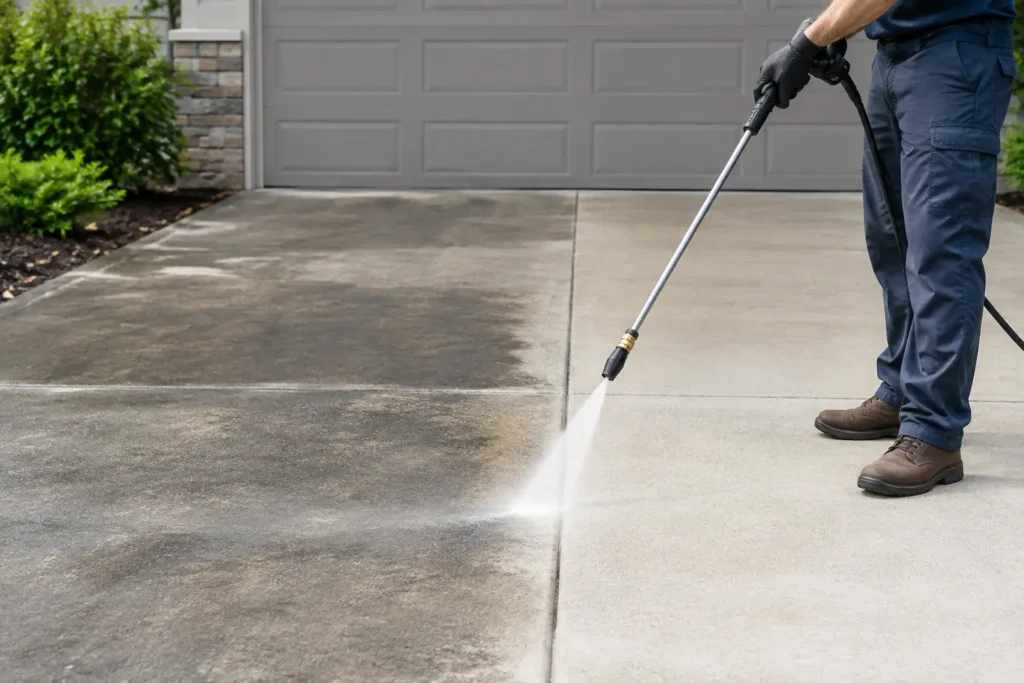
Pressure washing can be very effective once the correct treatment has loosened the stain. It is not a cure-all. A powerful narrow jet held too close can leave lines in concrete, strip the face from block paving, chip fragile stone, and remove jointing sand. The result may look cleaner at first but can become more vulnerable to weeds, movement, and future staining.
Use a broad fan setting, keep the wand moving, and maintain a sensible distance from the surface. If the paving begins to look rougher or noticeably lighter in one area, stop. That is usually a sign the cleaning is too aggressive.
Why Surface Type Changes the Job
Concrete is durable, but it is porous and can absorb oil, rust, and colored liquids. Strong acid cleaners may leave permanent etching or a patchy finish. A controlled degreaser or stain-specific product is generally a better starting point.
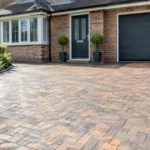
Block paving has joints filled with sand. Washing it too hard can empty those joints, loosen individual blocks, and create a route for weeds to return. After a thorough driveway clean, jointing sand may need to be replaced once the surface is fully dry. This is a normal part of restoring block paving properly.
Natural stone needs the most caution. Limestone, sandstone, and some other stone surfaces can react badly to acidic products. Even common household cleaners may cause discoloration or surface damage. Use a stone-safe cleaner and avoid guessing if you are unsure what type of paving you have.
Asphalt is softer than concrete and can be damaged by harsh solvents, strong pressure, and certain degreasers. It also fades naturally over time, so a cleaned area may stand out from the rest of the surface. For large asphalt stains, professional advice is often worthwhile before treatment begins.
Common Mistakes That Leave Driveways Worse
The most common mistake is reaching for bleach or acid without checking whether the product suits the paving. Bleach can kill surface algae, but it may damage nearby plants, discolor some surfaces, and leave an uneven result if used incorrectly. Acid can remove mineral and rust stains, yet it can also permanently mark concrete and natural stone.
Another problem is trying to clean one small stain until it is brighter than the surrounding paving. On an older driveway, a freshly treated patch can look obvious because the rest of the surface has years of weathering and traffic film. In this situation, cleaning a wider area or the full driveway may produce a more even finish.
Pressure washing without a pre-treatment is also less effective on greasy or organic staining. The water may clean the top layer while leaving the cause behind, which is why algae and dark marks can return quickly. Good results come from treating the cause first, then washing away the loosened buildup.
Finally, do not ignore drainage. Standing water encourages moss, algae, and black staining. If the same area repeatedly turns green or dark, look at overhanging plants, blocked drainage channels, leaking gutters, and shaded corners. Cleaning helps, but reducing constant moisture helps the result last.
When Professional Cleaning Makes Sense
A homeowner can often deal with a small fresh spill or light surface staining. Larger areas, older stains, and delicate paving are different. Professional cleaning is useful when the job calls for commercial-grade equipment, surface-appropriate products, or the experience to recognize when a mark will not lift without risk.
It can also save a great deal of time. A driveway cleaning job may involve moving vehicles and furniture, pre-treating stains, managing runoff, controlled pressure washing, rinsing, and replacing lost jointing sand where needed. The visible difference can be substantial, but the process needs to be carried out carefully to protect the surface.
For homeowners in Canvey Island and surrounding Essex towns, damp weather and coastal conditions can make algae and general driveway staining a recurring concern. Essex Exterior Cleaning provides fully insured exterior cleaning with a practical approach to restoring paving, patios, and driveways without taking unnecessary risks with the surface.
Keep Paving Cleaner for Longer
Once the stains have been treated, regular light maintenance makes a noticeable difference. Sweep leaves and soil away before they break down and leave tannin marks. Deal with vehicle leaks promptly. Trim back dense planting that keeps paving damp, and keep gutters and drainage routes clear so water does not continually run across the same area.
Sealing may help some paving resist future oil and water penetration, but it is not right for every surface. The paving must be thoroughly clean and fully dry first, and the sealant needs to suit the material. Applying it over remaining dampness or staining can trap the problem beneath the finish.
A cleaner driveway improves the first impression of the whole property, but it should never come at the cost of damaged paving. If a stain is stubborn, the safest decision is often to stop before the surface is harmed and arrange a professional assessment. A careful clean now can help your driveway stay presentable for years rather than creating a repair job for later.