A damp patch on an upstairs ceiling rarely starts as a dramatic hole in the roof. More often, it begins with small issues that have been building for months: moss holding water against tiles, leaves blocking gutters, or debris stopping rainwater from draining where it should. So, can roof cleaning stop leaks? It can help prevent certain moisture problems and reveal faults early, but it cannot repair a roof that is already damaged.
For homeowners, the key is knowing the difference. A careful roof and gutter clean can remove the buildup that puts extra strain on your roofline. If water is getting in through cracked tiles, worn flashing, or failing underlayment, however, a roofing repair is still needed.
Can Roof Cleaning Stop Leaks? The Short Answer
Roof cleaning can lower the risk of leaks when organic growth and debris are contributing to poor drainage or water retention. Moss, algae, lichen, leaves, and silt can all hold moisture on the roof surface. Over time, that moisture can work beneath lifted tile edges, saturate vulnerable areas, or freeze and expand during cold weather.
Cleaning also makes the roof easier to inspect. A tile that has slipped, a cracked ridge, or loose flashing can be hard to spot beneath a thick layer of moss. Once the surface is clear, those defects are more visible and can be dealt with before a small issue becomes water damage inside the home.
That said, cleaning is preventive maintenance, not a leak repair. If water is already entering the loft or ceiling, do not assume a clean alone will solve it. The source needs to be identified first, particularly after heavy rain or strong winds.
How a Dirty Roof Can Contribute to Water Problems
A roof is designed to shed water quickly. Tiles, slates, flashing, valleys, gutters, and downpipes all work together to direct rain safely away from the property. Buildup interferes with that system.
Moss holds water where it does not belong
Moss is common on shaded or north-facing roof slopes, especially on older homes. It absorbs rainwater and keeps the roof surface damp for longer. This does not automatically mean the roof will leak, but persistent moisture can speed up wear on vulnerable materials.
As moss grows, it can also push beneath tile overlaps or collect in roof valleys. During a hard downpour, water may then travel sideways rather than down the roof as intended. That raises the chance of water finding a weakness around a tile, joint, or flashing detail.
Blocked gutters can force water back toward the roofline
Gutter problems are one of the most common causes of preventable water damage. When gutters are packed with leaves, moss, and roof grit, rainwater overflows. It can run down exterior walls, soak fascias and soffits, and, in some cases, back up beneath the lower edge of roof tiles.
A clean roof with blocked gutters is not fully protected. Roof cleaning and gutter cleaning often make most sense as part of the same maintenance visit, because loose moss and debris can quickly end up in the gutters below.
Valleys and drainage channels need to stay clear
Roof valleys handle a high volume of water because they collect runoff from two slopes. Even a small pile of moss, leaves, or twigs in a valley can slow drainage during heavy rain. Water may then pool or overflow at the point where the roof is most exposed.
Keeping valleys clear is particularly worthwhile on homes surrounded by trees or in coastal areas where wind can move debris across roof surfaces.
When Cleaning Will Not Stop a Leak
If the leak is caused by physical damage, roof cleaning will not fix it and should not be treated as a substitute for a qualified roofer. Common faults include cracked or missing tiles, damaged slates, failed lead flashing, loose ridge tiles, degraded sealant around roof penetrations, and problems with roof valleys.
Leaks can also come from places homeowners do not immediately associate with the roof. A failed chimney flashing, damaged skylight seal, overflowing gutter, blocked downpipe, or condensation issue in the attic can all produce similar signs indoors. The location of the ceiling stain is not always directly below the point where water entered.
Be cautious if a leak has appeared suddenly after a storm. Wind can lift tiles or damage flashing, and cleaning should wait until the roof has been assessed. Walking on or washing an already compromised roof can make the issue worse.
Why the Cleaning Method Matters
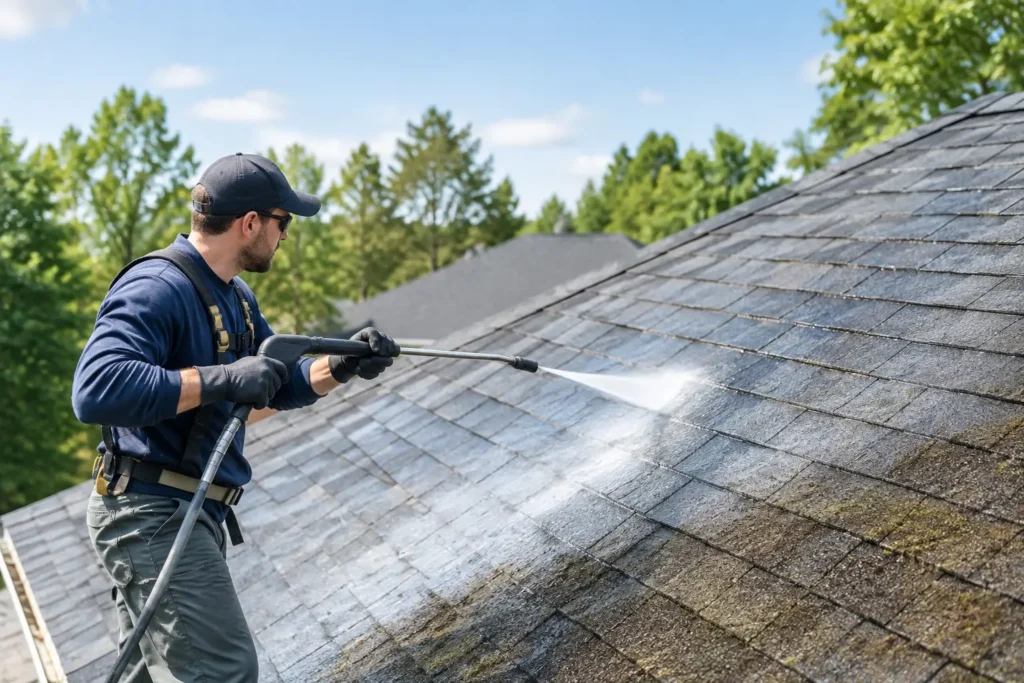
Roof cleaning should be carried out with the roof material, age, and condition in mind. Aggressive pressure washing can strip protective finishes, dislodge granules from some surfaces, force water beneath tiles, and damage fragile slate or cement tiles. It may leave a roof looking cleaner in the short term while creating avoidable problems later.
A professional approach usually starts with an assessment. The cleaner should consider access, the level of moss growth, the stability of tiles, nearby gutters, and where debris will go. For many roofs, gentle manual moss removal followed by a suitable treatment is safer than blasting the surface with high pressure.
It also pays to keep the gutter system protected during the work. Moss removed from a roof has to go somewhere. Clearing it from gutters and checking that downpipes flow freely helps prevent a cleaning job from creating a drainage blockage.
At Essex Exterior Cleaning, the focus is on careful exterior maintenance that improves the appearance of a property while helping homeowners spot issues that deserve further attention. Fully insured work and the right equipment matter, especially when elevated surfaces are involved.
What to Do if You Think Your Roof Is Leaking
Start by looking for the obvious signs from ground level. Check whether gutters are overflowing, whether there is a visible buildup of moss in valleys, and whether any tiles appear out of line. Inside, look in the attic for damp insulation, water marks on rafters, or fresh staining after rainfall.
Avoid climbing onto the roof yourself. Wet tiles are slippery, and roof access carries a real fall risk. It is also easy to crack a tile or disturb flashing without realizing it. If you can safely see a blocked gutter or debris-filled valley from the ground, arrange cleaning. If you can see damage, or water is entering the property, arrange a roofing inspection as well.
Timing matters. A roof clean is most useful before water has found a route indoors. Regular maintenance can keep gutters flowing, prevent heavy moss from taking hold, and make it easier to catch loose or damaged materials early.
Signs You Need a Roofer Rather Than a Cleaner
Cleaning may be part of the solution, but these signs point to a repair issue: a recurring damp patch after rain, missing or broken tiles, water in the attic, sagging gutters, loose flashing around a chimney, or visible daylight through the roof structure.
Do not delay where water is reaching electrical fittings, ceilings are bulging, or there is active dripping. Move belongings away from the affected area and arrange professional help promptly. Water damage can spread through insulation, timber, plaster, and wall finishes even when the visible stain looks small.
A well-maintained roof does more than improve curb appeal. Keeping moss, leaves, and gutter debris under control gives rainwater a clear route away from your home and gives you a better chance of finding small faults before they turn into a larger repair bill.