A gutter that spills over during a heavy shower can look like a minor inconvenience. Water stops once the rain passes, and the issue is easy to forget. But gutter overflow damage often starts with exactly that repeated overflow, sending water to parts of your home that were never designed to handle it.
For homeowners, the concern is not just a messy cascade over the gutter edge. It is the slow, repeated exposure that can stain brickwork, rot timber, undermine a walkway, and leave damp patches around the property. Regular gutter cleaning is a straightforward way to keep rainwater moving where it should: safely away from the roofline and foundation.
Why gutter overflow damage happens
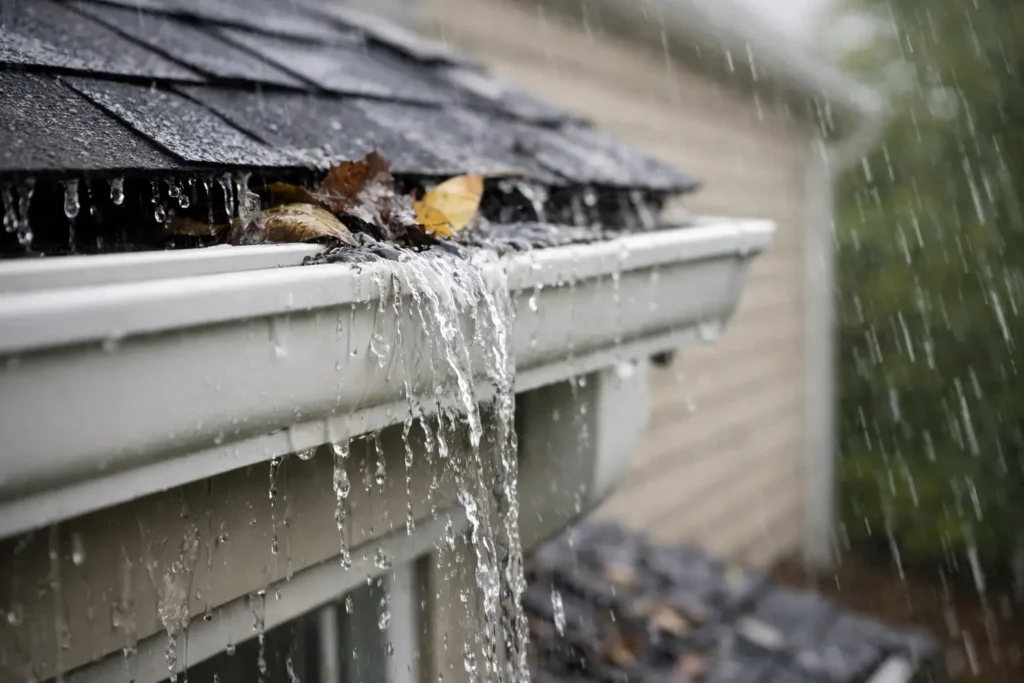
Gutters are designed to collect rainwater from the roof and direct it through downspouts. When that route is blocked or restricted, water has to find another way out. It usually runs over the front or back edge of the gutter, down exterior walls, and onto the ground below.
The most common cause is a buildup of leaves, moss, twigs, roof grit, and general debris. Even a small amount of sludge can prevent water from reaching the downspout properly. In areas with mature trees, gutters may block more quickly, but properties without nearby trees are not immune. Moss washed down from a roof and windblown debris can cause the same problem.
A blockage is not the only possibility. A gutter may overflow because it is sagging, poorly aligned, undersized for a roof section, or fitted with a downspout that cannot handle the volume of water. Heavy rainfall can expose these faults quickly. Cleaning clears the debris, but if water still pools or spills afterward, the gutter line may need adjustment or repair.
The parts of a property most at risk
Overflowing gutters place water in direct contact with vulnerable surfaces. The damage is often gradual, which is why it can remain unnoticed until repairs are more involved.
Fascia boards, soffits, and roof edges
When water repeatedly backs up behind a gutter or pours over its edge, it can soak the fascia board that supports it. Timber fascias are especially vulnerable to peeling paint, soft spots, and rot. Even modern materials can become stained or allow water to reach the structure behind them if joints and fixings are compromised.
Soffits may also show water marks or staining. If moisture reaches roof timbers over a prolonged period, it can create a much larger maintenance issue than a blocked gutter alone. Catching overflow early protects the roofline and helps keep the outside of the home looking cared for.
Exterior walls, windows, and doors
Rainwater should not be running down walls every time it rains. Persistent overflow can leave dark staining on siding, render, brick, and window frames. It may encourage algae growth and make a clean exterior look neglected, even shortly after washing.
Water can also find weaknesses around window seals, door frames, vents, and cracks in masonry. A single storm is unlikely to cause serious trouble, but repeated wetting can worsen small defects. If you have noticed damp marks indoors near an outside wall, it is worth checking the gutters above that area before assuming the problem begins inside.
Foundations, paths, and landscaping
Downspouts are there for a reason: they carry water away from the base of the property. When a gutter overflows, a concentrated stream may hit the same patch of ground every time it rains. Over time, this can erode soil, disturb mulch and plants, and create muddy areas close to the home.
Water collecting near foundations is a particular concern. The risk depends on the property’s drainage, soil type, slope, and construction, but allowing large amounts of roof runoff to sit against the building is never ideal. Overflow can also cause paths to become slippery and may lead to puddling around entrances.
Signs you should not ignore
You do not need to climb a ladder to spot every gutter issue. Watching your home during steady rain is often enough to reveal whether water is moving properly. Look for water pouring over a gutter edge, drips coming from joints, or a downspout that stays dry while the gutter is clearly full.
Between rainstorms, check for vegetation growing from the gutter, dark lines on walls beneath the roofline, sagging sections, or a visible buildup at the downspout opening. Peeling paint on fascias and green staining around the roof edge can also point to ongoing moisture exposure.
A sudden overflow after a storm can be caused by a recent blockage. Overflow that happens regularly, especially from the same section, deserves more attention. It could be debris, but it could also be an issue with the gutter’s pitch or condition.
Why cleaning is preventative maintenance, not just a tidy-up
Gutter cleaning is easy to postpone because the gutters are out of sight. The practical value is not simply removing leaves. It is restoring the drainage route before water begins to affect the roofline, walls, and ground around the home.
The right schedule depends on the property. A home near trees may need attention more than once a year, particularly after fall leaf drop. For many properties, an annual inspection and clean is a sensible starting point. If the roof sheds moss or you have previously experienced blockages, more frequent checks may be worthwhile.
Professional cleaning is also safer than attempting to reach high gutters from a ladder without the right equipment. A trained, fully insured exterior cleaning team can remove debris, check that downspouts are flowing, and identify visible problems such as loose brackets or overflowing joints. Cleaning cannot fix damaged guttering, but it makes it much easier to see when repair work is needed.
What to do when your gutters are already overflowing
Avoid waiting for the next major storm to see whether the problem gets worse. First, make a note of where the overflow occurs. Is it one short section, near a downspout, or across a longer run of guttering? This can help distinguish a local blockage from a drainage or alignment issue.
If it is safe to do so from ground level, check whether the downspout outlet is blocked by leaves or debris. Do not lean ladders against gutters or try to clear high-level blockages without suitable access equipment. Gutters can be damaged easily, and falls from ladders are a serious risk.
Arrange a professional gutter clean and flow check. Once the debris is removed, the gutter can be tested to confirm that water reaches the downspout and drains away properly. If overflow remains, you will have a clearer basis for arranging a repair, realignment, or replacement section.
Keep the water moving in the right direction
A clean gutter is a small part of property maintenance, but it protects far more than the gutter itself. It helps preserve the roof edge, keeps exterior walls cleaner, and reduces the chance of water repeatedly gathering near the home.
If you have seen water spilling over the gutters at your Canvey Island or Essex property, dealing with it before the next spell of wet weather can prevent a simple cleaning job from turning into avoidable repair work. A prompt inspection gives you a clear view of what needs attention and helps keep your home protected from the top down.