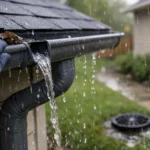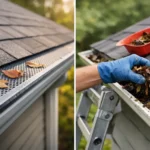
A gutter can look clear from the ground and still be holding a compacted mix of wet leaves, moss, roof grit, and standing water. That is why the choice between professional gutter clearing vs DIY is not simply about who can remove a few leaves for less. It is about access, safety, the condition of your system, and whether the work actually prevents the next heavy rainfall from becoming a property problem.
For some homeowners, a careful DIY clean on a low, easy-to-reach section can be sensible. For many others, especially where gutters sit above conservatories, extensions, sloping ground, or two-story elevations, professional service offers a safer and more dependable result. The right option depends on the property, not a one-size-fits-all rule.
Why clear gutters matter more than they seem
Gutters have one straightforward job: carry rainwater away from the roof and direct it safely through the downspipes. When debris blocks that route, water can spill over the front or back of the gutter. It may soak fascia boards, stain brickwork, splash onto paths, and collect close to the foundations.
In the wetter months, neglected gutters can also add unnecessary weight to brackets and joints. A small blockage in a downpipe may cause water to back up across an entire run, even if most of the gutter looks relatively clean. Clearing is preventive maintenance, not just a way to improve the appearance of the roofline.
Properties near mature trees tend to need more frequent attention, but every home collects roof moss, airborne dirt, and debris over time. Homes around Canvey Island and nearby coastal areas can also see grit and organic buildup settle in places that are difficult to inspect from ground level.
Professional gutter clearing vs DIY: the real differences
The main difference is not that professionals have a ladder and a bucket. It is the ability to inspect and clear the full system safely, including high-level sections and downpipes, while spotting issues that can be missed during a quick clean.
Safety is the first consideration
Ladder work causes avoidable injuries every year, particularly when homeowners try to reach sideways, work on uneven paving, or climb while carrying tools. Wet leaves and damp conditions make the job more hazardous. Reaching gutters above a porch, conservatory, garage roof, or awkward side passage creates further risk.
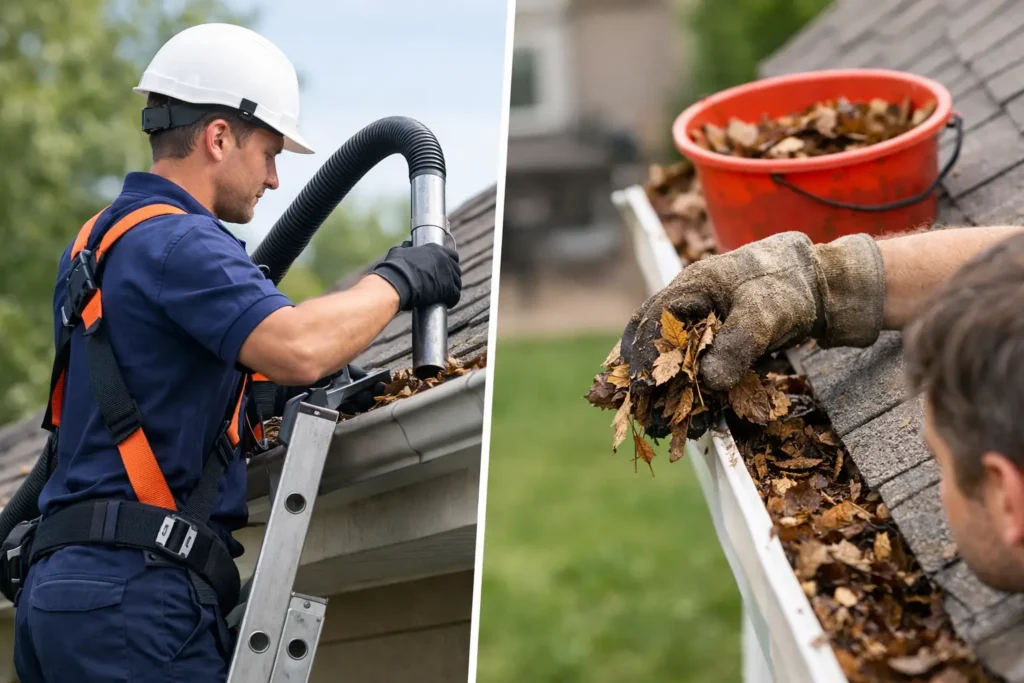
A professional team uses suitable access equipment and established working methods. Where appropriate, gutter vacuum systems can remove debris from the ground using high-reach poles, reducing the need for ladder work. This is especially useful on taller homes or areas where ladder placement is limited.
DIY may be reasonable if you have a single-story section, stable level ground, appropriate equipment, and confidence working at height. If any of those conditions are missing, saving money on the cleaning is rarely worth the risk of a fall or damage to the property.
A professional clean is usually more thorough
A homeowner cleaning from a ladder may remove visible leaves but leave sludge in the gutter base or fail to check the downpipe. That remaining material can quickly form another blockage once rain arrives.
Professional clearing focuses on the whole drainage route. The gutter channels are emptied, debris is removed rather than pushed into the downpipe, and problem areas can be identified. A good service should also reveal issues such as loose brackets, sagging runs, disconnected joints, cracked seals, or overflowing outlets.
This does not mean every gutter needs major work. Often, the problem is simply buildup. But knowing the difference helps you avoid paying for repairs later because a small defect went unnoticed.
DIY has lower upfront cost, but not always lower overall cost
DIY is usually cheaper on the day if you already own a suitable ladder, gloves, scoop, bucket, and protective equipment. However, the costs can add up when equipment needs buying, when several hours of weekend time are involved, or when access is difficult.
There is also the cost of an incomplete job. If a blocked gutter causes overflow that damages painted trim, saturates a wall, or contributes to damp around a vulnerable area, the initial saving can disappear quickly. Professional work costs more upfront, but it buys experience, appropriate equipment, insured service, and a clearer view of the system’s condition.
The best value is not always the lowest quote or the cheapest DIY approach. It is the option that keeps water moving where it should, without creating a safety issue or leaving the hard-to-reach blockage behind.
When DIY gutter cleaning can make sense
DIY gutter cleaning can be a practical choice for a homeowner who has safe access to a short, low-level gutter run and is comfortable carrying out basic maintenance. It can also work well between professional visits, particularly if a small amount of loose debris has gathered near an easily reached outlet.
If you choose to do it yourself, wait for a dry day, make sure the ground is firm and level, and do not overreach from the ladder. Clear small sections at a time and check that water can pass through the downpipe afterward. Never stand on a roof, lean a ladder against a weak gutter, or attempt the task alone if conditions are uncertain.
DIY is less suitable when the gutters are high, heavily blocked, hidden behind extensions, or showing signs of failure. It is also not the right job when you can see watermarks beneath the gutter, vegetation growing from the channels, or a downpipe that regularly overflows in rain.
When calling a professional is the better decision
Professional gutter clearing is the sensible route when safety, access, or the scale of the buildup is a concern. It is particularly worthwhile for two-story properties, homes with conservatories, rental properties, and households that simply do not have the time or equipment to manage the work safely.
You should also arrange a professional inspection if you notice any of the following:
- Water spilling over the gutter line during rain
- Damp patches, peeling paint, or staining near the roofline
- Gutters that appear to bow, sag, or pull away from the fascia
- Plants, moss, or visible debris growing from the gutter
- Downpipes that drip, leak at joints, or fail to drain properly
These signs do not automatically mean expensive repairs are needed. They do mean the system needs proper attention before the next spell of wet weather makes the issue worse.
What a dependable service should include
A reliable gutter clearing visit should be clear about what is being done and what has been found. Homeowners should not be left guessing whether the downpipes were checked or whether debris was simply moved somewhere less visible.
Look for a fully insured provider with experience working on different property types. The team should use suitable methods for the access available, work carefully around rooflines and exterior surfaces, and communicate any concerns discovered during the clean. Visible results matter, but so does practical advice when a gutter joint, bracket, or outlet needs further attention.
Essex Exterior Cleaning provides professional exterior maintenance with the same straightforward approach: safe working methods, attention to detail, and a focus on helping homeowners protect their property as well as improve its appearance. For many customers, combining gutter clearing with window, fascia, or soffit cleaning also makes it easier to keep the whole exterior looking cared for in one visit.
How often should gutters be cleared?
Most homes benefit from gutter clearing at least once a year. Properties close to trees, with mossy roofs, or with frequent debris buildup may need attention twice a year, commonly after fall and again before prolonged winter rain.
Rather than waiting for an overflow, check the roofline after heavy weather and look for changes in how water drains. A regular maintenance schedule is usually easier and more affordable than responding to a blocked system when water is already running down the walls.
Whether you choose DIY for a simple low-level task or book a professional for complete, safe clearance, the useful goal is the same: keep rainwater moving away from your home before a small blockage has the chance to become a bigger repair.