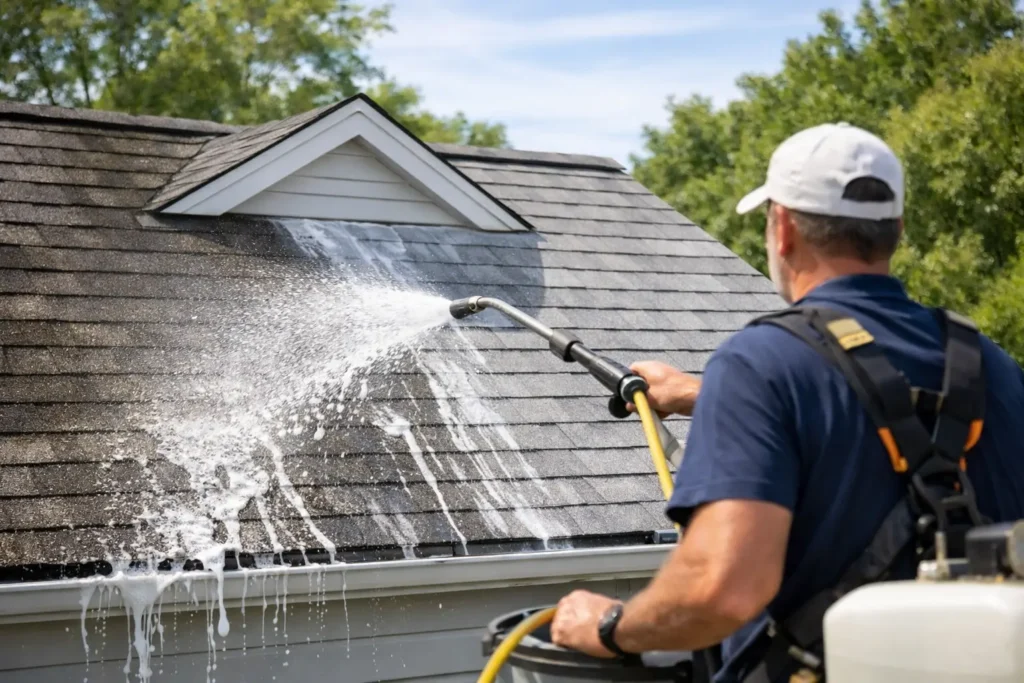
A roof can look tired long before it has reached the end of its life. Dark streaks, green moss, and lichen may seem like cosmetic problems, but they can hold moisture against the roof surface and make small maintenance issues harder to spot. For most homes, the best method for roof cleaning is soft washing: a low-pressure treatment that removes organic growth without the force that can damage roofing materials.
The right approach still depends on the roof itself. A newer asphalt-shingle roof, an older concrete tile roof, and a delicate slate roof should not all be treated in exactly the same way. The goal is not simply to make the roof look cleaner for a week. It is to remove the growth safely, protect the roof, and leave the property looking well cared for.
Why pressure washing is usually the wrong choice
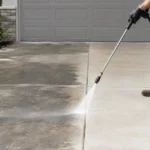
A standard pressure washer can be useful on hard ground surfaces such as driveways and patios. Roofs are different. Their materials are designed to shed rainwater, not withstand a powerful stream of water directed up close.
On asphalt shingles, high pressure can strip away the protective granules that help shield the roof from sun and weather. It can also force water beneath the shingles, disturb edges, and shorten the roof’s service life. On concrete or clay tiles, pressure may loosen tiles, damage older surfaces, or drive water into gaps around flashings and joints.
There is also the practical issue of runoff. Moss broken loose by pressure washing can collect in gutters and downspouts, creating a blockage just when the drainage system needs to handle dirty water. A roof may appear clean immediately afterward, but the risk and disruption often outweigh that short-term result.
A carefully controlled low-pressure process is a safer choice for the majority of residential roofs. It treats the source of the staining rather than trying to blast it away.
The best method for roof cleaning is soft washing
Soft washing uses a roof-safe cleaning solution applied at low pressure. The treatment is designed to kill algae, moss, lichen, and other organic growth, then allow the roof to brighten gradually as weathering rinses away the remaining residue. Where appropriate, a professional may gently remove heavier moss first, but this should be done without aggressive scraping or pressure.
The important difference is the pressure. Soft washing applies the solution with controlled equipment, rather than using force to remove material from the roof. This makes it well suited to shingles, tiles, and many other common roofing surfaces.
A proper service is not just a quick spray from ground level. The technician should assess the roof material, its age and condition, visible moss coverage, access points, guttering, and nearby plants before beginning. That assessment helps determine the right treatment strength, the amount of manual moss removal needed, and how runoff should be managed.
For homeowners, the benefits are straightforward: cleaner-looking roof surfaces, less risk of surface damage, and a treatment that addresses the growth causing those black or green marks. Soft washing can also slow the return of organic buildup, although no roof stays completely free of debris forever in a damp, leafy, or coastal environment.
What a careful roof cleaning service should include
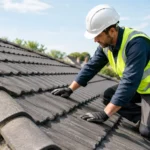
Roof cleaning is high-level work, so preparation matters as much as the cleaning solution. A dependable contractor should protect surrounding areas, work safely around access points, and keep an eye on drainage throughout the job.
First, loose debris such as branches and thick moss should be considered. Removing large amounts of moss may be necessary, but it should be handled carefully to avoid cracking tiles, lifting shingles, or sending material into the gutters. Gutters should then be checked and cleared so water can drain properly after treatment.
Nearby plants, lawns, and exterior finishes also deserve attention. A professional will pre-wet sensitive vegetation where needed, manage overspray, and rinse affected areas after the application. This is especially valuable on close-set properties, where a roof treatment must be controlled with care.
Finally, the roof should be allowed time to respond. Soft washing is not always an instant transformation, particularly where lichen has been established for years. The treatment kills the growth first; rain and normal weathering help the roof clear over the following weeks. A company that promises a spotless roof in minutes may be relying on excessive pressure rather than the safest method.
When manual moss removal is needed
Soft washing is highly effective for staining and light-to-moderate biological growth. Heavy, thick moss can require an additional manual step before treatment, particularly on older tile roofs. Moss has a habit of growing around overlaps and edges, where it traps moisture and can interfere with normal rainwater flow.
Manual removal should be gentle and selective. It is not the same as scraping the roof hard with metal tools. The purpose is to lift the bulk of loose growth while preserving the roof surface beneath it. The remaining treatment then deals with spores and smaller growth that cannot be seen clearly from the ground.
This is one of the reasons a roof inspection matters. A roof with a few dark algae streaks may need only a low-pressure treatment. A roof carrying deep moss across tiles and into the gutters may need cleaning, gutter clearing, and a closer look at drainage. One method does not fit every roof, but high-pressure washing is rarely the answer.
Roof material changes the cleaning approach
Asphalt shingles need particular care because their surface granules can be easily damaged. Low-pressure soft washing is generally the preferred approach, with no brushing that could wear the shingle surface. Water should never be driven upward beneath the shingle courses.
Concrete and clay tile roofs can be durable, but older tiles may be porous, brittle, or already cracked. A trained cleaner should avoid walking unnecessarily on fragile areas and should use a treatment suited to the condition of the tiles. Replacement or repair should be addressed before cleaning if tiles are loose or broken.
Slate roofs deserve extra caution. Natural slate can last for decades, yet individual pieces can crack under poor foot placement or careless cleaning. Specialist assessment is sensible where slate is aged, steeply pitched, or visibly weathered.
Metal roofing is less likely to support thick moss, but it can still develop algae, dirt streaks, and debris around fasteners and gutters. A mild, compatible treatment and low-pressure rinse can be effective without harming the coating. Whatever the roof material, the cleaning product must be appropriate for that surface and applied according to a controlled process.
Do not clean a roof when repairs come first
Cleaning can improve the appearance of a roof, but it cannot solve damaged flashing, failed sealant, cracked tiles, missing shingles, or leaks. In some cases, a dirty roof is hiding a repair issue that needs attention first.
Look for signs such as water marks in the attic, slipped tiles, curled shingles, loose ridge pieces, damaged flashing around chimneys, or gutters pulling away from the roofline. If any of these are present, arrange a repair assessment before a cleaning visit. Applying a treatment to a roof with active defects may send water where it should not go and makes it harder to identify the original source of a problem.
It is also wise to postpone roof cleaning during icy conditions, strong winds, or heavy rain. Safe access is essential. A professional should be fully insured and equipped to decide when conditions are unsuitable rather than taking unnecessary risks.
Can homeowners clean their own roofs?
For many homeowners, roof cleaning is not a sensible DIY task. Ladders, wet roof surfaces, cleaning chemicals, and uneven ground create a combination of risks that is easy to underestimate. Even a single-story property can be difficult to work on safely, especially when gutters, conservatories, or landscaping limit access.
There is also a risk of choosing the wrong cleaner or rinsing method. Household products may stain surfaces, harm plants, or fail to deal with the organisms causing the discoloration. A rental pressure washer can cause damage in seconds that costs far more than a professional cleaning service.
If the roof only has a small amount of loose debris near a safely accessible gutter line, keep both feet on stable ground and consider a suitable long-reach tool. For moss, staining, or anything that requires stepping onto the roof, hiring an insured exterior cleaning team is the safer route.
Keeping a cleaned roof in better condition
A clean roof benefits from simple ongoing maintenance. Keep gutters and downspouts clear so rainwater has somewhere to go. Trim back overhanging branches where practical, as shade and falling leaves encourage moss growth. Check the roof from ground level after storms and during the wetter months, looking for blocked gutters or obvious changes.
Properties in areas such as Canvey Island, Benfleet, Rayleigh, and Southend-on-Sea can be exposed to damp weather, windblown debris, and coastal conditions that speed up exterior buildup. Regular gutter and exterior maintenance helps prevent a roof-cleaning issue from becoming a drainage issue.
Essex Exterior Cleaning uses practical, low-pressure roof-cleaning methods chosen to protect the surface while delivering visible results. A careful treatment, clear drainage, and routine checks give your roof the best chance to keep doing its job quietly for years to come.