
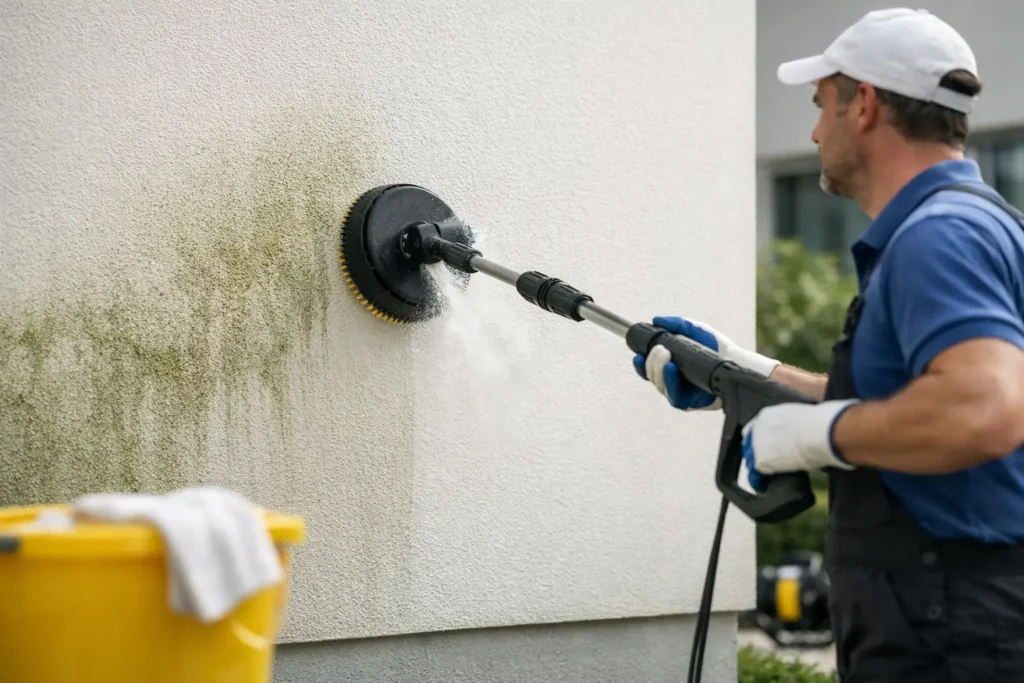
A rendered wall can look tired long before it is actually in poor condition. Green algae, traffic film, dirt streaks, and airborne pollution can quickly spoil an otherwise well-kept home. Cleaning rendered walls safely is about removing that buildup without blasting away the surface, forcing water behind cracks, or leaving patchy marks that make the wall look worse than before.
For many homeowners, the temptation is to use the highest setting on a pressure washer and get the job done quickly. That is often where damage begins. Render is not the same as brick or concrete. Its finish, age, paint type, and condition all affect how it should be cleaned.
Why rendered walls need a careful approach
Render is a protective outer coating, usually made from cement, lime, acrylic, or silicone-based materials. Some finishes are painted, while others are colored through the material itself. Although it can be durable, render can also be porous or delicate, particularly on older properties or walls with existing hairline cracks.
When water is driven at the wall under too much pressure, it can strip away the surface, expose the aggregate beneath, or create visible lines and gouges. Water can also enter small cracks and weak joints. In colder weather, trapped moisture may worsen the problem over time.
There is also the question of appearance. Strong cleaning methods may remove algae but leave pale patches, streaks, or uneven areas behind. A wall that was simply dirty can end up needing repainting or repair. The safest method is always the one that suits the condition and finish of the wall, not the one that appears fastest.
Check the wall before you start
Before any cleaning begins, inspect the render closely from ground level. Look for loose material, cracks, bubbling paint, crumbling edges, stained areas beneath gutters, and signs of damp. A green or black coating is often algae, moss, or mildew, but brown streaks may point to rusting fixtures or overflowing gutters.
If the render is loose, hollow-sounding, badly cracked, or flaking, cleaning should wait until the underlying issue is addressed. Washing a damaged surface can make the defect larger. Likewise, a persistent stain below a gutter or roofline may return quickly unless the source of the water is fixed.
It is sensible to test any cleaning method on a small, discreet part of the wall first. This shows how the surface reacts and helps avoid an unpleasant surprise across the front of the property.
Use low pressure and the right cleaning solution
For most rendered walls, a gentle wash with a suitable cleaning solution is safer than aggressive jet washing. The cleaning product loosens organic growth and dirt so it can be rinsed away with far less force. This is especially useful for textured, painted, or older rendered finishes.
Start by protecting nearby plants, outdoor furniture, windows, and painted woodwork. Wetting plants beforehand and rinsing them afterward helps reduce the chance of cleaning residue affecting them. Keep runoff in mind, particularly near ponds and drainage areas.
Apply the cleaner according to its instructions and allow enough contact time for it to work. Do not let it dry onto the wall, especially in direct sun. Then rinse using low pressure, working from the top down in controlled sections. A broad fan setting and a sensible distance from the wall are far safer than a narrow, concentrated jet.
Scrubbing may be needed in stubborn areas, but use a soft brush. Wire brushes, abrasive pads, and harsh scraping tools can scar the finish or remove paint. Patience is usually more effective than force.
Avoid cleaning in poor conditions
A dry, mild day is best. Cleaning during freezing temperatures can create a slip risk and may allow water to freeze in defects. On very hot or sunny days, solutions can dry too quickly and leave marks. High winds can spread overspray onto windows, neighboring properties, or plants.
If the wall has recently been painted or repaired, check the curing time recommended for the coating or render system before cleaning it. Fresh finishes need time to fully harden.
When pressure washing can be appropriate
Pressure washing is not automatically wrong for rendered walls, but it needs to be handled with care. A newer, sound render finish may tolerate a gentle rinse, particularly where heavy dirt has collected near ground level. Even then, the operator should use low pressure, a wide spray pattern, and keep the nozzle moving.
Never direct a high-pressure stream into cracks, around window frames, under sills, beneath roof edges, or at weakened render. Avoid working too closely to corners and decorative details, where the finish can be more vulnerable.
The trade-off is simple: more pressure may appear to clean faster, but it increases the risk of surface damage. A slower soft-wash approach often provides a more even result and is much kinder to the property.
Common mistakes that damage render
Several well-meant cleaning jobs end up causing avoidable problems. The most common mistake is treating rendered walls like a driveway. Concrete and paving are designed for tougher cleaning, while render requires a lighter touch.
Other problems include using bleach or strong chemicals without checking their suitability, cleaning without protecting plants, and ignoring gutter leaks that are causing the staining. A harsh chemical can discolor painted render, while a poorly rinsed product can leave streaks or residue.
Homeowners should also avoid trying to clean high walls from ladders while handling a hose or pressure washer. The work becomes difficult to control, and the risk of a fall is significant. Upper-story render, walls above conservatories, and hard-to-reach side passages are better handled with the right equipment and a safe working method.
Address algae, mildew, and recurring green stains
Green staining is particularly common on shaded walls, north-facing elevations, and areas close to trees or shrubs. Essex weather can leave exterior surfaces damp for long periods, creating the ideal conditions for algae to return.
Removing the visible growth is only part of the job. A treatment designed for exterior organic staining can help slow regrowth when applied correctly. Keeping gutters clear, trimming back vegetation that blocks airflow, and reducing constant splashing around downspouts can also make a real difference.
Do not assume every dark mark is mildew. Soot, pollution, rust, and water staining all need different approaches. If a stain remains after gentle cleaning, forcing it with stronger pressure is rarely the answer. It may require targeted treatment or a repair to the source of the stain.
When to call a professional
Professional cleaning is a sensible choice when render is high up, heavily stained, painted, cracked, or difficult to access safely. It is also worthwhile when you are unsure whether the wall is traditional cement render, a modern colored render system, or a painted finish. Using the wrong method on an unfamiliar surface can be costly.
A reliable exterior cleaning team should assess the wall before starting, choose a suitable low-impact method, and explain what result is realistic. Not every old stain can disappear completely without repainting, but a careful clean can make a substantial improvement without taking unnecessary risks.
At Essex Exterior Cleaning, we take a practical approach to exterior surfaces: protect the property first, then work toward a clean, even finish. Fully insured service and the right equipment matter just as much as the visible result.
A rendered wall does not need aggressive treatment to look cared for. Give it the gentler method it deserves, deal with the moisture or drainage issue behind recurring marks, and the finish will have a far better chance of staying clean and presentable for longer.