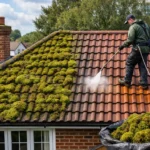
A few green patches along the lower edge of a roof can look harmless. Left alone, they can hold moisture against tiles, spread into gutters, and make a well-kept home look neglected. These roof moss removal examples show why the right approach depends on the amount of growth, the roof material, and the condition of the tiles underneath.
Roof Moss Removal Examples by Level of Growth
Moss does not build up overnight. On many Essex homes, it starts on shaded roof slopes, around chimneys, beneath overhanging trees, or on north-facing areas that stay damp for longer. Looking at the level of buildup helps determine whether careful maintenance is enough or whether a full professional roof clean is the sensible choice.
Example 1: Light moss on a few roof tiles
This is the earliest and simplest example. You may see small tufts of moss between tiles or a thin green film in one corner of the roof. The roof still looks mostly clean from the street, and there is little or no moss collecting in the gutters.
At this stage, the priority is preventing a small problem from becoming a bigger one. A professional can remove loose growth carefully, clear any debris that has reached the gutters, and apply an appropriate treatment where suitable. The treatment helps slow regrowth without the need for aggressive cleaning.
It is tempting to deal with a few patches from a ladder, but roof access carries real risk. Walking on tiles can also crack or dislodge them, particularly on older roofs. A light buildup does not always need a heavy cleaning method, but it still needs a safe one.
Example 2: Moss along the lower roof edge and in gutters
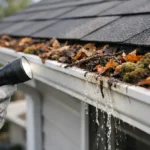
A common sight is a line of moss sitting above the guttering. Rainwater washes loose pieces down the roof, where they settle in the gutter, around downpipes, and behind gutter guards. The roof may not appear heavily covered, yet the drainage system is already under pressure.
This example usually calls for both roof and gutter attention. Removing only the gutter blockage means more moss may arrive after the next spell of rain. Removing only the roof moss can leave existing debris blocking the flow of water. Handling both areas at the same visit gives a cleaner result and helps water move away from the property as it should.
Homeowners often first notice this issue when water spills over the gutter during rain. That overflow can mark walls, soak fascia boards, and create damp areas around the base of the home. Addressing the buildup early is generally more straightforward than waiting for drainage problems to appear.
Example 3: Thick moss across one side of the roof
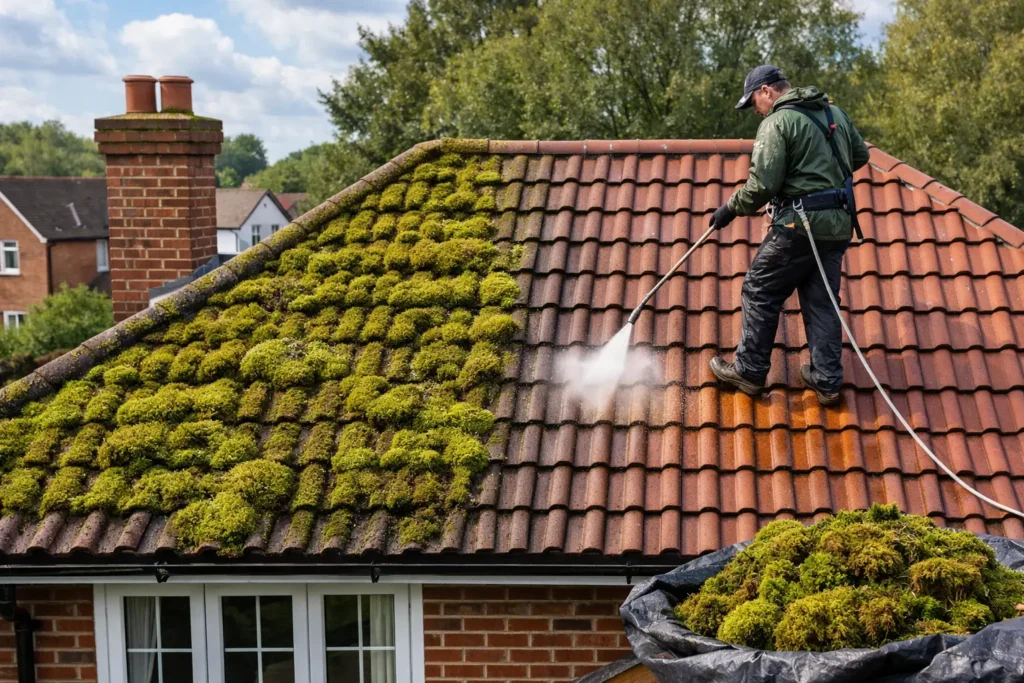
When a shaded roof slope has a thick, uneven layer of moss, the growth is no longer just a cosmetic concern. It can trap moisture against the surface and work its way beneath overlapping tiles. In freezing weather, retained water may add stress as it expands and contracts.
For this level of growth, the work should be planned around the roof’s condition. A trained cleaner will check for loose, cracked, or damaged tiles before starting. Moss is then removed in a controlled way, usually by hand or with specialist low-pressure methods suited to the roof. Debris should be collected rather than pushed into gutters, flower beds, or neighboring property.
High-pressure washing is not the automatic answer. It can strip protective surface layers from some tiles, force water beneath them, and shorten the life of an aging roof. The quickest-looking method is not always the best value if it creates repair work afterward.
Example 4: Moss with visible tile damage
Sometimes moss removal reveals a problem that was already developing. A tile may be cracked, slipped, or worn beneath the growth. Ridge tiles and flashing around chimneys can also need closer attention where moss and debris have gathered.
In this situation, cleaning should not be treated as a substitute for roof repair. Loose moss can be removed carefully so the roof can be assessed clearly, but damaged materials should be repaired by an appropriate roofing professional before any wider cleaning continues. A reputable exterior cleaning company should be clear about that distinction.
This is one reason homeowners should be cautious of anyone offering a fast, one-price roof wash without seeing the roof first. Every roof has different materials, access points, pitch, and existing wear. A proper assessment protects the roof as well as its appearance.
What Safe Roof Moss Removal Looks Like
The best roof moss removal examples have one thing in common: they use the least aggressive effective method. The aim is to remove growth, protect the tiles, and leave the surrounding areas tidy.
A careful service normally begins with an inspection from ground level and, where safe, closer access using the right equipment. The cleaner considers tile type, roof pitch, areas of damage, nearby conservatories, and where debris is likely to fall. Gutters and downpipes should be cleared afterward because even a careful removal process can dislodge small pieces of moss.
For many tiled roofs, manual removal and a suitable biocide treatment are preferred over forceful pressure washing. Manual work takes more time, but it gives better control around fragile tiles and roof details. A treatment can deal with remaining spores and gradual staining, although weathering means the final improvement may continue over the following weeks rather than appearing all at once.
That gradual result is worth understanding. A roof covered in years of moss may look dramatically better immediately after removal, but darker biological marks can take time to fade. Promising an instant, brand-new appearance on every roof is not realistic. Careful cleaning is about improving appearance while avoiding unnecessary damage.
When Moss Removal Is Worth Booking
A small amount of moss is not always an emergency. However, action is sensible when growth is spreading, gutters are filling repeatedly, water is overflowing, or tiles are becoming difficult to inspect. Roofs beneath trees and homes close to coastal moisture can need more regular attention because damp organic debris builds up faster.
It is also worth considering roof moss removal before putting a home on the market, after a long period of neglected gutter maintenance, or when other exterior cleaning is being arranged. Cleaning windows, soffits, fascias, gutters, and the roof together can make the whole property look more cared for. The right schedule depends on shade, surrounding trees, roof material, and how quickly moss returns.
For homeowners in Canvey Island, Rayleigh, Benfleet, Basildon, and nearby areas, local experience matters. Essex Exterior Cleaning can assess the visible condition of your roof, explain the appropriate cleaning method, and provide a clear quote for safe, fully insured exterior work.
Keeping Moss From Returning Too Quickly
No cleaning method can stop nature completely, especially on a damp or heavily shaded roof. It can, however, reduce the conditions moss needs to grow. Keeping gutters clear prevents wet debris from sitting at the roof edge. Trimming back branches where practical allows more light and airflow onto the tiles, while regular checks after autumn help catch buildup before it spreads.
Avoid scraping at moss with unsuitable tools, spraying harsh chemicals without controlling runoff, or using a rented pressure washer from a ladder. These shortcuts can damage tiles, gutters, landscaping, and, most importantly, put you at risk. If moss is visible from the ground, there is often more of it where you cannot safely see.
A clean roof should not come at the expense of a sound one. The most useful next step is a straightforward assessment of the moss, the tiles, and the gutters, followed by a method that treats your home with the care it deserves.