
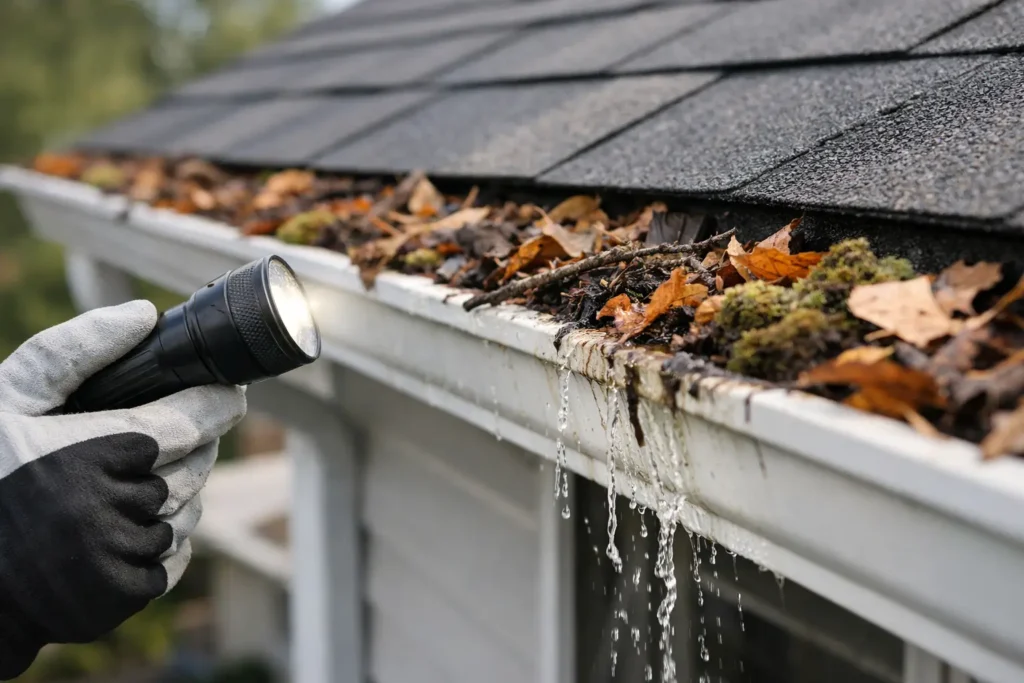
A gutter can look perfectly normal from the driveway while holding enough leaves, moss, and standing water to cause a problem at the next heavy rainfall. Knowing how to spot blocked gutters before that happens can save you from damp patches, damaged paintwork, and water collecting where it should not.
For homeowners in Canvey Island and nearby Essex towns, this is especially worthwhile after autumn leaf fall, strong winds, or a spell of wet weather. Gutters are easy to overlook because they sit above eye level, but they do a vital job: moving rainwater safely away from your roof, walls, foundations, and paths.
How to Spot Blocked Gutters From Ground Level
You should never need to climb a ladder just to check whether your gutters are working. In many cases, the warning signs are visible from the ground, particularly during rain or shortly afterward.
Water spilling over the gutter edge
Overflowing water is the clearest sign of a blockage. Instead of running toward the downspout, rainwater builds up behind leaves, roof moss, twigs, or silt and pours over the front or back edge of the gutter.
A small amount of overspill during an exceptional downpour does not always mean the gutters are fully blocked. However, if water regularly sheets over the edge during ordinary rain, it needs attention. Water falling from the back of the gutter is more concerning because it can run directly down exterior walls, behind fascia boards, or into areas around the foundations.
Watermarks, staining, or green growth on walls
Look at the wall below the gutter line. Vertical watermarks, dirty streaks, peeling paint, or green algae can all suggest rainwater has been overflowing for some time. You may also notice staining around the tops of windows or beneath the roofline.
These marks can be caused by wind-driven rain, so they are not proof on their own. But when they appear below a section of gutter that overflows, sags, or has visible debris, the cause is usually clear.
Plants, moss, and debris sticking out
A few leaves resting in a gutter may not stop water immediately. The trouble begins when those leaves mix with roof moss, soil-like grit, and small twigs. The buildup becomes dense and holds water in place.
If you can see moss growing over the gutter edge, grass-like shoots, or clumps of debris near the downspout, arrange a clean before the next prolonged rainfall. Plant growth means material has been sitting wet in the gutter for long enough to break down.
A sagging or uneven gutter run
Blocked gutters are heavy. Water trapped behind debris adds weight, while wet moss and silt can be surprisingly dense. Over time, this weight can pull gutter brackets loose and leave part of the run sagging.
Stand back and look along the gutter line. It should appear straight with a gentle fall toward the downspout. A section that dips, bows, or sits noticeably lower may be carrying a blockage, have loose brackets, or both. Cleaning is the first step, but the fittings should also be checked once the gutter is empty.
Signs You May Notice Around the Property
Not every blocked gutter gives an obvious visual clue at roof level. Sometimes the first evidence appears lower down, where rainwater ends up after it has failed to drain properly.
Puddles and splashing near the walls
After rain, check the ground below your gutters. Repeated puddles beside the house, unusually muddy borders, and heavy splash marks on brickwork can point to overflowing water. This is more than a nuisance around the entrance or patio. Constant water at the base of exterior walls can contribute to damp problems and may wash soil away from planted areas.
Also watch where your downspouts discharge. If a downspout is blocked, it may overflow at a joint or send water back up toward the gutter. If it is clear but water pools at its base, the issue may be poor drainage rather than the gutter itself. The fix depends on where the water is stopping.
Drips after the rain has stopped
It is normal for a roof and gutter to drip briefly after a shower. Persistent dripping from one point long after the rest of the property has dried can indicate standing water caught in a low section or behind a blockage.
Pay particular attention to drips from gutter joints. A joint may simply need resealing, but trapped water and debris can also force water through weak points. Leaving it unresolved can stain the wall and gradually worsen the leak.
Damp patches indoors or around roof edges
Blocked gutters do not automatically cause internal damp, and damp inside a home can have several causes. Still, a patch on an upper wall or ceiling, especially near an outside corner, should not be ignored if the gutter above is overflowing.
Water entering behind the gutter can affect fascia boards and roof-edge timbers before it becomes visible indoors. Early cleaning and inspection are far less disruptive than waiting until there is clear water damage.
Why Downspouts Need Checking Too
A gutter can be clean along most of its length and still fail because the downspout is blocked. Leaves often collect at the outlet where the gutter meets the downspout. Moss and small debris then form a plug that prevents water from escaping.
During rain, a blocked downspout often causes water to rise in the gutter until it spills over. You may hear gurgling, see water backing up at the outlet, or notice that one section overflows while the rest appears clear.
Do not force tools into a downspout from a ladder unless you are confident working safely at height. It is easy to damage a joint, dislodge the downspout, or miss a second blockage lower down. A professional clean can remove debris from the full system and confirm that water flows freely afterward.
When Are Gutters Most Likely to Block?
The answer depends on the property. Homes near mature trees often need more frequent attention, particularly after fall. Roofs with heavy moss growth can also send large amounts of debris into gutters throughout the year, even when there are few trees nearby.
Strong winds can fill an otherwise clean gutter with twigs and leaves in a single afternoon. In coastal areas, wind-blown debris and persistent wet weather can make regular checks useful. Flat-roof outlets, conservatory gutters, and smaller gutter sections around extensions are also easy to miss and may block sooner than the main roofline.
As a practical rule, inspect gutters from the ground a few times a year and after major storms. Many homeowners schedule professional gutter cleaning once or twice yearly. Properties below trees or with moss-covered roofs may need it more often. The right frequency is based on what your property collects, not a one-size-fits-all schedule.
Do Not Ignore These Less Obvious Warning Signs
Some gutter problems are caused by damage rather than debris alone. A clean gutter that is incorrectly pitched, cracked, or pulling away from the fascia can still overflow. That is why a good inspection looks beyond leaves.
Listen for water running where it should not during rainfall. Check for loose clips, split joints, missing end caps, and gutters that appear tilted away from the downspout. If you find a visible crack or a section that has come loose, avoid attempting a repair from an unstable ladder. The risk of a fall is not worth it, especially in wet conditions.
Bird nests can also create a sudden blockage. If you suspect an active nest, do not disturb it. Get advice before any work is carried out, as nesting birds may be protected.
Safe Gutter Care Makes a Difference
Clearing a gutter is not just a matter of removing the debris you can see. The work should include clearing the outlets and downspouts, checking that water can run through the system, and identifying damaged brackets or joints that may need repair.
For many homeowners, access is the main challenge. Ladders on uneven ground, wet paving, and awkward rooflines all increase the risk. Essex Exterior Cleaning uses suitable equipment to clean and inspect elevated gutters safely, helping homeowners deal with buildup without taking unnecessary chances.
If you spot water overflowing, wall staining, gutter sagging, or debris growing from the roofline, do not wait for a larger problem to appear. A timely gutter clean is a simple piece of property care that helps keep rainwater where it belongs: moving safely away from your home.