A conservatory can make a home feel brighter, larger, and more welcoming – until the roof becomes coated in green algae, traffic film, leaf debris, and weather marks. Professional conservatory roof cleaning results are often striking because the difference is not limited to appearance. A properly cleaned roof lets more natural light into the room, improves the view from inside, and helps stop organic buildup from sitting on the surface for longer than it should.
For homeowners, the main question is usually simple: will it actually look better? In most cases, yes. But honest results depend on the age and condition of the roof, the type of material, and how long dirt, algae, and staining have been allowed to build up. The aim is a cleaner, brighter roof with a tidy, even finish – achieved safely and without taking unnecessary risks with delicate panels, seals, or gutters.
What Good Conservatory Roof Cleaning Results Look Like
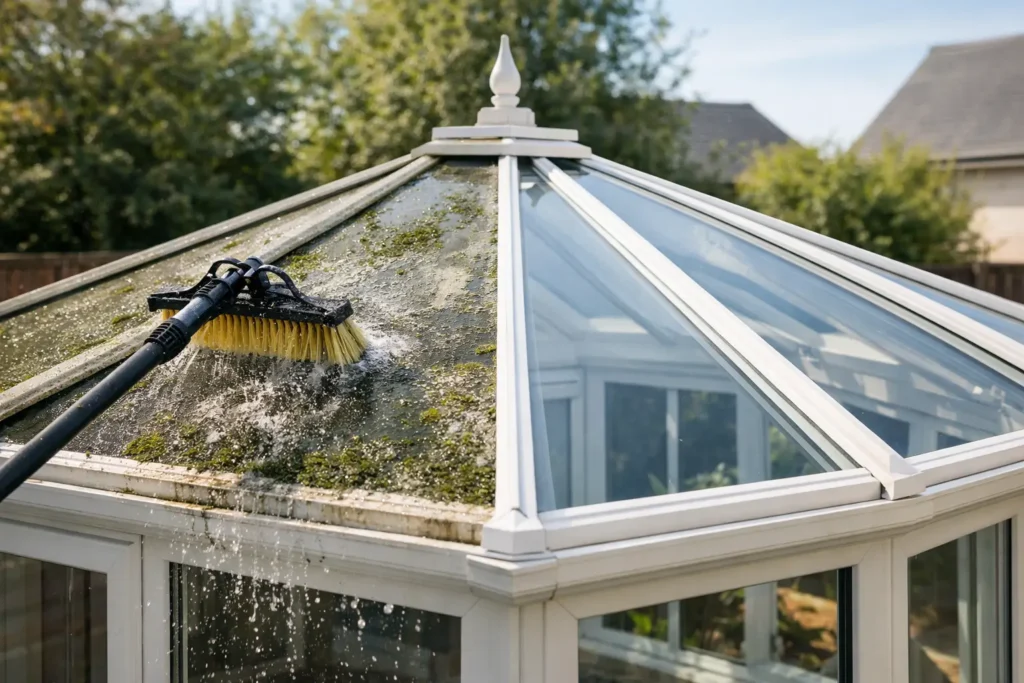
The most noticeable result is usually the return of light. Conservatory roof panels can look only slightly dirty from ground level, while the room beneath feels noticeably darker. Once algae, dust, cobwebs, and grime are removed, the roof can look clearer and the conservatory often feels fresher straight away.
From outside, a cleaned roof should have a more consistent appearance. Green growth around bars and edges is reduced, accumulated debris is removed from valleys, and the frame looks less dull. The finish should not be patchy with obvious missed areas, especially where roof panels meet the uPVC framework.
The surrounding details matter as well. A conservatory roof clean is far more satisfying when the gutters, fascia boards, window frames, and accessible glass are left looking cared for rather than making the clean roof stand out against dirty edges. This is why a full exterior approach can make such a visible difference to the overall appearance of the property.
Why Results Vary From One Roof to Another
Not every roof will come up looking brand new, and a reliable cleaner should be clear about that before work begins. Surface dirt and biological growth generally clean away well. Long-standing discoloration, weathering, scratches, faded panels, or staining trapped within older polycarbonate can remain visible after cleaning.
This does not mean the service has failed. It means cleaning has reached the limit of what cleaning can reasonably change. A roof that is structurally sound but tired may look dramatically improved, while a roof with permanently weathered material may look cleaner, brighter, and better maintained without returning to its original factory finish.
The roof material also makes a difference. Glass roofs can often deliver a crisp, clear finish when cleaned correctly. Polycarbonate roofs are more prone to scratching and can become cloudy over time, so they need a careful method and suitable equipment. Harsh pressure or abrasive products may create short-term results at the cost of lasting damage.
The Difference Between Cleaning and Damage
Conservatory roofs are not a surface to treat aggressively. They include panels, glazing bars, seals, vents, gutters, and sometimes difficult angles that make access a genuine concern. Walking on a roof, using excessive pressure, or relying on unsuitable chemicals can damage the roof or force water into areas where it does not belong.
A professional clean should be planned around the roof rather than forced through with one method. Water-fed pole systems are useful for reaching high panels safely from the ground, while traditional methods can be used where more detailed work is appropriate. The right approach depends on access, roof height, material, and the level of buildup.
At Essex Exterior Cleaning, the focus is on visible results without compromising property care. Fully insured work and more than 10 years of exterior cleaning experience matter here because conservatory cleaning is not simply about making a surface look good for an afternoon. It is about handling an elevated, often delicate part of the home with care.
What Happens During a Professional Conservatory Roof Clean
The job normally starts with an assessment of the roof condition and access. Heavy moss, leaves, and loose debris need to be dealt with first, particularly around gutters and roof valleys. Clearing this material helps prevent blockages and gives the cleaner a better view of the surface beneath.
The roof is then cleaned in a controlled way to lift off grime, algae, and atmospheric dirt. Frames and bars need attention because these are common places for green buildup to cling. Rinsing is equally important. Leftover cleaning residue can affect the finished appearance, so the roof should be rinsed thoroughly for a clean, clear result.
For roofs that have not been cleaned in years, it may take longer to get the best possible finish. Some grime loosens immediately, while deeply settled buildup can require more careful work. The best result is not always the fastest one. It is the one that leaves the roof clean, the surrounding areas tidy, and the materials respected.
The Importance of Gutters and Edges
A conservatory roof often collects leaves and moss before they make their way into the guttering. If the gutters are blocked, rainwater can overflow, mark the exterior, and create damp issues around the conservatory. Cleaning the roof without considering the gutters can leave half the problem behind.
Where gutter cleaning is needed, dealing with it at the same time can protect the property and make the final result look more complete. Clean roof panels, clear gutters, and fresh frames work together to improve both drainage and curb appeal.
How Long Will the Clean Look Good?
It depends on the location of the property and what is around it. Conservatories beneath trees usually collect leaves, pollen, bird mess, and moss spores more quickly than those in open positions. Homes near busy roads can also pick up more airborne dirt, while shaded sides of a property tend to encourage algae growth.
For many households, having the roof cleaned as part of regular exterior maintenance prevents heavy buildup from returning. Windows, gutters, soffits, fascias, and driveways all weather at different rates, so there is no single schedule that suits every home. A cleaner can recommend a sensible plan based on what they see rather than pushing work that is not needed.
Simple upkeep between visits helps too. Keeping nearby trees trimmed where practical and removing loose leaves from accessible areas can reduce the amount of debris that sits on the roof. Homeowners should avoid climbing onto the conservatory or attempting difficult cleaning from ladders. The risk of a fall or broken panel is not worth it.
Is a Conservatory Roof Clean Worth It?
If the conservatory feels dark, the roof looks green or stained, or the gutters are collecting debris, cleaning is usually a practical investment. It improves the way the space looks and feels without the cost and disruption of replacing the roof. It can also help homeowners spot issues such as damaged seals, blocked gutters, or worn components that might otherwise go unnoticed.
There is a cosmetic benefit, particularly before guests visit, when preparing a property for sale, or simply when the rest of the exterior has been cleaned. More importantly, regular attention helps prevent the neglected appearance that can make an otherwise well-kept home look tired.
A clean conservatory roof will not hide cracked panels or reverse years of material wear, but it gives the roof the best chance to look its best. If yours is holding back the light or letting down the appearance of your home, a careful professional clean and a free quote can be a straightforward first step.