A light layer of dust may not look serious from the ground, but solar panels work by allowing sunlight to reach their cells. When grime, pollen, bird droppings, salt residue, or traffic film sits on the glass, less light gets through. So, does cleaning solar panels improve efficiency? In many cases, yes – especially where buildup is visible, uneven, or left in place for months.
For homeowners, the practical question is not whether panels need attention every week. It is whether a safe clean can help the system produce closer to what it was installed to deliver. The answer depends on where the property is, how the panels are positioned, and what is collecting on them.
Does Cleaning Solar Panels Improve Efficiency in Real Terms?
Solar panel cleaning can improve output because it removes material that blocks sunlight. The improvement is often modest on panels with only a thin coating of ordinary dust. However, heavier soiling can have a more noticeable effect, particularly when bird droppings, leaves, moss, sticky pollen, or coastal salt deposits cover parts of the panel.
Even a small shaded area can matter. Panels are made up of connected cells, and a stubborn patch of dirt can affect more than the small area it covers. Modern systems are designed to manage some variation, but there is no benefit in allowing avoidable buildup to remain on the glass.
The difference is rarely the same for every home. A clean system in a sheltered location may see little change, while panels near busy roads, trees, farmland, construction work, or the coast can collect dirt far more quickly. Homes around Canvey Island and other coastal parts of Essex may also experience salt-laden air, which can leave a film that rain does not always remove fully.
When Cleaning Is Most Likely to Help
The best indicator is not simply how long the panels have been installed. It is their condition. If panels look patchy, have visible droppings, or show a dull film that remains after rainfall, cleaning is likely to be worthwhile.
Bird droppings are a common issue because they tend to dry hard and create dense spots that rain may not shift. Tree sap, leaf debris, and pollen can cause similar problems, particularly in spring and summer. After dry spells, dust can build up steadily, then turn into a more stubborn layer when mixed with light rain.
Panel angle also makes a difference. Steeper panels generally shed water and loose dirt more easily than low-pitch panels. Flat or shallow installations are more likely to hold dust and standing water marks. Properties close to the sea, busy roads, or open land may need more regular checks than homes in quieter, sheltered areas.
A useful approach is to compare your solar monitoring data before and after a professional clean, allowing for weather and seasonal changes. If the system has been producing less than expected and visible dirt is present, a clean may explain part of the difference. If output remains unusually low afterward, the issue could be electrical, mechanical, or related to shading rather than cleanliness.
Rain Does Not Always Clean Solar Panels
It is easy to assume rain keeps panels clean. Rain can wash away loose dust, but it is not a complete cleaning method. Light rain may simply move dirt around, while mineral deposits in water can dry into marks on the surface. It also does little for dried bird droppings, sticky sap, or grime that has bonded to the glass.
This is why panels can look cleaner after a shower but still have a film that reduces the amount of light reaching the cells. A proper clean removes the residue rather than relying on weather to do the job gradually.
There is another reason not to depend on rain alone: buildup is often uneven. One panel may be clean while another sits below a tree branch, near a chimney, or in an area birds regularly use. Uneven dirt can create uneven performance across the array.
How Often Should Solar Panels Be Cleaned?
For many homes, an annual inspection and clean is a sensible starting point. Some properties may benefit from cleaning every six months, especially if panels are exposed to birds, nearby trees, coastal air, dust, or regular pollution.
There is no need to clean panels on a fixed schedule if they remain visibly clear and performance is steady. Unnecessary cleaning adds cost and creates avoidable roof access. The better choice is to base the frequency on the condition of the panels and the environment around the property.
It is worth checking them after long dry periods, stormy weather, nearby building work, or heavy pollen seasons. You do not need to climb onto the roof to inspect them. A view from the ground, binoculars used safely, or a review of your inverter or app data can help identify whether professional attention is needed.
Why the Cleaning Method Matters
Solar panels are durable, but they are not a surface to attack with harsh chemicals, abrasive pads, or high-pressure washing. Scratching the glass, damaging seals, disturbing wiring, or forcing water into unsuitable areas can create a far more expensive problem than a dirty panel.
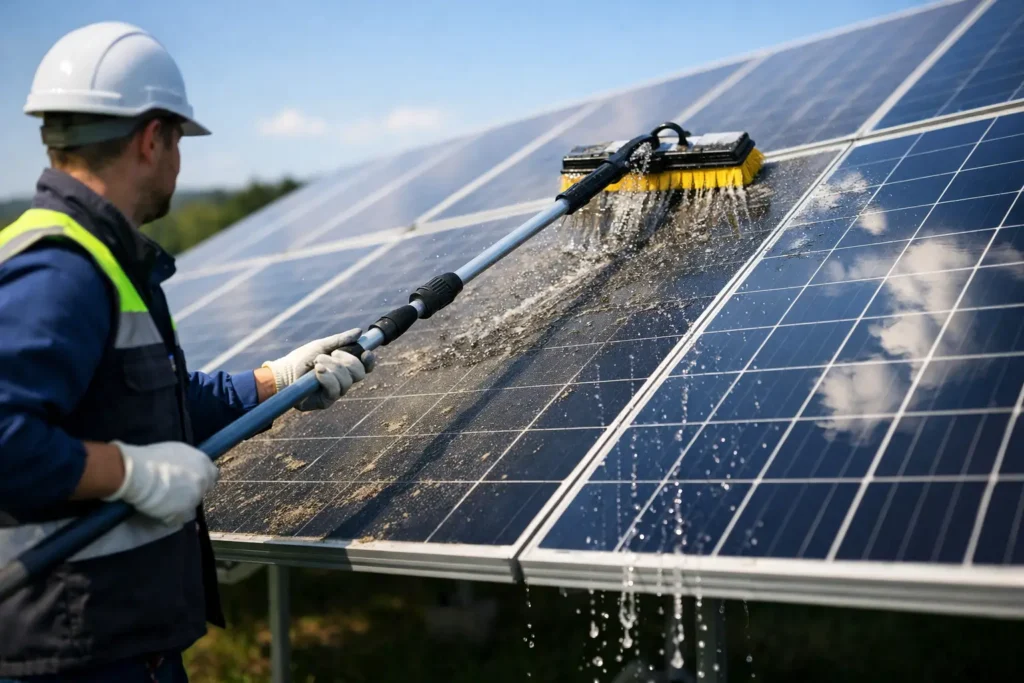
A safe professional clean typically uses purified water and suitable soft equipment to lift dirt without leaving mineral residue behind. The aim is a spotless finish with minimal risk to the panels, roof, and surrounding property. Water-fed pole systems can also allow work to be carried out from the ground in many situations, reducing the risks associated with ladder and roof access.
Avoid household glass cleaners, strong detergents, and rough brushes. Some products can leave residue that attracts more dirt, while abrasive materials can mark the surface. Cleaning panels when they are very hot is also not ideal, as rapid cooling and evaporating water can leave streaks or put unnecessary stress on the surface.
If your panels are difficult to reach, mounted high up, or installed on a steep roof, do not treat it as a DIY job. Working at height brings real risks, and solar systems have cables and components that should be handled carefully. Fully insured exterior cleaning professionals have the equipment and working methods to clean safely without turning a straightforward maintenance task into a roof-access problem.
Cleaning Is Part of Property Care, Not a Cure-All
Keeping panels clean supports their ability to receive sunlight, but it will not fix every performance issue. Shade from growing trees, inverter faults, loose connections, damaged components, and seasonal daylight changes can all reduce generation. In winter, shorter days and lower sun angles naturally affect output even when panels are perfectly clean.
That is why it helps to see cleaning as preventative property care. It removes a common, visible cause of reduced performance and makes it easier to spot other concerns. During a clean, a trained professional may notice cracked glass, heavy moss nearby, loose debris around the array, or signs that the panels need further inspection by a qualified solar technician.
Solar panel cleaning also makes sense alongside other exterior maintenance. Clear gutters reduce the chance of overflow around rooflines, while roof and window cleaning help maintain the rest of the property’s appearance. When these jobs are handled at the right time, homeowners can keep on top of exterior upkeep without spending weekends on ladders.
A Clear View of Better Solar Performance
Clean panels cannot create extra sunlight, but they can stop dirt from getting in the way of the sunlight available. If your panels are visibly soiled, producing less than expected, or exposed to coastal air, trees, birds, or road dust, a careful professional clean is a practical step that can protect both appearance and performance.
A quick visual check and a look at your generation data can tell you when it is time to act. Keeping the glass clear, using the right cleaning method, and leaving high-level work to experienced professionals gives your system its best chance to do the job you installed it for.