Green staining on a brick wall can make an otherwise well-kept home look damp, neglected, and older than it is. Brickwork algae removal is not simply about improving curb appeal. Done properly, it removes slippery growth, reduces moisture held against the wall, and helps you spot areas that may need maintenance before they become a larger issue.
For homeowners, the temptation is to attack the stain with the strongest cleaner available or a powerful pressure washer. That can work on some surfaces, but brickwork needs a more careful approach. Older bricks, damaged pointing, and sheltered walls can all react differently. The best method depends on the condition of the masonry, the extent of the growth, and what is causing it to return.
Why algae grows on brickwork
Algae needs moisture, shade, and a surface where spores can settle. Brick walls are naturally porous, so they can hold small amounts of water after rain or condensation. A north-facing wall, a narrow side passage, overhanging trees, or a leaking gutter can create the damp conditions algae favors.
The green film is often algae, while darker marks may include mildew, lichen, general traffic pollution, or accumulated dirt. These can look similar from a distance, but they do not always respond to the same treatment. A professional inspection helps avoid using more water pressure or chemical strength than the wall can safely handle.
Algae itself is usually a surface problem at first. However, repeated growth is often a sign that the wall stays wet for too long. Clearing the staining without addressing dripping gutters, poor drainage, or dense vegetation may leave you with the same issue again after a few months.
Brickwork algae removal starts with the right cleaning method
The aim is to clean the brick face and mortar joints thoroughly without stripping the surface. Brick is durable, but it is not indestructible. High pressure at close range can erode softer mortar, chip old brick, force water into cracks, and leave a patchy finish that attracts dirt more easily.
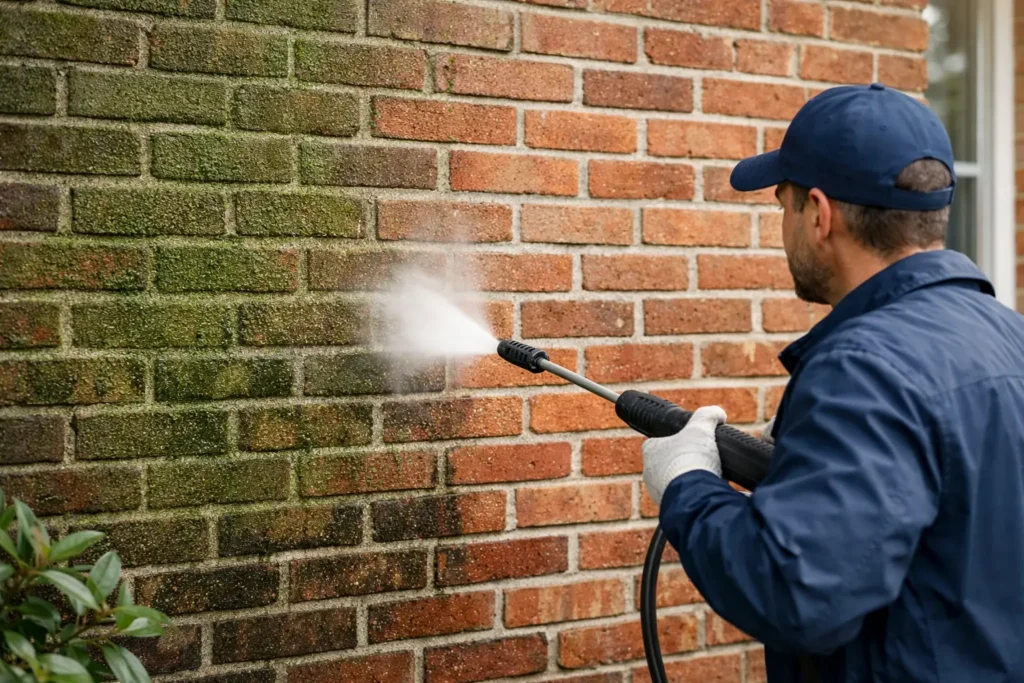
For light to moderate algae, a suitable exterior biocide or masonry-safe cleaning solution is often the most effective starting point. The product is applied carefully, allowed time to work, and then rinsed at low pressure where appropriate. This treatment kills the organic growth rather than just blasting away the visible green layer.
Where staining is heavier, gentle agitation with a soft brush may be needed. This is especially useful around textured bricks and recessed mortar joints, where algae can cling to the surface. The work should be controlled from start to finish, with nearby windows, plants, paths, and painted surfaces protected before cleaning begins.
Pressure washing may have a place on sound, modern brickwork, but it is not automatically the best answer. Lower pressure, the correct nozzle, and a safe working distance matter far more than raw power. If your brick is old, flaky, painted, lime-mortared, or already showing cracks, chemical treatment and a gentler rinse are generally the safer choice.
Why household cleaners can cause problems
Bleach and other household products may appear to brighten brick quickly, but they can be difficult to control and may damage nearby plants, discolor materials, or leave uneven results. Acid-based cleaners are even riskier. They can attack mortar and change the appearance of some bricks if used incorrectly.
A cleaning product should always be selected for the surface and applied according to its instructions. It should also be rinsed and contained responsibly. This is one reason many homeowners prefer an insured exterior cleaning company rather than spending a weekend testing products on a visible wall.
Check the cause before the algae comes back
A clean wall is satisfying, but the long-term result depends on moisture control. Once the brickwork has been treated, look closely at what is feeding the growth. Guttering that overflows onto a wall is a common cause. So are leaking downspouts, blocked drains, and soil or mulch piled too high against the base of the property.
Trees and shrubs can also make a difference. Branches close to the wall reduce airflow and keep the area shaded after rain. Cutting back vegetation does not mean stripping your garden bare. Even a little extra space between plants and brickwork can help the wall dry more quickly.
Pay attention to the mortar as well. Missing or crumbling pointing gives water more places to sit and can worsen with repeated freezing and thawing. Cleaning will improve the appearance, but it will not repair failing mortar. If joints are damaged, repointing should be considered before the issue spreads.
When DIY cleaning is reasonable
A small, accessible patch of algae on solid brickwork can often be managed by a homeowner. Use a masonry-appropriate treatment, wear gloves and eye protection, follow the label directions, and test a discreet area first. A soft brush and low-pressure rinse are usually enough for minor buildup.
Avoid working from ladders while handling water, chemicals, or pressure-washing equipment. Do not direct a pressure washer into vents, window seals, cracks, or mortar joints. It is also wise to avoid cleaning in strong sun, high winds, or freezing conditions, as products can dry too fast, drift onto nearby surfaces, or fail to work properly.
DIY becomes less sensible when the wall is high, the algae covers a large area, the brickwork is old, or you can see loose mortar and signs of water damage. Those are situations where a quick clean can easily turn into a repair bill.
When to call a professional for brickwork algae removal
Professional cleaning is the safer route when access is difficult or when the condition of the brickwork is unclear. A trained cleaner can assess whether the wall needs soft washing, low-pressure rinsing, brushing, or a combination of methods. They can also identify whether what looks like algae may be lichen, efflorescence, or another issue that needs a different response.
For homes in coastal and built-up parts of Essex, damp weather, shade, and airborne grime can make exterior surfaces look tired quickly. Essex Exterior Cleaning provides practical exterior cleaning services for homeowners who want visible results without taking unnecessary risks with their brickwork, windows, gutters, or surrounding landscaping.
A professional visit is particularly worthwhile if algae has spread from walls onto patios, driveways, steps, or paths. Those surfaces can become slippery when wet. Cleaning them as part of a wider exterior maintenance visit can make the property look more consistent and reduce the chance of stains being carried back onto the wall.
How often should brick walls be cleaned?
There is no fixed schedule for every home. A sunny, open wall may stay clean for years, while a shaded wall beneath trees may need treatment annually or every couple of years. The key is to act when you first notice green film, dark streaks, or moisture marks rather than waiting for heavy buildup.
Regular gutter cleaning can make a meaningful difference because it prevents overflow from soaking brickwork. Keeping downspouts clear, trimming vegetation, and dealing with small leaks promptly will also extend the time between cleaning visits. These simple steps protect both the appearance of the wall and the surrounding exterior surfaces.
Brickwork should look clean, but it should also be treated with care. Choosing a method that matches the age and condition of the masonry gives you a better finish, less risk of damage, and a result that lasts. If the growth is widespread, recurring, or out of reach, arranging a professional assessment is a straightforward way to get the wall looking right again.