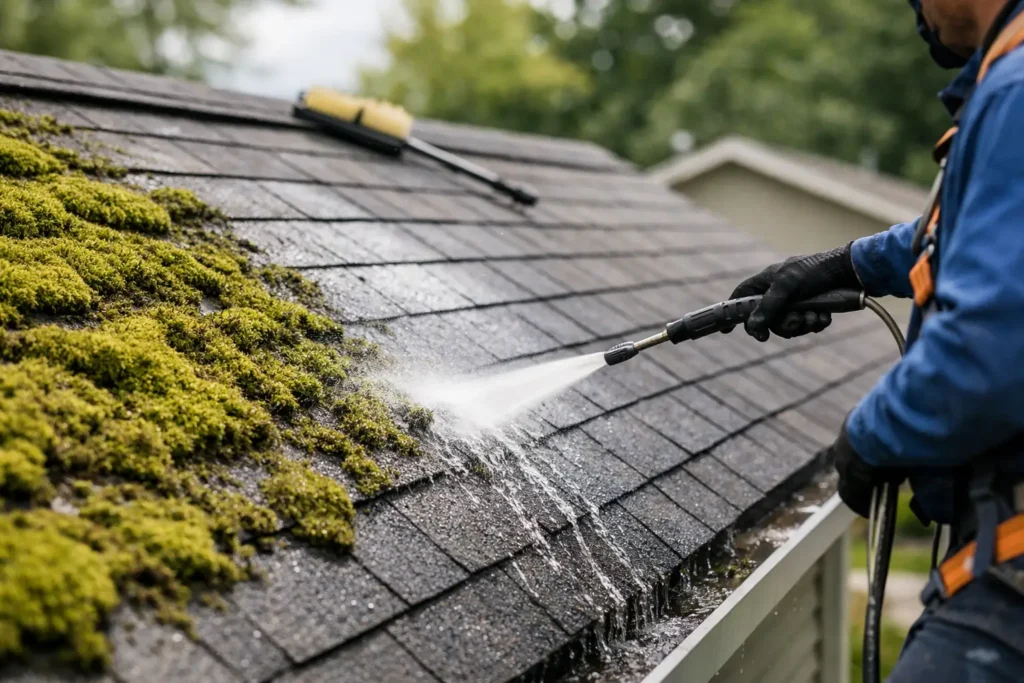
Moss can make a roof look older than it is, but the bigger concern is what sits underneath it. When it holds moisture against shingles or tiles, moss can encourage staining, lift edges, and block the path of rainwater into the gutters. Knowing how to clean roof moss safely helps protect your property without turning a maintenance job into costly roof damage.
For many homeowners, the safest answer is not to climb onto the roof with a pressure washer. Moss removal needs a careful approach that suits the roof material, its condition, and how easy it is to access. A clean roof should still be a sound roof when the work is finished.
Why roof moss needs attention
Moss thrives in damp, shaded areas, particularly on north-facing roof slopes and beneath overhanging trees. It starts as a green patch, then spreads into thicker clumps that hold rainwater long after the weather has cleared.
That trapped moisture is the real issue. On a tiled roof, moss may creep beneath tile edges and interfere with drainage. On asphalt shingles, aggressive removal can dislodge protective granules. Moss also drops into gutters and downspouts, where it can contribute to blockages and overflow around the property.
Not every small patch calls for immediate treatment. A little surface growth on an otherwise sound, accessible roof is usually less urgent than thick moss, lifted tiles, repeated gutter blockages, or visible damp marks indoors. The condition of the roof matters more than how green it looks from the street.
Check the roof before you clean it
Start from the ground. Use binoculars or clear photos taken from a safe position to look for loose, cracked, or missing tiles, sagging areas, damaged flashing, and heavy moss growth around valleys or gutters. If you can see obvious defects, arrange a roofing inspection before any cleaning takes place.
Avoid working at height unless you have the right access equipment, stable footing, and experience. Ladders can shift, wet moss is slippery, and fragile roof materials can break underfoot. If cleaning requires you to walk across the roof, it is normally better left to a fully insured exterior cleaning professional.
You should also consider where rinse water and treatment runoff will go. Cover or move delicate plants where practical, keep pets away from the work area, and make sure downspouts are not blocked. Moss and debris washed into a clogged gutter can cause an avoidable overflow.
How to clean roof moss safely
The right method depends on whether your roof has concrete or clay tiles, slate, metal panels, or asphalt shingles. In most cases, a gentle manual removal followed by a suitable moss treatment is safer than forceful washing.
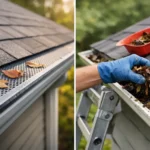
Begin by clearing loose moss from the gutters. This prevents clumps from being pulled into downspouts later. From a safe access point, use a soft brush or a purpose-made plastic scraper to lift the thickest moss away. Work downward with the direction of the roof surface so you are less likely to force debris beneath tiles or shingle edges.
Do not use a metal scraper, wire brush, or abrasive pad. These can scratch coatings, loosen shingle granules, and damage older tiles. The aim is to remove the bulk of the moss, not to scrub the roof until it looks brand new in one visit.
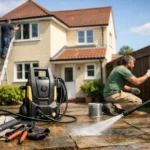
High-pressure washing is also a poor choice for many domestic roofs. A pressure washer can drive water under tiles, strip the surface of shingles, damage pointing, and spread water into areas that should remain dry. Even when the result looks clean at first, the repair bill can outweigh the benefit. Low-pressure rinsing may be appropriate for some tile roofs, but only where the roof is sound and the person carrying out the work understands the material.
Once the heavier moss has been removed, apply a roof-safe moss treatment that is specifically labeled for the roof surface you have. Follow the manufacturer’s dilution, application, weather, and safety instructions exactly. These treatments are designed to kill remaining spores and allow weathering to clear the residue gradually.
A treatment is not always an instant visual fix. It can take weeks or months for dead moss and staining to release naturally, especially during dry weather. That slower result is often preferable to harsh cleaning that shortens the life of the roof.
Take extra care with older roofs
Older clay tiles, slate, and weathered shingles deserve a lighter touch. They may already have small cracks or weakened edges that are not obvious from below. If moss is deeply rooted or tiles move when touched, stop cleaning and have the roof assessed.
Roof cleaning should never be used to hide a maintenance problem. Replacing broken tiles, repairing flashing, or correcting drainage comes first. Cleaning a damaged roof can make the issue worse and may complicate later repairs.
Keep gutters clear after moss removal
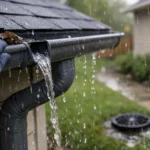
A moss-cleaning job is incomplete if the gutters are left full of debris. Rain carries loose material downhill, and even a carefully cleaned roof can shed moss over the following weeks. Clear the gutters and downspouts after treatment, then check them again after the next heavy rainfall.
Look for water flowing freely from each downspout and watch for overflowing sections. If one area repeatedly fills with moss, it may point to a shaded roof slope, nearby tree growth, or a gutter fall that needs attention.
For homeowners who already have gutter cleaning booked, it can make sense to address visible roof moss at the same time. It reduces repeat access work and helps keep the drainage system functioning as it should.
Prevent moss from returning quickly
Moss spores are always present outdoors, so no cleaning method can guarantee that growth will never return. The goal is to slow it down and prevent heavy buildup.
Trim back branches that keep the roof in permanent shade or drop leaves onto it. Keep gutters clear so water does not sit at the roof edge. Regularly remove leaf debris from valleys, behind chimneys, and around roof windows, as these damp pockets give moss a place to establish.
Some roofs benefit from periodic treatment before moss becomes thick. The right interval depends on tree cover, roof orientation, local weather, and the roof material. A bright, open roof may need very little attention, while a shaded roof in a leafy area may need checking every year.
When to call a professional roof cleaner
Professional cleaning is the sensible option when moss covers a large area, the roof is steep, access is restricted, or you are unsure what the roof is made of. It is also worthwhile if you have seen loose tiles, blocked gutters, water staining, or repeated moss regrowth.
A reliable cleaner will assess the roof first, use a method suited to its condition, and avoid damaging shortcuts. Ask whether the work is insured, whether gutter debris is included, and how runoff, plants, and surrounding surfaces will be protected. The cheapest quote is not always good value if it relies on high pressure where a gentler treatment is needed.
For homeowners in Canvey Island and nearby Essex towns, Essex Exterior Cleaning can help with practical roof and gutter cleaning as part of a wider exterior maintenance service. The focus should be on visible results while treating your roof, drainage, and property with proper care.
A roof does not need to be spotless to be well maintained. It needs to shed water properly, remain undamaged, and stay free from the heavy moss and debris that can cause trouble over time. If you are uncertain about safe access or the right cleaning method, arranging a professional inspection is a sensible next step.