A stained roofline can make an otherwise well-kept home look tired, but the issue is not always just cosmetic. This guide to fascia and soffit care explains how to keep these high-level surfaces clean, recognize early warning signs, and avoid the water damage that can follow neglected gutters.
Fascia boards and soffits sit where the roof meets the walls of your home. Because they are exposed to rain, wind, dust, algae, and overflowing gutters, they can collect dirt quickly. Regular attention protects the finish, improves curb appeal, and helps you catch small problems before they become costly repairs.
What Fascia and Soffits Do for Your Home
Fascia is the board that runs along the lower edge of the roof. It supports the guttering and creates a neat, finished line around the roof. Soffit is the panel underneath the fascia, bridging the space between the exterior wall and the roof edge. Many soffits include vents that help air circulate through the roof space.
Both parts matter. A sound fascia gives gutters a secure fixing point, while clean, unobstructed soffit vents can help manage moisture and heat in the attic. When either area is damaged or heavily soiled, the problem can affect more than the appearance of the property.
Modern homes often have uPVC fascia and soffit boards, which are durable and relatively low-maintenance. Older homes may have painted timber boards, which need closer inspection because peeling paint, rot, and water absorption are more likely. The right care method depends on the material and its condition.
A Practical Guide to Fascia and Soffit Care
The most effective approach is simple: inspect regularly, keep gutters flowing, clean surfaces gently, and deal with damage early. You do not need to climb a ladder every month, but a visual check from ground level after periods of heavy rain can reveal a lot.
Start With the Gutters
Blocked gutters are one of the main reasons fascia boards become stained, damp, or damaged. Leaves, moss, roof grit, and other debris stop water from reaching the downpipe. It then spills over the gutter edge, repeatedly soaking the fascia and the wall below.
Look for water running over the front of the gutter during rain, green streaks on the fascia, or damp marks beneath the roofline. These are signs that the gutter needs attention. Cleaning gutters at least once or twice a year is sensible for most homes, though properties near trees may need more frequent visits.
If the gutter is loose, sagging, or pulling away from the fascia, cleaning alone may not be enough. The brackets or the board behind them could need repair. It is better to address this promptly than allow the weight of trapped water and debris to worsen the damage.
Clean Dirt Before It Becomes Embedded
Fascia and soffit cleaning is usually needed when traffic film, algae, cobwebs, bird mess, and weather staining begin to dull the surface. On white uPVC, even a light buildup can be noticeable from the street.
For a small, safely reachable area, use warm water, a mild exterior-safe cleaner, and a soft cloth or soft-bristled brush. Work in manageable sections, rinse thoroughly, and avoid abrasive pads that can scratch the surface. Scratches tend to hold dirt, making future cleaning harder.
A professional exterior clean is often the safer choice for full rooflines, especially on two-story properties or where access is limited. Water-fed pole systems allow technicians to clean high-level frames, fascia, and soffits from the ground using purified water. This reduces the need for ladders while helping achieve a streak-free finish.
Treat Black or Green Marks With Care
Green algae and black marks are common in shaded or damp areas. They can return more quickly on north-facing elevations, beneath overhanging trees, or where gutters have previously overflowed. Cleaning improves the appearance, but the cause should also be considered.
If staining returns soon after cleaning, check for a persistent water source. A blocked gutter, leaking joint, slipped roof tile, or poor drainage can keep the area damp. Removing surface growth without correcting the moisture problem is only a short-term fix.
Do not use a harsh chemical cleaner simply because a stain is stubborn. Strong products can affect painted timber, damage nearby plants, or leave marks on siding and windows. Test any product in a discreet area first and follow the manufacturer’s directions.
Why High-Pressure Cleaning Is Not Always the Answer
It can be tempting to use a pressure washer on every exterior surface. Fascia and soffits need more care than a driveway or patio. A powerful jet aimed upward can force water behind boards, into roof edges, or through vent openings. It can also strip paint from timber and damage seals around windows.
Low-pressure rinsing may be suitable in some circumstances, particularly for durable uPVC in sound condition, but it depends on the property. The cleaning method should match the material, the amount of buildup, and the access available. Gentle brushing and purified-water cleaning are often more appropriate for routine upkeep.
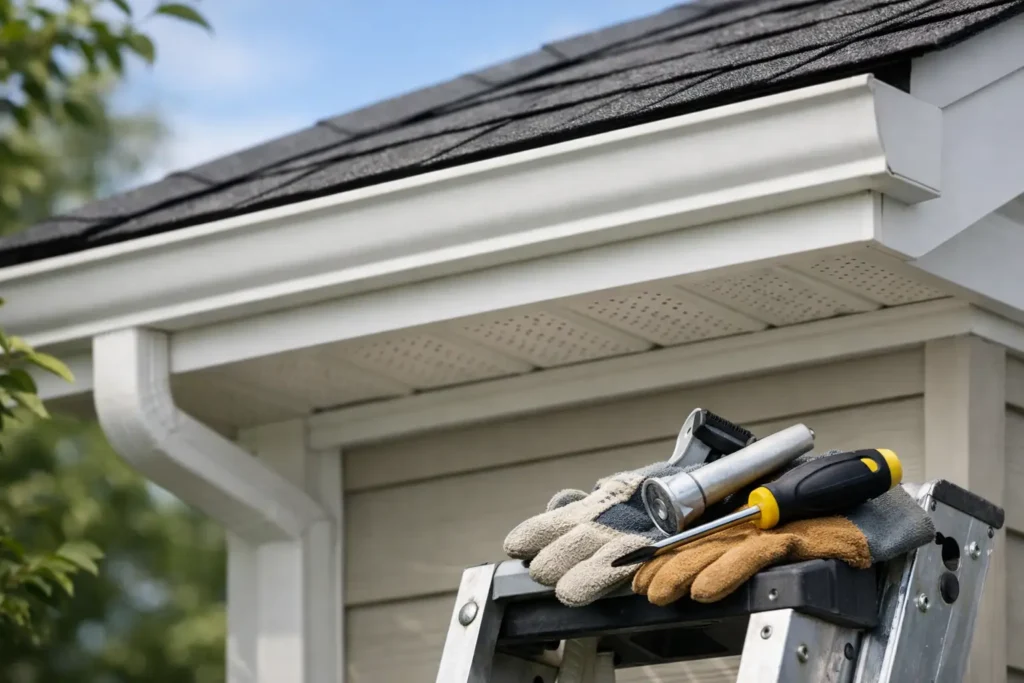
The same caution applies to ladders. Working around gutters means reaching overhead, handling water, and standing on uneven ground. A fall can happen quickly, and leaning a ladder against fragile guttering can cause damage. If you cannot work comfortably and safely from the ground, arrange professional help.
Signs Your Fascia or Soffits Need More Than Cleaning
Cleaning makes it easier to see the true condition of the roofline. While you are inspecting it, watch for signs that suggest repair or replacement may be needed:
- Peeling, cracked, or blistered paint on timber fascia boards
- Soft, swollen, split, or darkened wood
- Gaps between boards, walls, or guttering
- Loose gutters, leaking joints, or rusted fixings
- Missing, broken, or blocked soffit vents
- Bird or insect activity around openings in the roofline
Timber fascia can often be repaired if deterioration is found early. Once rot has spread behind gutter brackets or into nearby roof timbers, the work becomes more involved. uPVC boards can also crack, warp, or become loose, even though they do not rot in the same way as wood.
If you see water stains indoors near an exterior wall or ceiling, do not assume fascia is the only cause. Roof leaks, failed flashing, and defective gutters can produce similar symptoms. A proper inspection helps identify where the water is entering before repairs are made.
Set a Realistic Maintenance Schedule
For most homeowners, a seasonal check works well. In spring, clear winter debris and look for storm damage. In late summer, wash away dust, pollen, and surface grime before it becomes ingrained. In fall, keep gutters clear as leaves begin to drop. After severe winter weather, check that gutter brackets, downpipes, and roofline boards remain secure.
A full fascia and soffit clean once a year is a practical baseline for many properties. Homes close to busy roads, coastal weather, mature trees, or shaded areas may benefit from more frequent cleaning. In places such as Canvey Island and nearby coastal towns, wind-driven rain and salt-laden air can leave exterior surfaces looking dull faster than homeowners expect.
It also helps to combine roofline care with window and gutter cleaning. Doing these jobs at the same time means dirt from the gutters is dealt with before clean windows and frames are finished, and it gives you a clearer view of the entire exterior.
Protect the Finish Between Professional Visits
Small habits make a noticeable difference. Trim back branches that rub against gutters or shade the roofline all day. Keep downpipe outlets clear so water moves away from the property. Avoid attaching decorations, cables, or heavy fixtures directly to fascia boards unless they are fitted correctly.
When washing windows or siding, rinse cleaners away from the soffits rather than allowing product to dry on them. If you have painted timber fascia, keep an eye on the paint coating. Repainting at the first signs of failure is far easier than waiting for bare wood to absorb water.
A clean roofline should not be treated as a one-off cosmetic job. It is part of routine property care, alongside gutters, windows, and drainage. When these areas are maintained together, your home stays sharper in appearance and is better protected from avoidable water problems.
For homeowners who would rather not work at height, Essex Exterior Cleaning provides fully insured fascia, soffit, window, and gutter cleaning with clear, visible results. A regular visit can keep the roofline looking cared for while giving potential issues a better chance of being spotted early.