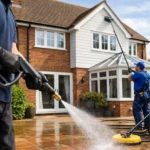
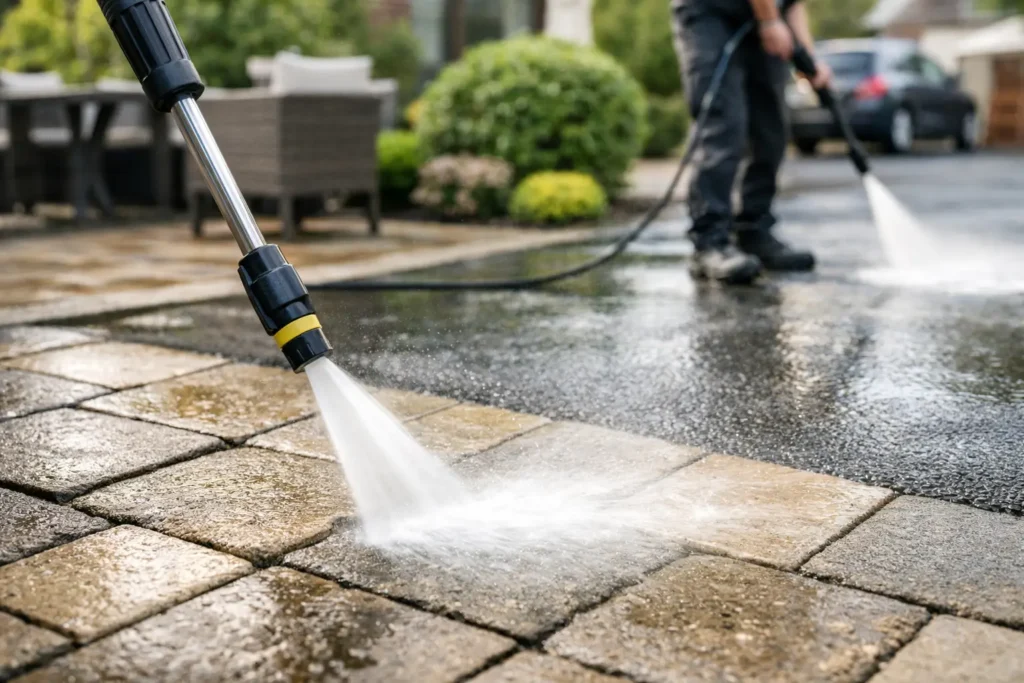
A patio can look tired long before anything is actually wrong with it. Green algae along the edges, black spots in the joints, oil marks by the car, and weeds pushing through block paving all make an outdoor space feel neglected. Professional patio and driveway jet washing gives those surfaces a clear reset, removing years of surface buildup without the hassle of hiring equipment, moving heavy furniture, or spending a weekend covered in muddy spray.
For homeowners, the difference is immediate. Clean paving makes an entrance look cared for, helps reduce slippery areas after wet weather, and brings back the original color and detail of the surface. The key is using the right method for the material, rather than simply applying the highest possible pressure.
What Patio and Driveway Jet Washing Can Remove
Exterior surfaces are exposed to rain, shade, traffic, leaves, and airborne dirt every day. Over time, this creates a layer of grime that ordinary sweeping cannot shift. Jet washing uses controlled water pressure to lift surface dirt from patios, paths, driveways, and paved areas.
It is particularly effective on algae, moss, mud, general weathering, tire marks, loose weeds, and many everyday stains. On block paving, it can also clear accumulated dirt from between the blocks. On concrete and textured paving, it can reveal a much brighter finish that has been hidden beneath grime.
Some marks need more than water alone. Oil stains, deeply set rust marks, paint, or discoloration that has been present for years may require specialist treatment, and even then the final result depends on the surface and how long the stain has been there. A dependable cleaning service should be clear about what can realistically be improved before work begins.
How Professional Patio and Driveway Jet Washing Is Carried Out
A good result starts before the machine is switched on. The surface needs to be assessed for its condition, material, drainage, loose paving, damaged pointing, and nearby areas that need protection. This matters because a concrete driveway, sandstone patio, resin-bound surface, and block-paved path do not all respond in the same way.
Preparation protects the surrounding area
Furniture, pots, bins, and movable items should be cleared where possible so the whole surface can be cleaned evenly. Nearby doors, walls, drainage channels, and planted borders also need consideration. A careful operator works methodically to avoid pushing dirt into areas that have already been cleaned or sending debris where it could cause a blockage.
Loose moss and larger debris are removed first. This prevents unnecessary mess and allows the jet washing equipment to work directly on the built-up grime below.
Controlled pressure gives a cleaner finish
The idea that more pressure always means better cleaning is one of the most common mistakes in exterior cleaning. Excessive pressure can scar some paving, disturb jointing material, damage weak concrete, or force water into already compromised areas.
Professional cleaning is about matching the water flow, pressure, and nozzle choice to the surface. The aim is to lift dirt consistently, including around edges and corners, while keeping the finish even. This is especially important on driveways, where striped cleaning patterns can look worse than the original grime if the work is rushed.
Jointing and finishing make the result last longer
Block paving often needs attention after cleaning because dirt and old jointing sand are removed during the process. Once the area is dry, new kiln-dried sand can be brushed into the joints where appropriate. This helps lock the blocks together, supports stability, and makes it harder for weeds to take hold quickly.
Not every surface needs re-sanding, and not every patio should be sealed. Sealing can be useful for certain materials when the surface is fully dry and in suitable condition, but it is not a shortcut for poor preparation. The cleaning itself must be completed properly first.
The Right Approach Depends on the Surface
Patio slabs can be made from concrete, natural stone, porcelain, limestone, sandstone, or other materials. Some are hard-wearing and respond well to thorough jet washing. Others need gentler treatment because their surface can be more porous or prone to damage.
Natural stone is a good example. It can look excellent after cleaning, but the wrong pressure or cleaning product may leave it roughened, patchy, or more open to future staining. Resin-bound driveways require particular care and are not suited to aggressive pressure washing. Older concrete with cracks or flaking may also need a lower-pressure approach.
Block paving is one of the most common driveway surfaces and usually responds very well to a professional clean. The trade-off is that the joints may need re-sanding afterward. This is not a flaw in the service. It is part of restoring the surface properly after removing compacted dirt, moss, and old sand.
If a patio has loose slabs, crumbling mortar, poor drainage, or significant surface damage, cleaning can still improve its appearance, but it will not repair structural issues. Addressing those concerns first may be the better investment.
Why Regular Cleaning Is About More Than Appearance
A clean driveway improves curb appeal, but there are practical reasons to keep exterior surfaces maintained. Algae and moss become slippery when wet, particularly on shaded paths, steps, and patios. Leaves and dirt can collect in drainage points, allowing water to sit where it should run away.
Buildup also holds moisture against the surface. Over time, that can encourage further moss growth and make weathering look worse. Regular cleaning does not prevent every issue, but it makes it easier to spot cracked paving, failed joints, or drainage problems before they become larger jobs.
For properties in coastal and busy Essex areas, windblown debris, damp weather, and everyday traffic can leave driveways and patios looking dirty faster than expected. An occasional professional clean keeps the work manageable and avoids letting months of buildup become years of staining.
Is DIY Jet Washing Worth It?
Hiring a pressure washer can be tempting, especially for a small patio. For light dirt on a sturdy surface, it may be enough. However, the job often takes longer than expected, and the results can be uneven without the right equipment or experience.
DIY cleaning also brings risks. High pressure can damage paving, strip jointing sand, mark render, or turn a small oil stain into a larger spread of discoloration. There is also the practical issue of handling hoses, power, water runoff, and heavy equipment safely.
A professional service is usually the better choice when the driveway is large, the surface is delicate, algae has made the area slippery, or the property has block paving that needs re-sanding. It is also a sensible option for homeowners who want the work completed efficiently without giving up their free time.
Keeping a Clean Surface Looking Better for Longer
After cleaning, regular sweeping makes a noticeable difference. Removing leaves, soil, and standing debris gives moss and weeds less chance to establish. Trim back overhanging plants where possible, especially in damp, shaded corners that stay wet for longer.
Treat new spills quickly, particularly oil on driveways. The sooner it is dealt with, the less chance it has to soak into a porous surface. Checking drainage channels and clearing them of leaves also helps prevent dirty water from pooling across freshly cleaned paving.
When your patio or driveway starts to look darker, slippery, or patchy again, it is usually easier to arrange cleaning before the buildup becomes heavy. Essex Exterior Cleaning provides fully insured exterior cleaning with practical care for the surfaces around your home. A well-cleaned driveway or patio should not just look brighter on the day – it should make coming home feel better every time you pull up.